
By Roselyn Fauth with support from Kelly Sweerus
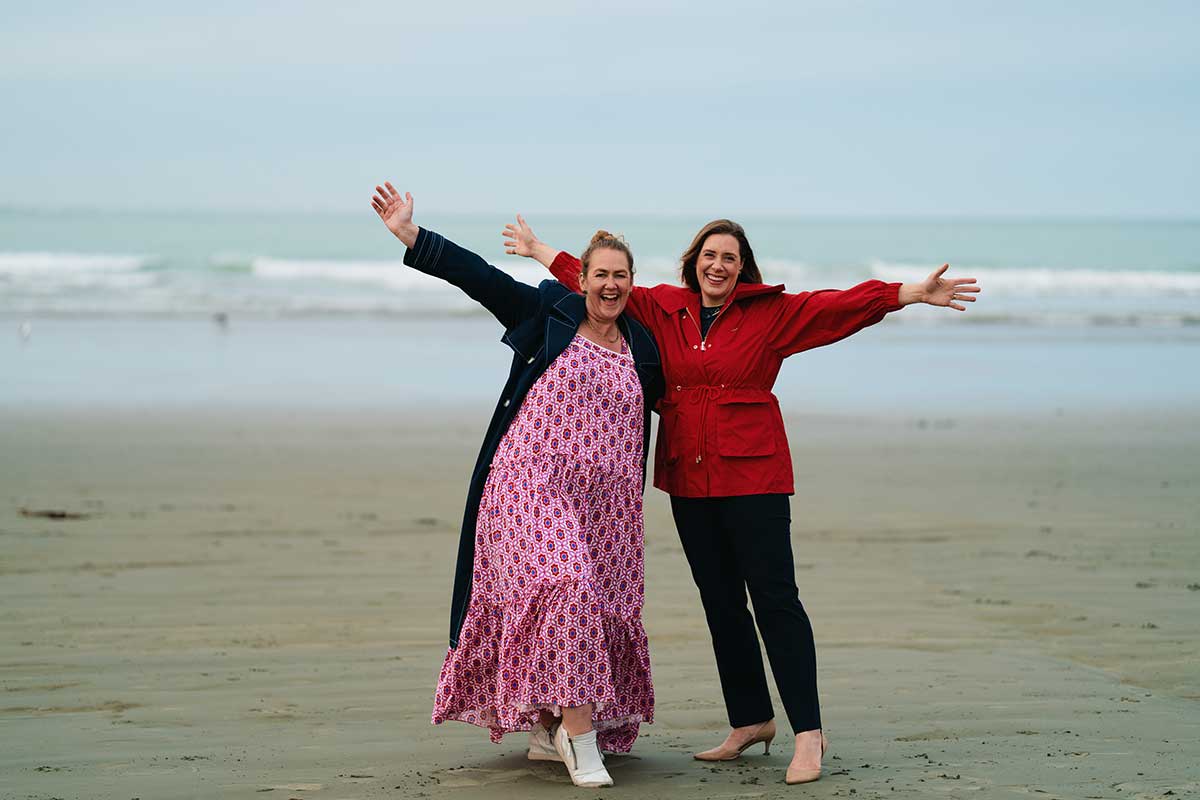
Photography by Kevin Fedde for WSJ one of the 51 photos taken for a photoshoot for the Wall St Journal in America
Last night I sat at a dinner table at The Oxford in Timaru with American doctors, one of my closest friends, my neighbours, my GP, and the surgeon who had replaced my mum’s knee that afternoon! I took a selfie and sent a photo to Mum back in her hospital bed and joked that I was getting exceptional service, hearing how her surgery had gone that day from the very person who had been working inside her leg! That’s Timaru, hey. We are small enough cities that usually once you get chatting you can find two degrees of connection.
One of the people at the heart of today's blog is my friend Kelly Sweerus, an American doctor who moved to Timaru from the United States with her husband Forest and twin girls. Our children are the same age, and that is how we met. Over the years, she has become one of my closest friends...
We had gathered for dinner, because of a story published in The Wall Street Journal, asking why so many American doctors are relocating here. The Wall Street Journal! That is a massive publication in the United States with around 4.7 million average subscribers, a wonderful promotion for Timaru. While it was a honour to help journalists learn who Timaru is, it also reinforced to me how luck we are live, work and play here.
We are not just a stop between Christchurch and Dunedin. We are pretty special little city. People moving here might think initially it is about what they can get... a house and a job. But when they land and settle in, they then find Timaru is a place to belong to. To become part of communities at schools, neighbourhoods. We were quoted in the Wall St journal as "aggressively friendly" which I was pleased to read, because I do think we are a welcoming bunch. There are plenty of local events, there are playgrounds in most neighbourhoods that you can walk to, lots of clubs to join, we have hospitality standard that you could expect in the big smoke. Places such as CPlay, Caroline Bay, Te Ana Māori Rock Art Centre, Aigantighe Art Gallery, The Oxford and local events show that Timaru invests in stories, creativity, children, heritage, hospitality and shared experiences. For American doctors coming from high-pressure health systems and large cities, Timaru can be a place where life feels more manageable. Work still matters, but so do family, safety, nature, rest and belonging.
What might seem small to outsiders are our big strengths. Timaru District and the wider South Canterbury region is big enough to offer opportunity, schools, arts, sport, healthcare, restaurants and events, but small enough for people to feel known. We can sometimes think Timaru is ordinary because it is home. Read on to find out what our strengths are, how our community, cares, we are creative, we have strong sense of heritage, we are welcoming and friendly and our lifestyle enables us to get together to make people feel they can belong here... we value community.
Come for the lifestyle, safety, scenery and work-life balance, but prepare carefully. Check your visa, budget properly, understand healthcare and transport, expect cultural differences, and find community early. New Zealand can be a wonderful place to live, but the move is easier when people arrive informed, flexible and want to be part of something and contribute, rather than focused on what they will get.
Read on to find out how this all happened. Why Kelly and I now have 51 professional photos of our friendship, why Timaru has hit international and national news as the place to move to, and where the drops came from that have had a great ripple effect...

Kelly was part of the preparation with a few local doctors and helped support the reporter. I was invited to give a local perspective on where we live, what makes Timaru special, and what it means to welcome immigrants here. Preparing for that interview made me ask myself those questions, and through that reflection, it reaffirmed that we live in a very special place.

It was really cool to meet Haydn Jones from 7 Sharp.
Although I was not featured in the article myself, one of my photos, showing Kelly’s beautiful Turnbull Rule home, was included. That felt pretty cool: to support the journalist, and my friend, promote Timaru, and profile our built heritage, our epic playground, and public art gallery to readers in the United States.
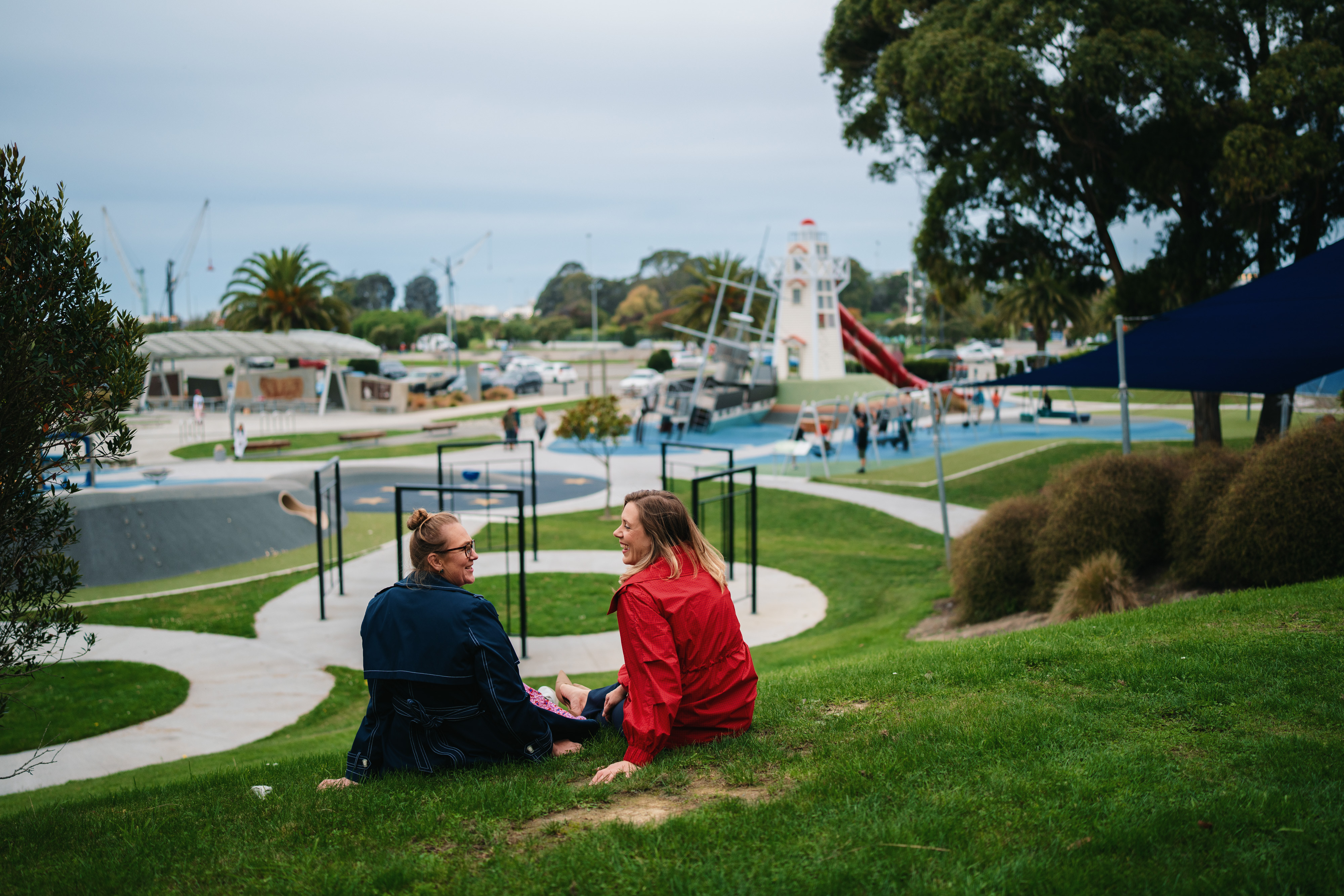
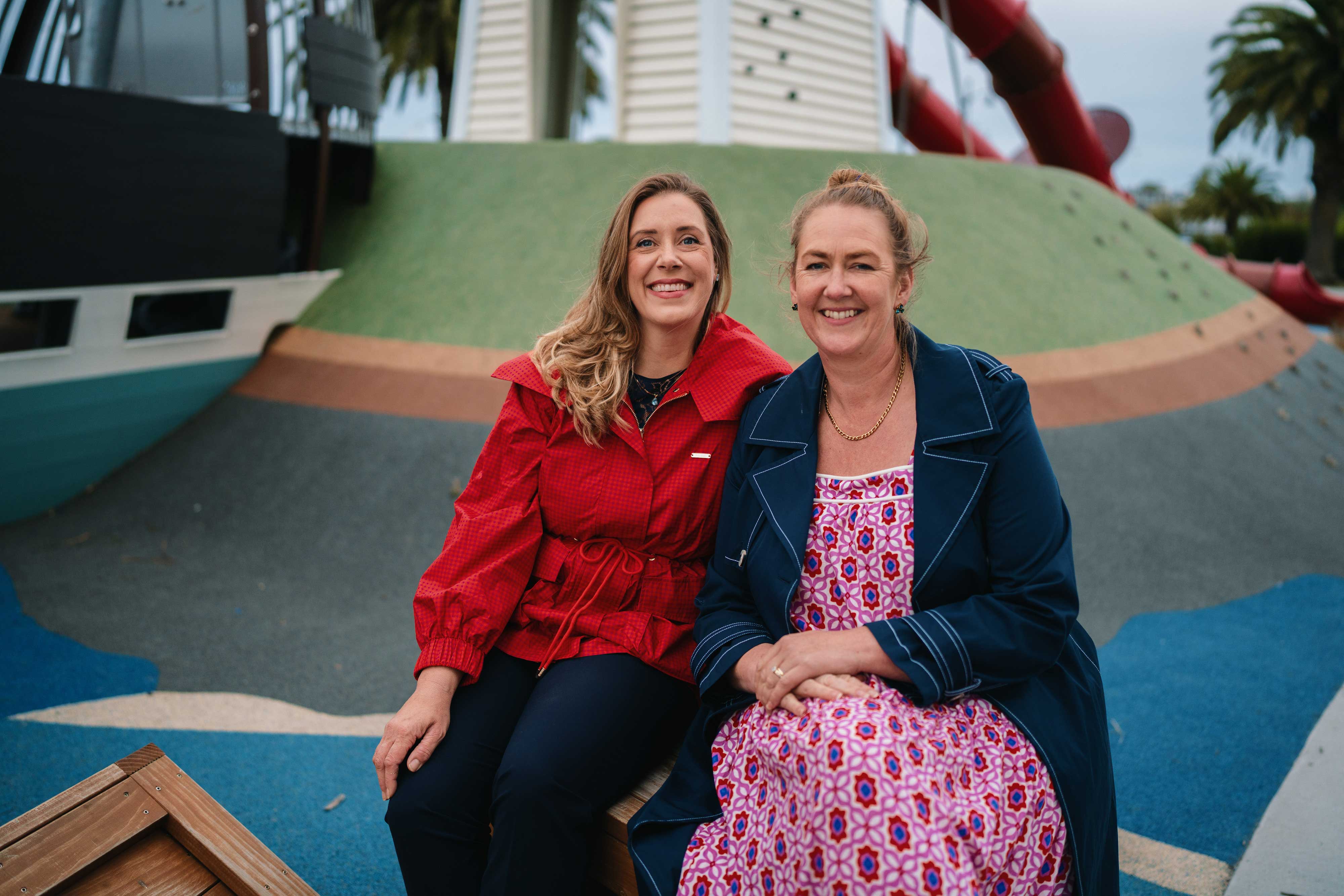
Kelly Sweerus and I Roselyn Fauth (volunteer and founder of WuHoo Timaru) posing at the playground for Wall St Journal article. We are laughing at how awkward it was to have our photo taken. Despite the weirdness of the situation, we were happy to do it if it helped to entice people to move here 2026 Photography- Fedde Studios
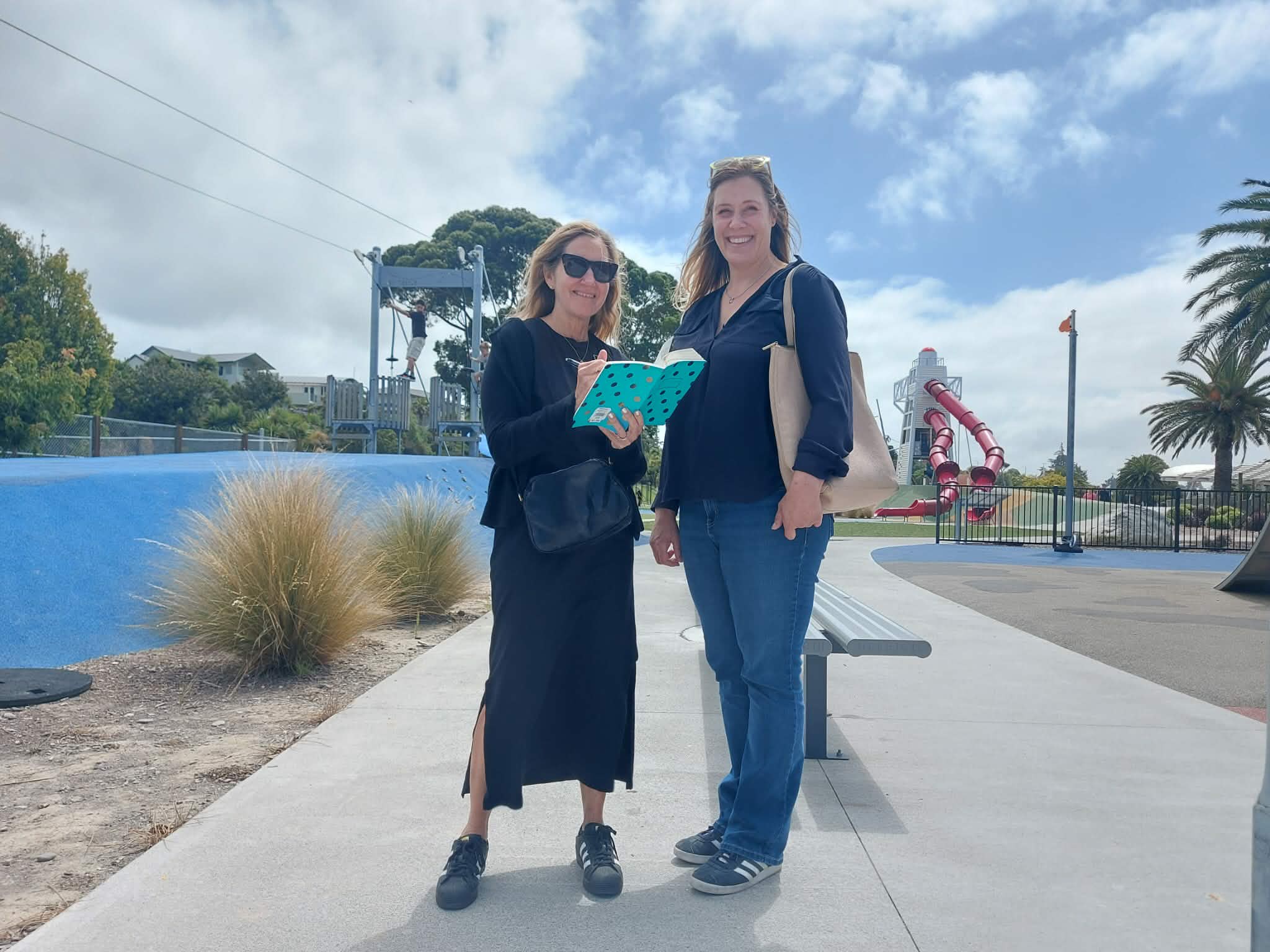
Dr Kelly Sweerus with Wall St Journalist Nancy Keates. CPlay even got a mention, after I had the pleasure of showing Nancy around the playground and sharing how it came together through community effort. It is a great reminder that the things we sometimes take for granted, our people, places, lifestyle, creativity and care for community, can look pretty extraordinary from the outside.
When Nancy, the reporter from The Wall Street Journal, visited Timaru, Kelly and I met her for lunch at one of my favourite local places, The Oxford. Afterwards, we showed her some of our CBD heritage buildings, then we went to Caroline Bay Playground. Later, Kelly showed her the Aigantighe Art Gallery, where Nancy experienced a weaving workshop, a free event hosted by the gallery team and the South Canterbury Tongan Society.
Helping journalists understand CPlay reinforced more generally how Timaru people do not just wait for things to happen. When there is a problem, we find the solution. They imagine, fundraise, volunteer, collaborate and build things for the next generation. We are big enough that if people want to get together to make something happen, we can. And we are small enough that we can work together and get the task done.
The playground blew her away. She said, “We don’t have anything like this in the US.” And the fact she could rock up to a playground like this for free, and a workshop at the Aigantighe to learn how to weave as a free event, she said that would be unusual back home, there would usually be a charge, and that would exclude those who couldn't afford the fee.
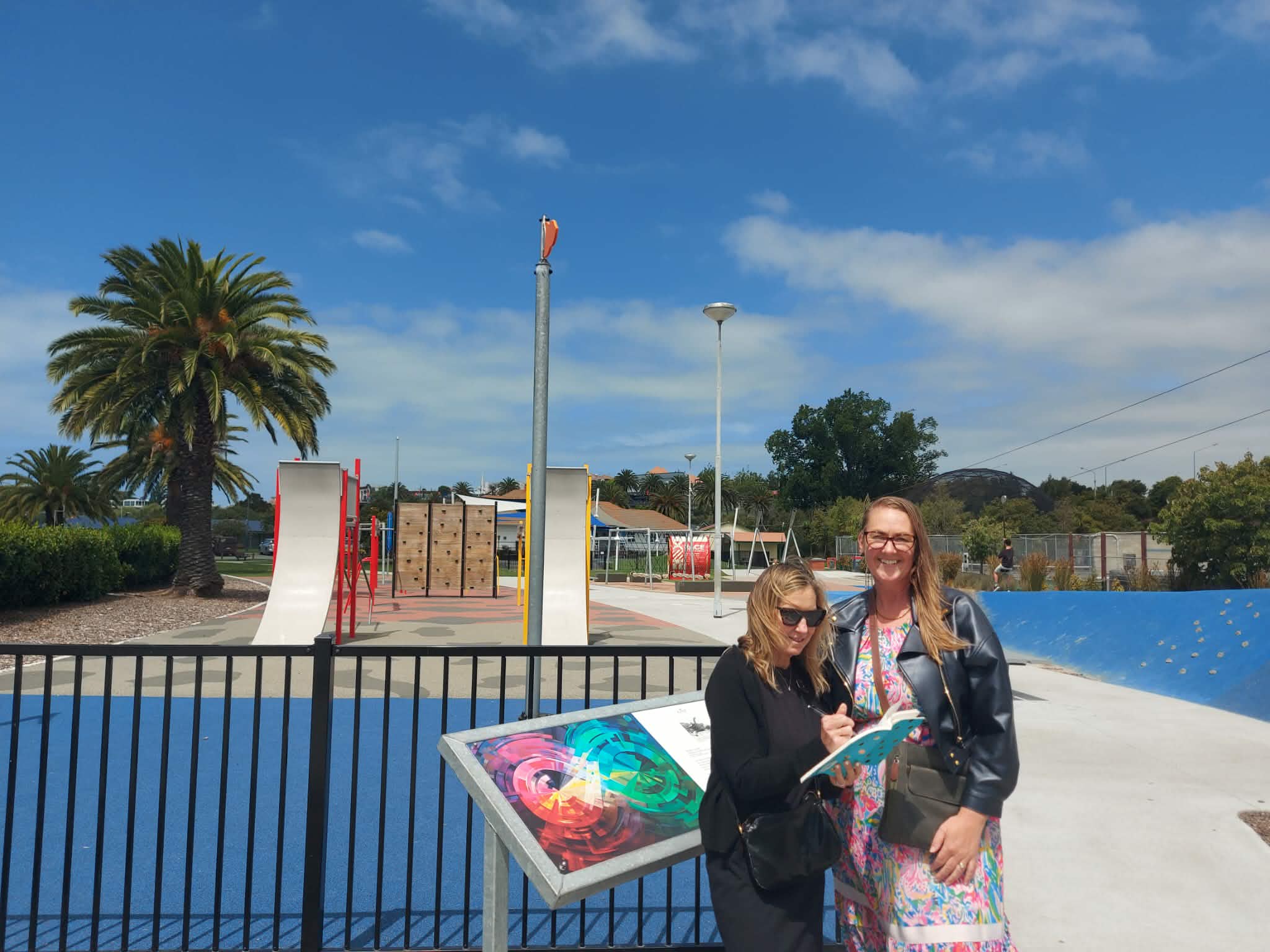
Roselyn Fauth fun fact-ing the face off reporter Nancy Keates from the Wall St Journal at the Caroline Bay Playground.
As we clambered around on the shipwreck and I explained that the playground had been championed and fundraised for by community. And that is Timaru aye... when we see a problem, we find a solution, rally together, and make something happen. Timaru is small enough and big enough that it can be what you choose to make of it.
Nancy Keates was planning a three week holiday in Australia to see friends in Sydney, and asked for permission to write some stories while she was away. Changes to New Zealand’s investor visa programme last year inspired Nancy to decided to write about Americans moving here to invest in tech startups. Nancy's husband is a doctor and worked in Portland with Dr Kate Ropp, she had recently moved to Timaru, New Zealand. so Nancy decided to do a story about medical professionals moving to Timaru. Nancy had a two day trip to Timaru, interviewed a range of doctors and a few locals like me, and was introduced to the way of life in New Zealand.
Dr Brandon Williams held a dinner with other American doctors where Nancy interviewed them and met their families. Kate introduced Nancy to American Dr Kelly Sweerus and myself, Timaru's local Roselyn Fauth.
A few weeks later, our little city was featured on the front page of the The Wall Street Journal’s website.
With The Wall Street Journal reaching about 4.7 million average subscribers, including 4.3 million digital-only subscribers, the profiles carried Timaru’s story far beyond New Zealand. American readers flicked through the newsprint and scrolled their screens to meet people who had moved here, each giving them a taste of what small Kiwi city life can offer. It said Timaru had become a magnet for medical workers fed up with the American healthcare system and seeking a better work-life balance.

The article created quite a buzz overseas and reinforced to kiwis that New Zealand relies heavily on overseas-trained doctors. South Canterbury has a particularly high proportion of internationally trained doctors. They bring different training, life experience, medical perspectives and cultural knowledge. That diversity can strengthen local care and broaden how clinical problems are approached.
If New Zealand wants overseas-trained doctors to stay, practical support matters. Induction, cultural understanding, help navigating systems, schools, banking, immigration and community life all make a difference.

Dr Kelly Sweerus in her office at the Timaru Hospital - Photography By Roselyn Fauth
It would be amazing if we could attract more medical expertise to help fill vacancies in our South Canterbury health services.
Most of my doctor friends that I have met from overseas all say the same thing: New Zealand’s health system is not perfect, but there is something very special about the way we try to care for people. And it might be something that us kiwi's sometimes take for granted.
If a patient turns up needing emergency care, they are treated according to clinical need. If it is not an emergency, they may be pointed towards a GP, an after-hours clinic, Healthline, or another more appropriate service. It does not mean everyone is seen instantly, and yes, there are still waiting times and gaps, but the basic belief behind the system is that people should be able to access medical support when they need it.
Much of that care is publicly funded or subsidised. Kiwis chip in through taxes, levies and public funding because, at our best, we believe healthcare should not just be for people who can afford it.
Then there is ACC, which is something I think many of us take for granted until we realise how unusual it is. If you have an accident in New Zealand, ACC may help cover the cost of injury-related treatment and recovery support. Depending on the situation, that can include urgent medical care, help with treatment costs, weekly compensation if you cannot work because of the injury, support at home, carer or attendant care, and even equipment or home modifications for people left with long-term or permanent injury-related needs.
Even tourists are included in part of our medical safety net. for example if a visitor has an accident while they are in New Zealand, ACC may help cover injury-related treatment and support. But that does not mean every medical cost is free, and it definitely does not replace travel insurance. ACC does not cover ordinary illness, disrupted travel, emergency travel home, or ongoing care once someone returns to their own country. So please do your research before you come, and make sure you have appropriate travel insurance.

WSJ Kelly Sweerus at the CPlay Lighthouse 2026 Photography- Fedde Studios
I just assumed we had copied this approach from the rest of the world, but it was only recently that I realised how lucky we are to have this kind of safety net when we are vulnerable.
I often forget about the role of the hospital. It's only when I sit in Accident and Emergency and look around that I remember this whole other world our community has created to support and care for the injured and unwell. I usually prepare for a four hour wait, and our regional hospital punches well above its weight in waiting times. Other parts of the country can be sitting in those seats for 8-12 hours!
This does not happen everywhere. It certainly does not work the same way in the United States. Kelly often tells me what a relief it is to write out a prescription in New Zealand knowing the patient is far more likely to be able to fill it and actually take the medicine. In the US, the cost can be so prohibitive that people who cannot afford it simply miss out.
Our system is not perfect. We have waiting lists, workforce shortages, rural pressures and people who still fall through the cracks. But the principle matters. When someone is sick, injured or vulnerable, the first question should not be, “Can you afford help?” It should be... “What do you need, and how can we help?”
For doctors tired of burnout, cost pressures and the strain of the US medical system, Timaru represents something deeply attractive: meaningful work, family time, safety, landscape, community and a chance to breathe.
To learn more about our hospitals emergency departments, read more here: https://www.healthnz.govt.nz/hospitals-services/services-support/emergency-departments
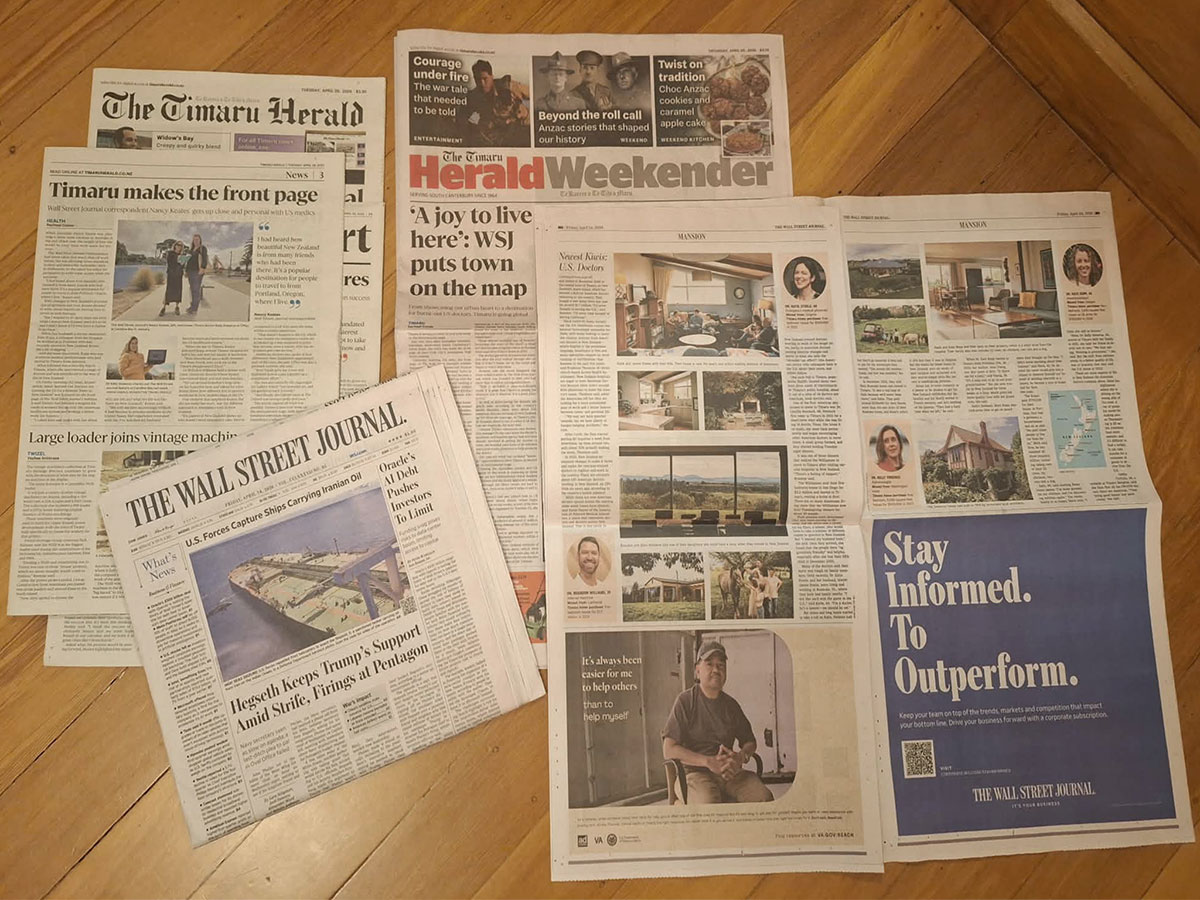
Timaru splashed on the local, national and international rags!

The new playground, surrounded by existing tennis courts, paddling pool, skate park and bike skills park, with view out to Caroline Bay, Timaru. - Photo South Canterbury Drone Photography
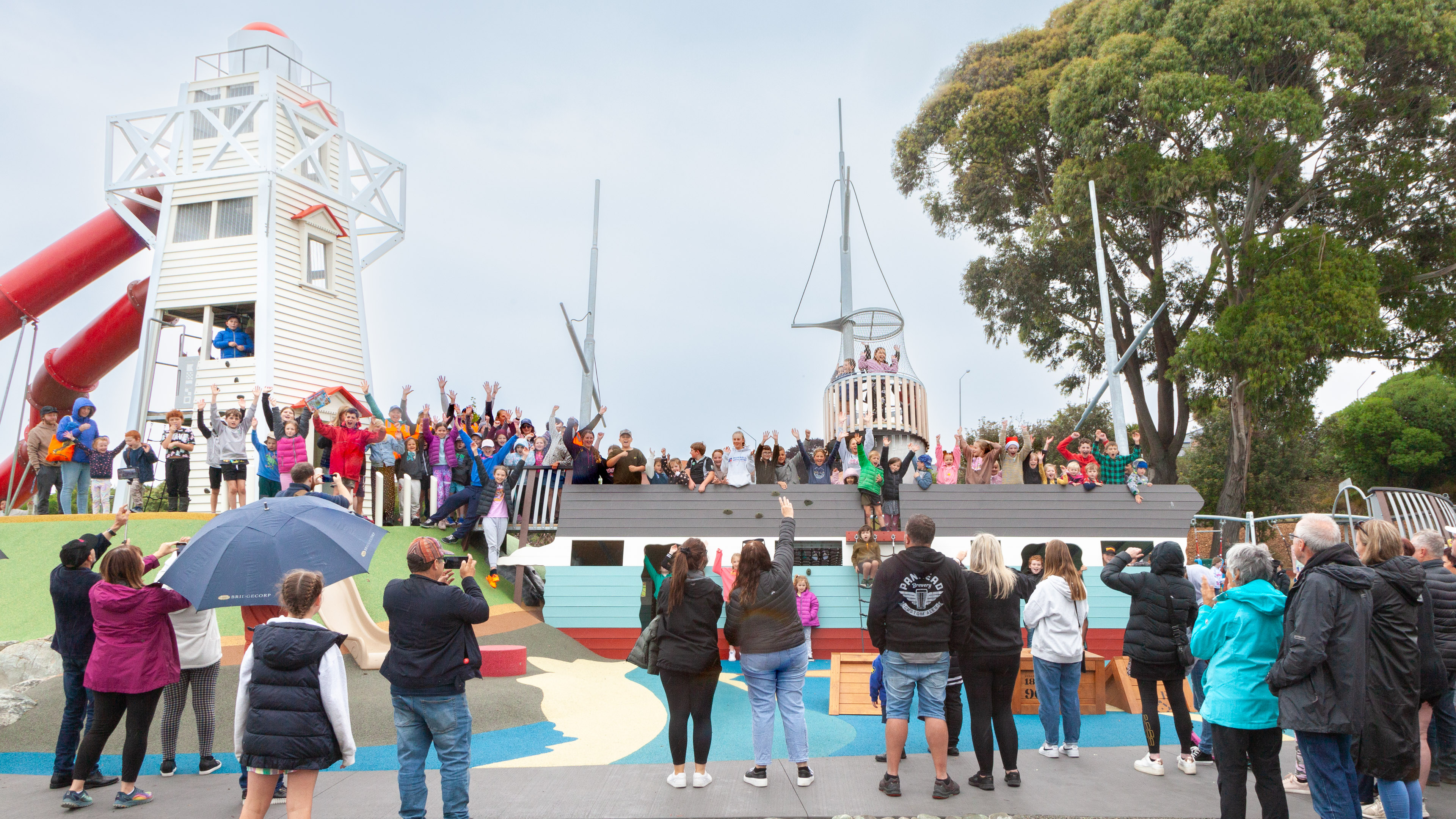
The playground design has been inspired by stories of Caroline Bay and the Timaru District, capturing everything from its creation stories, and geological foundations to the local Māori and the European stories. https://cplay.co.nz/case-study
There is something special about helping people connect to a place you care about. I felt really proud. As well as our city, our wider region is stunning. Just a bit of fuel and a picnic and within 30mins to an hour you can be in wild landscapes hunting for fossils, finding cool rocks, watching birds and taking in views like this.
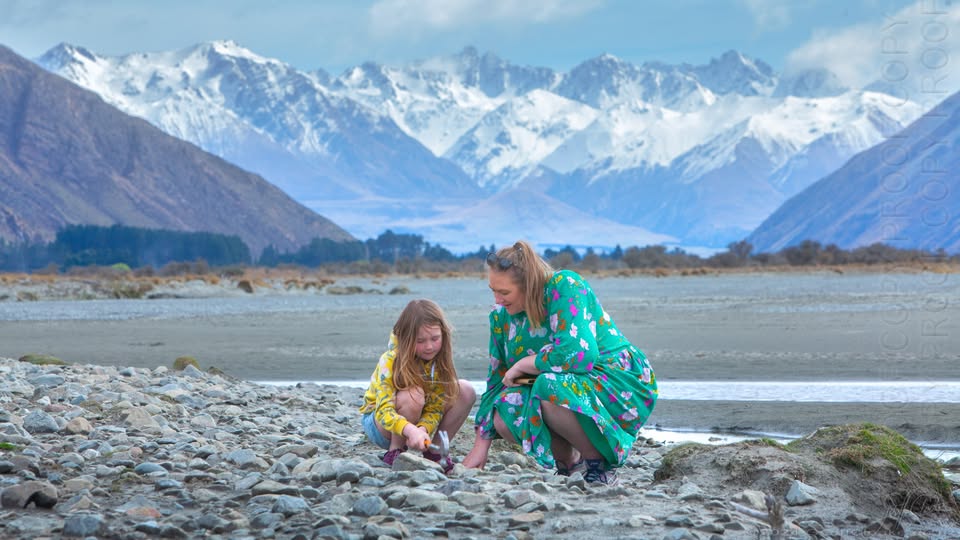
Sunday drive to Mesopotamia. Belles and I are bashing rocks with hammers on the hunt for aggates. Photo taken by Geoff Cloake.

Free concert at the Caroline Bay carnival - posing with the Kiss Tribute band.

Volunteers supporting the Aigantighe Art Gallery over the years.

Special friendships - raising our families together. Kelly Sweerus, Clarissa Doran, and Roselyn Fauth

Free fun in Timaru. Photo By Roselyn Fauth 2026

Caroline Bay Photo By Roselyn Fauth 2026. This was my backyard growing up as a kid here in the 1980s. And now I raise my two girls here with my husband Chris. He grew up in Greymouth and relocated to Timaru to take a job at Environment Canterbury. Look at this view! Shallow sandy bay is great for a paddle in the sea. Little blue penguins next in the basalt boulders. Ngai Tahu is the iwi of the area, they have use this area for mahika kai (food gathering) for century's. there are stunning ancient rock art images inland that could be around 700 years old. You can see them waddle in for free on dusk. 150 Years ago sailing ships anchored here to establish the area as a United Kingdom colony. Smaller boats transported cargo and passengers between the ships and the shore until the harbour was constructed. The Port impacted the way sediment flowed up the coast, trapping the sand here and building out a man made sandy beach. Timaru today is still a Port town, a place of exchange linking our primary industries with national and global markets.
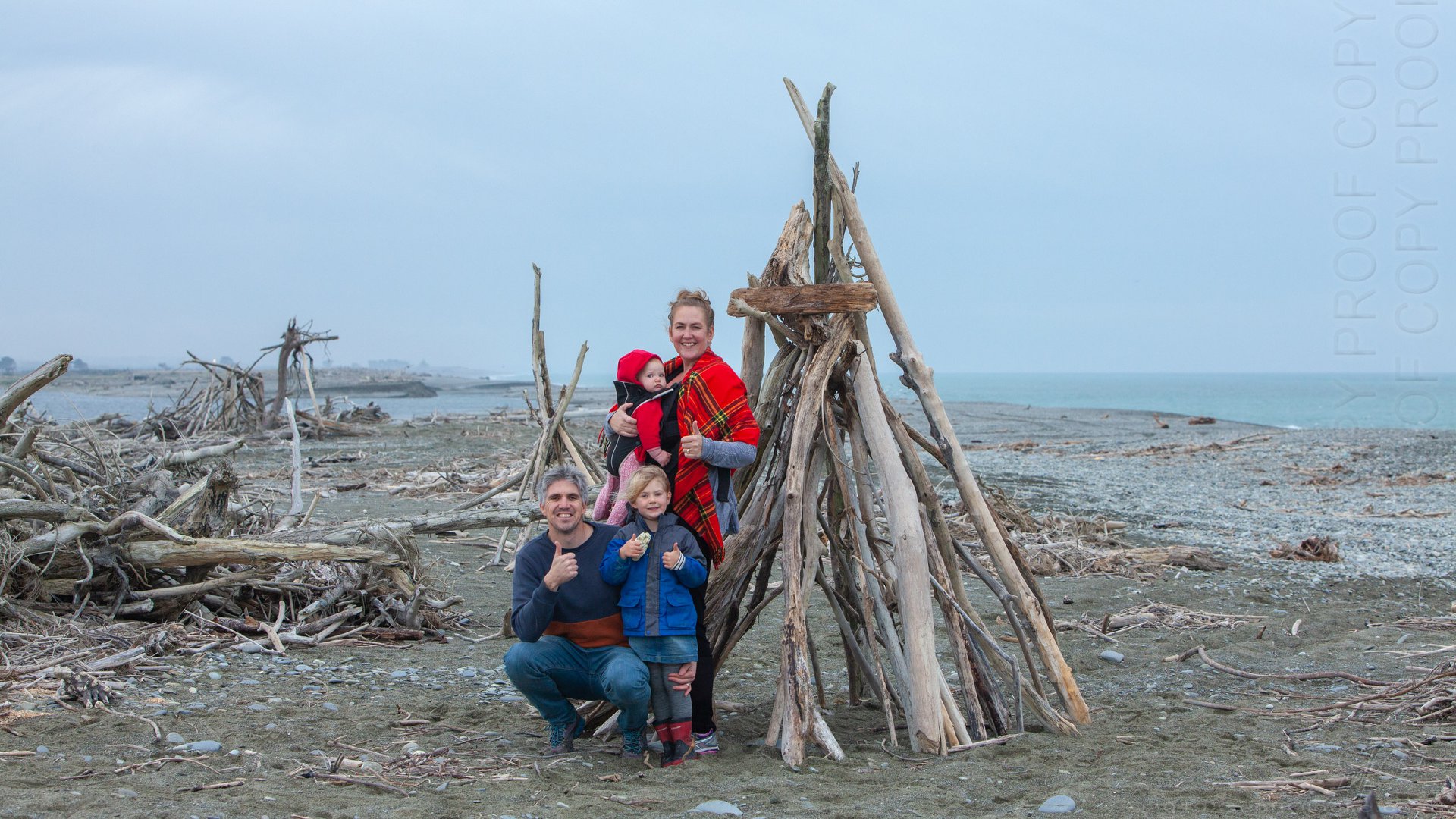
Finding free fun is what we love to do at WuHoo Timaru. Our voluntary project to help people find free fun in Timaru District and wider region. And to make that fun even more meaningful by sharing history and information about our past people and place. Chris, Rose and our daughters a few years ago. Photo Geoff Cloake
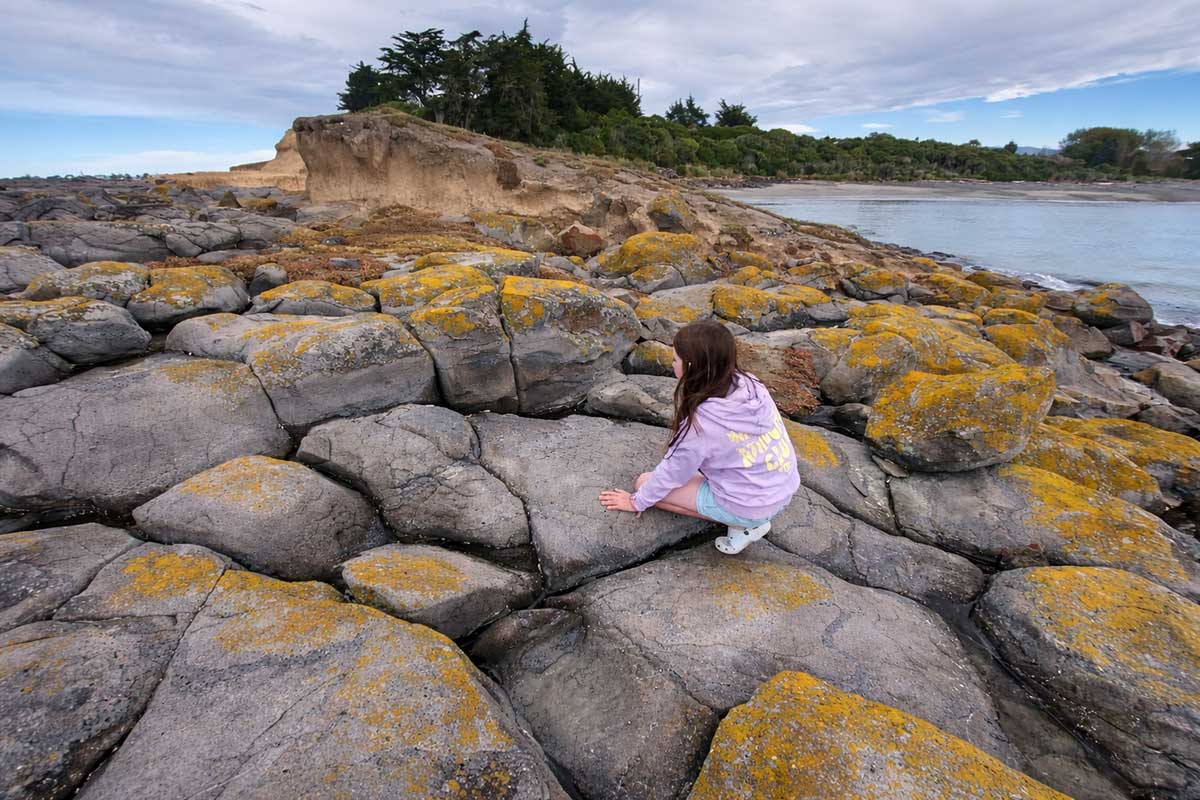
One of our favourite spots for a free fun adventure. You can walk out onto the reef at low tide to explore the rock pools. These can be covered by the sea, so make sure you get your timing right. Photo By Roselyn Fauth 2026

I am the 6th generation of my family to call Timaru and South Canterbury region home. Center: My fathers grandmothers parents. Right: My fathers mothers parents. My mother is dutch and immigrated in 1980s to work as a nurse at the Timaru Public Hospital. So while I have deep generational roots here in Timaru, I also am half Dutch, living here in a culturally blended family.
After Nancy flew home to write her report, a photographer was booked for The Wall Street Journal. So there we were, Kelly and I, having a professional photo shoot together. I now have 51 photos of us, which are lovely, but also hilarious. It is not often you get that with one of your closest friends! I have no idea what to do with these images, so I'll stick them here in this blog for you!
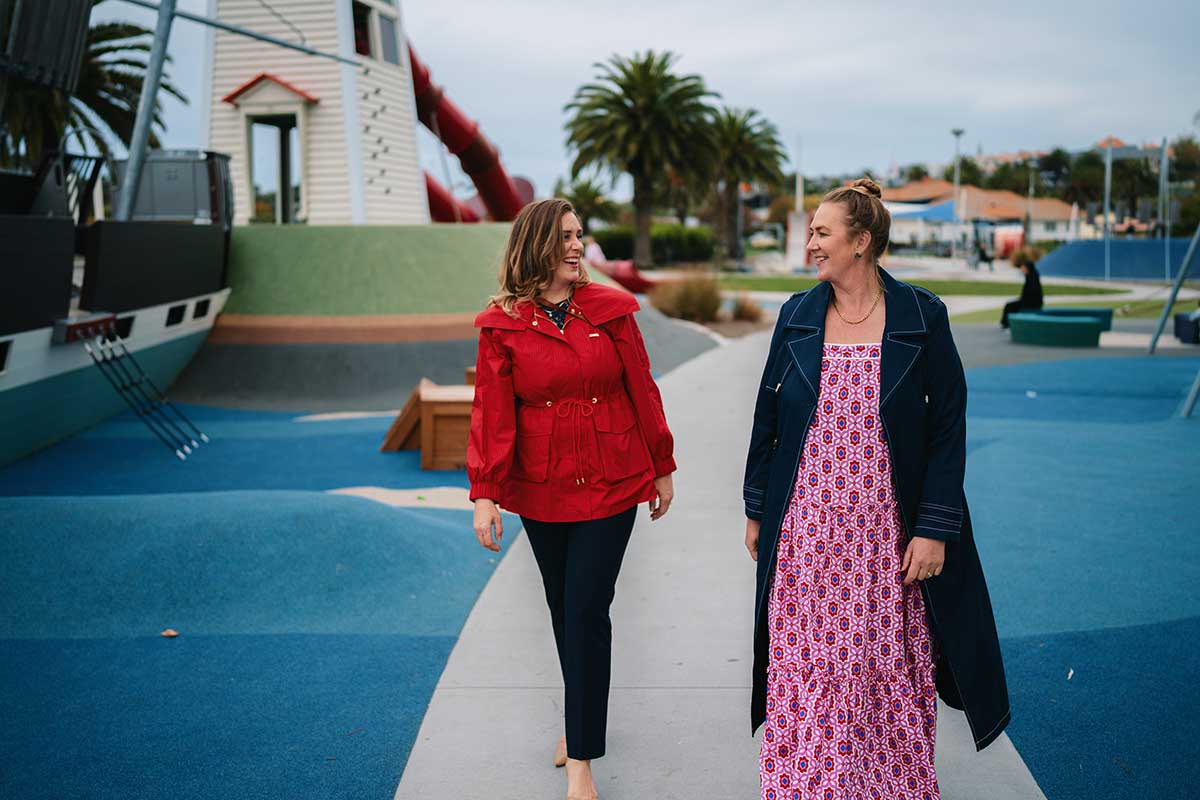
Photography by Kevin Fedde for WSJ Dr Kelly Sweerus and Roselyn Fauth - one of the 51 photos taken for a photoshoot for the Wall St Journal in America
When the article was published, the story rippled back home. Rachael Comer wrote about the article in an article for The Timaru Herald,. Then Radio New Zealand came down, and then Hayden Jones from Seven Sharp arrived to film people who have chosen to move to Timaru. Many are connected through the hospital. Some gather most weeks for dinner, helping each other settle into Kiwi life. What began as support for newcomers has become friendship, family, laughter and community.
Looking around the room, I thought: these people could have chosen to live anywhere. And they chose Timaru.
They may have come for work, but they found something more... Friendship. Community. A place to raise their children, volunteer, join in, and belong.
This is so critical for Timaru. Like many regional places, we need doctors, skilled workers, families, volunteers, teachers, carers, business owners and community-minded people to keep choosing us. But attracting people is not just about jobs. It is about whether people can imagine a life here and feel welcomed into it, and come not for what they can consume, but for what they can be part of.
We were chatting in the car on our way home from the interview, and Kelly told me...
“It is hard to describe Timaru to Americans as there isn’t really anything like it in the United States. Timaru has a great sense of community. With all of the activities, clubs and events we are busier here than we ever were in Seattle. It is a joy to live here.”
"The media attention feels a bit uncomfortable, I want the spotlight to be on the community and how wonderful it is. And I'm acutely aware that the hospital staffing isn't optimal, so I think a lot about the people who are waiting to be seen. I hope they know that their referrals are important and we are working hard to recruit additional staff and to get them the care that they deserve."

Dr Kelly Sweerus at her desk in the Timaru Public Hospital. Photography by Roselyn Fauth
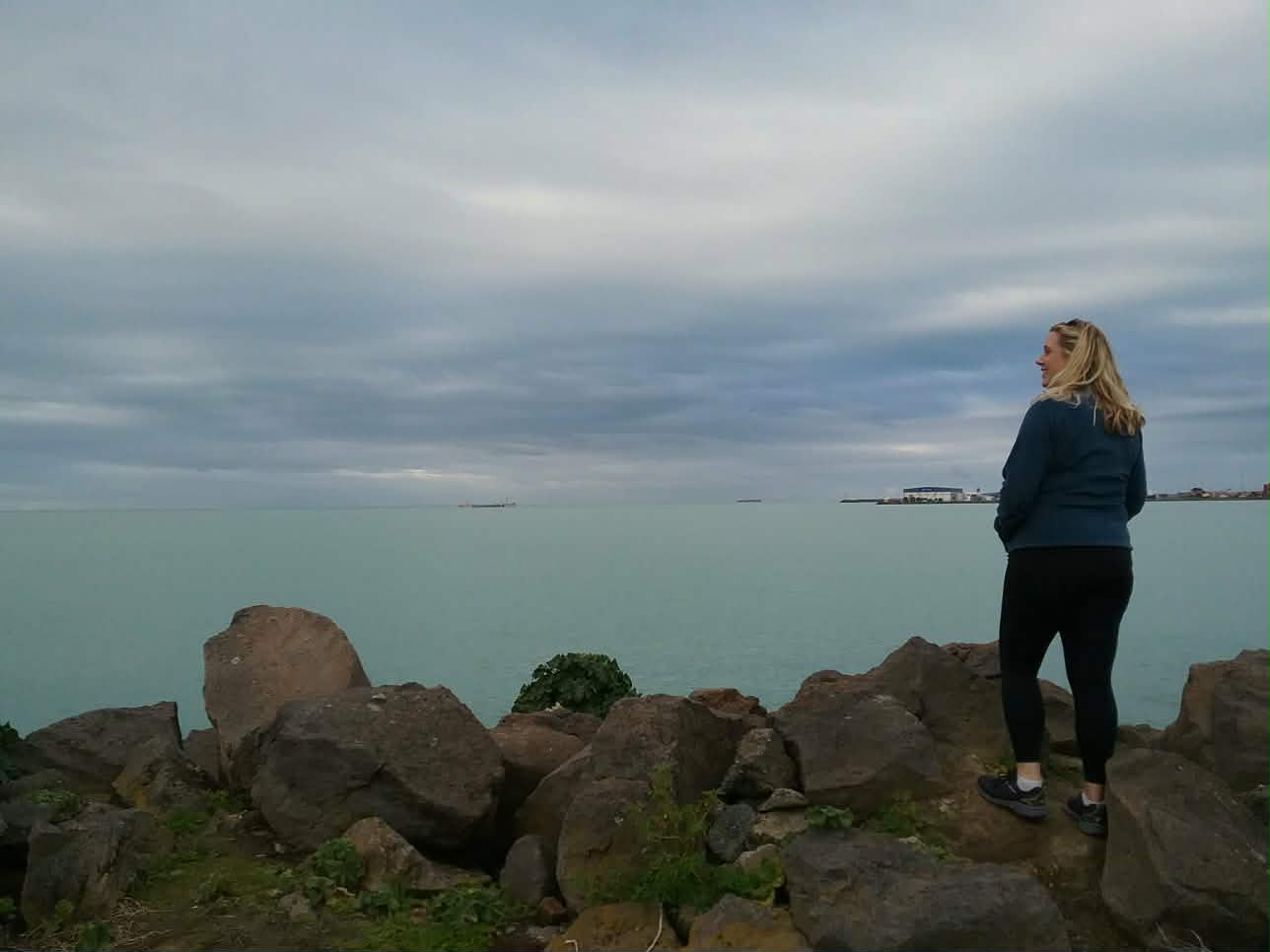
Dr Kelly Sweerus looks out to the pacific ocean on her first day in Timaru.
Timaru is more diverse than many might realise. More than 70 cultural and ethnic groups are now part of the district, and newcomers from around the world help shape its workplaces, schools, neighbourhoods and community life.
Timaru has always been shaped by people. Ngāi Tahu are mana whenua here, and this coastline has long been a place of movement, food gathering, connection and exchange. Later came sealers, whalers, farmers, landing service crews, port workers, manufacturers, teachers, doctors, families and volunteers. So when I say Timaru is practical and productive, I do not just mean now. It is part of a much longer story...
For locals, we are not trying to be somwhere else like Auckland, Christchurch or Queenstown. And while no place will be truely perfect, one of the most rewarding things about living here is that if you want to make a ripple of impact, you can.
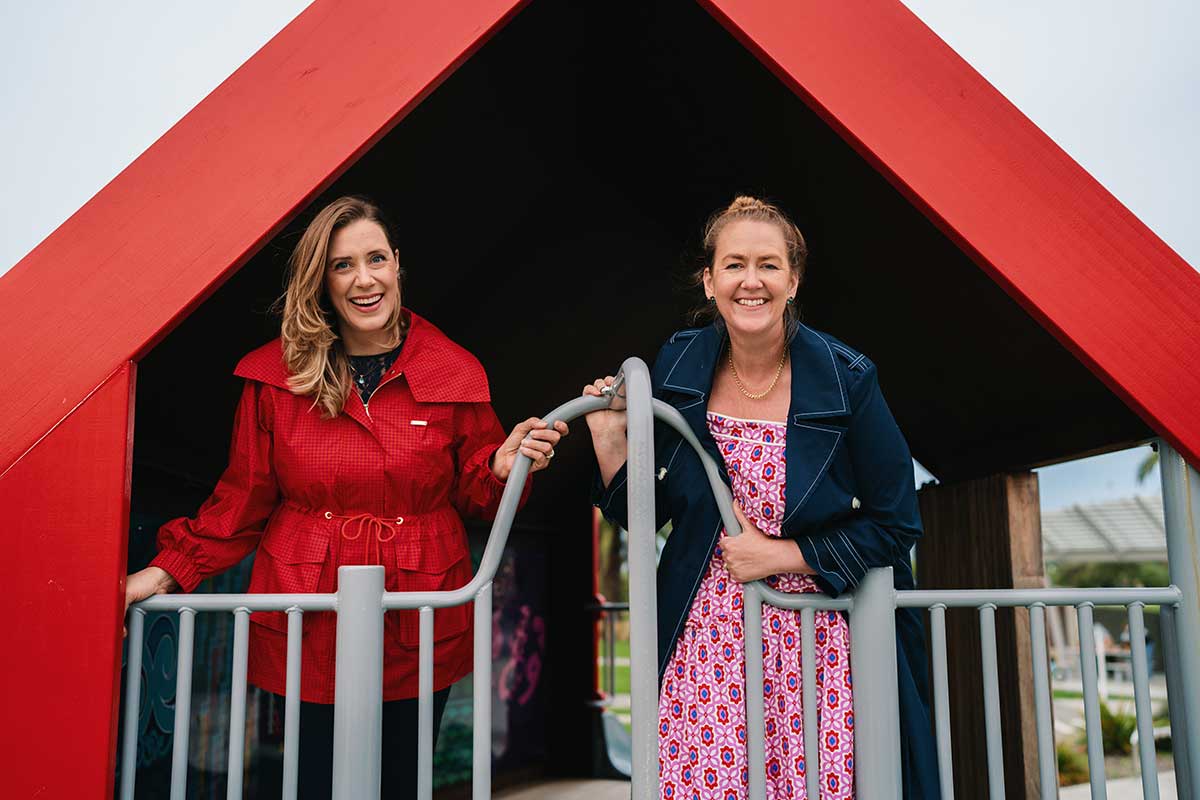
Photography by Kevin Fedde for WSJ - Dr Kelly Sweerus and Roselyn Fauth at South Canterbury's epic playground CPlay at Caroline Bay.
I often say that Timaru can be what you make of it. The more you give to this place, the more it gives back. Not always in money or consuming, but in friendship, purpose, identity, making memory, developing skills and belonging. And, if you are willing to join in, Timaru are more than welcome you to our little city - the "Rivea of the South", Timaru, South Canterbury, New Zealand

Me as a kid in the 1980s, playing on the seesaw at Caroline Bay, my childhood neighbourhood and still one of the places that shaped my love for Timaru.
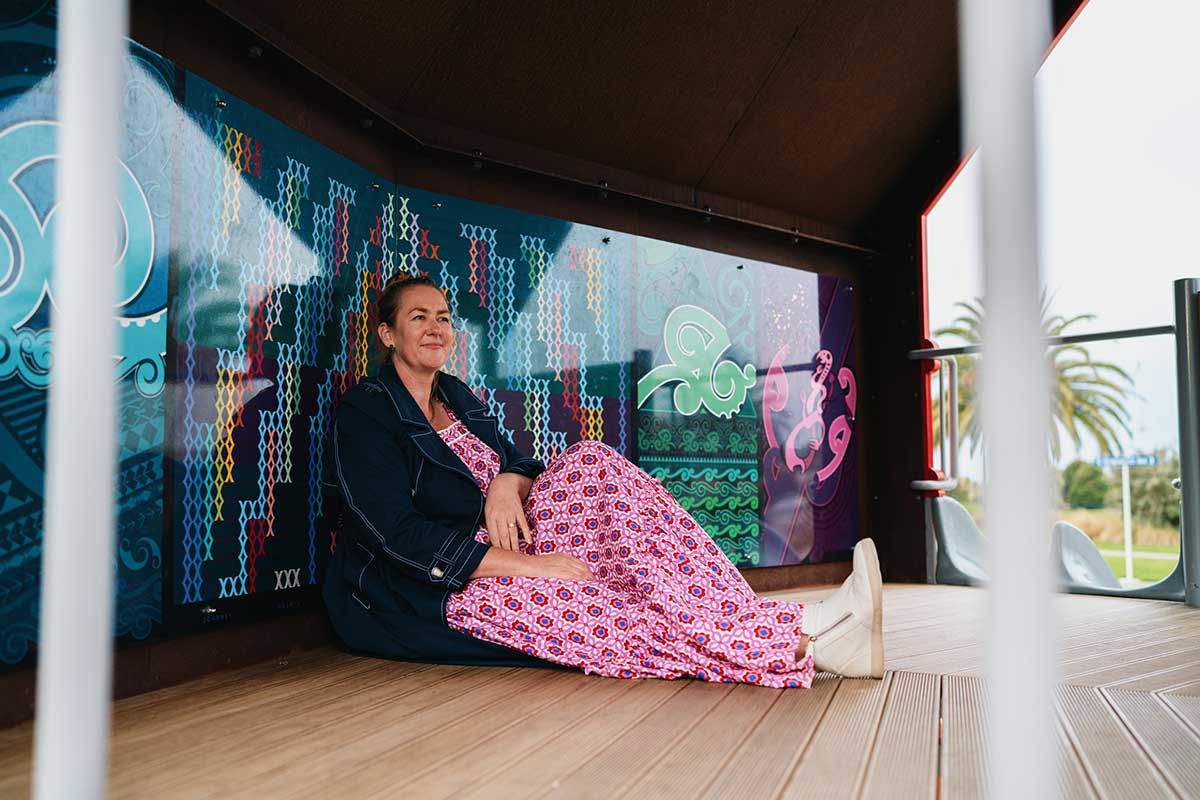
Me, Roselyn Fauth, at the new playground a few laters later, as a mum raising my kids here with my husband Chris. Photography by Kevin Fedde for WSJ. the mural in the whare that was designed by architect John Rushton, has an artwork inside that was a collaboration by Francine Spencer and Roselyn Fauth.

After the photoshoot with feddestudio - Kevin Fedde for WSJ. Photo By Roselyn Fauth 2026
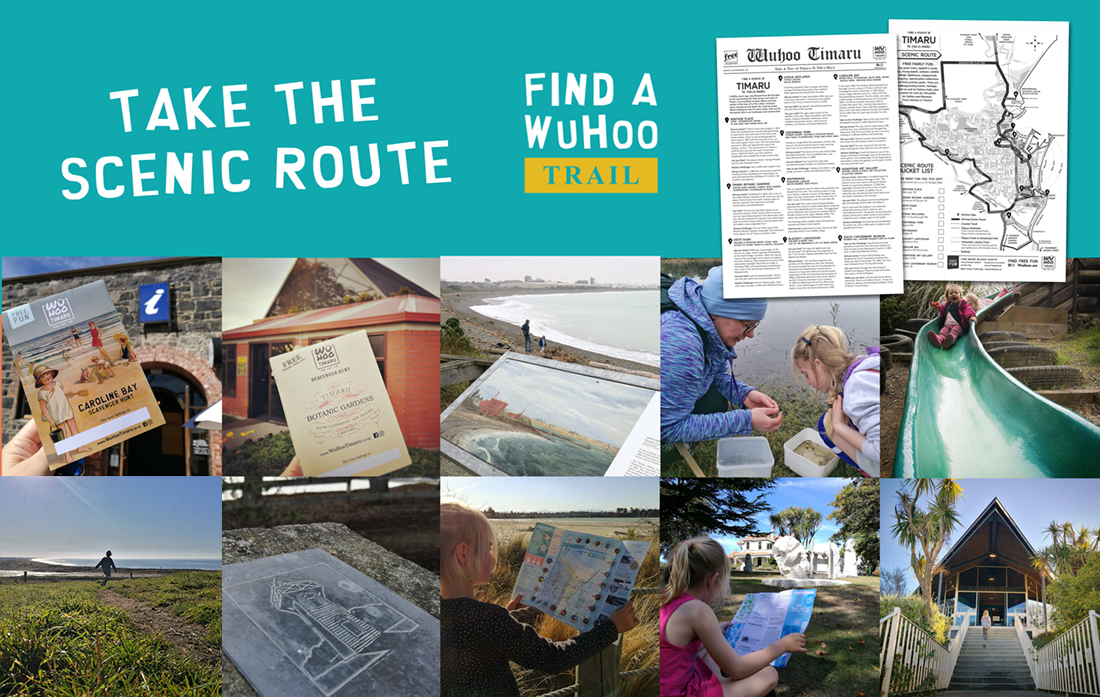
Looking for free fun? Check out our Timaru Scenic Route for some inspiration https://www.wuhootimaru.co.nz/timaru-scenic-route
A lovely Timaru Herald article by Rachael Comer shares the story behind the international attention, including how Wall Street Journal journalist Nancy Keates came to visit Timaru, meet American doctors who have made South Canterbury home, and discover a little of what makes our place so special. CPlay even got a mention, after I had the pleasure of showing Nancy around the playground and sharing how it came together through community effort. It is a great reminder that the things we sometimes take for granted, our people, places, lifestyle, creativity and care for community, can look pretty extraordinary from the outside. CPlay was also a pleasant surprise, she said. “Rose Fauth gave me a tour and explained how it came together as a community effort.’’ She was also taken by the Aigantighe Art Gallery which “has beautiful art, and the garden in back is lovely”. “And, the Oxford salad at The Oxford was unexpectedly delicious.’’
Read the full Timaru Herald article here: https://www.thepress.co.nz/nz-news/360992752/how-did-timaru-end-front-wall-street-journal
Timaru Herald / Rachael Comer / April 28, 2026
Timaru has found itself in the international spotlight again. A story by Rachael Comer in The Post looks at how our town came to be featured by The Wall Street Journal, following a wave of interest in American doctors who have chosen Timaru as their new home. What I love about this story is that it is not just about healthcare or headlines. It is about what people notice when they arrive here: community, welcome, connection, family life, the pace of the place, and the many small things that make Timaru feel like home. It also says something about the value of investing in our public spaces, local stories, arts, hospitality, and community projects. These are the things that help people belong.
Read the full article here https://www.pressreader.com/new-zealand/the-post-1022/20260425/281715506209335
Otago Dailiy Times / Star News / Rachael Comer 25 April 2026
Why are American doctors choosing Timaru? RNZ has shared a fascinating story about how our South Canterbury town has become home for a growing number of American medical professionals looking for a different way of life. It is more than a feel-good Timaru moment. The article also opens up a bigger conversation about healthcare, work-life balance, recruitment, belonging, and what makes a place feel like home. There is something quite special about seeing Timaru through the eyes of people who have chosen to build a life here. Read the full RNZ article here: https://www.rnz.co.nz/news/health/593950/why-american-doctors-are-flocking-to-timaru
RNZ / Keiller MacDuff 1 May 2026
Timaru’s moment in the international spotlight has opened up a bigger conversation. This RNZ story looks beyond the headline of American doctors moving to South Canterbury and explores something much wider: New Zealand’s strong reliance on overseas-trained medical professionals, especially in regional areas. It raises important questions about what helps people not just arrive, but stay. Welcome matters. So does practical support, cultural understanding, good induction, community connection, and a health system that helps doctors feel they can do meaningful work. South Canterbury stands out in this story because so many of our doctors have trained overseas, bringing different experiences, perspectives, and skills to local healthcare. It is a reminder that when people choose Timaru, they are not only choosing a job. They are choosing schools, neighbourhoods, friendships, culture, landscape, family life, and a place to belong.
Read the full RNZ story here: https://www.rnz.co.nz/news/health/593950/why-american-doctors-are-flocking-to-timaru
Star News / Keiller MacDuff 1 May 2026
https://www.wsj.com/real-estate/luxury-homes/timaru-new-zealand-american-doctors-eca3fe8d
https://www.thepress.co.nz/nz-news/360992752/how-did-timaru-end-front-wall-street-journal
https://www.pressreader.com/new-zealand/the-post-1022/20260425/281715506209335
https://www.msn.com/en-us/health/general/the-doctors-leaving-america-for-new-zealand/ar-AA21EINN
https://newsroom.co.nz/2026/05/07/the-immigrant-doctors-giving-new-zealand-life/
Discover why Timaru is attracting international attention
Thinking about why Timaru has suddenly appeared on the radar for American doctors? These links help explain both sides of the story: why South Canterbury is appealing, and how overseas health workers can explore the practical steps toward working in New Zealand.
Explore Health New Zealand’s international recruitment information
For doctors, nurses, midwives, allied health workers and other health professionals curious about working in New Zealand, this is the official place to begin.
https://www.healthnz.govt.nz/careers/international
Find practical information for international candidates
This page explains recruitment, immigration and relocation support for overseas health workers considering a move to New Zealand.
https://www.healthnz.govt.nz/careers/working-health-new-zealand/international-candidates
Search current health jobs in New Zealand
Anyone ready to look at real opportunities can search current Health New Zealand vacancies across clinical, frontline, support and corporate roles.
https://www.healthnz.govt.nz/careers
Check registration pathways for overseas-trained doctors
Doctors trained overseas need to understand which Medical Council of New Zealand registration pathway applies before they can practise here.
https://www.mcnz.org.nz/registration/getting-registered/registration-pathways/
Prepare your documents for verification
Overseas-trained doctors may need primary source verification of their qualifications, so this is an important practical step to check early.
https://www.mcnz.org.nz/registration/getting-registered/how-to-register/primary-source-verification-of-qualifications-epic/
Start your New Zealand moving checklist
Use NZ Ready from Immigration New Zealand to create a personalised checklist before you move. It is a good first step for working through visas, documents, family needs, pets, money, housing and the practical things that are easy to forget when planning an international move. Put visas first on your checklist. The advice is to work out whether you are eligible, what pathway suits your situation, and whether you need a job offer or sponsor before you move. Americans cannot move to New Zealand to live and work without the right visa. You can use using Immigration New Zealand’s tools to narrow the options.
https://www.immigration.govt.nz/nz-ready/
This is such a big task, so I don't recommend that you just “wing it”. You will read lots of advice on how to relocate to Timaru. Once you have your plan sorted for your Visa, then choose a moving date, work backwards, and list the big tasks: visas, flights, short-term accommodation, job hunting, selling or storing belongings, banking, transport and arrival plans. NZ Ready is useful because it creates a personalised checklist and asks about work, visas, family, children and pets.
Plan where you could live and work This Immigration New Zealand page helps people think beyond the dream and do the research. Use it to compare regions, understand what life in New Zealand is like, check visa options, prepare for job hunting and think carefully about where your family could settle well.
https://www.immigration.govt.nz/live/moving-to-new-zealand/planning-your-move-to-new-zealand/
Prepare for everyday life in New Zealand This is useful once the move starts to feel real. New Zealand is pretty far from the United States. Visiting family back home can be expensive and time-consuming, so people need to think about distance, homesickness, flights, holidays and family expectations.

Caroline Bay - Photography by Feede Studios
There are lots of websites that offer settlement information, local support, community services and practical help for adjusting to a new country. It is especially helpful for families who need to think about schools, work, housing and local connections. There are plenty of online guides that will warn people that moving to New Zealand is expensive. People should plan for flights, freight or shipping, temporary accommodation, rental bond, furniture, a car, and living costs while settling in. New Zealand costs are often thought about weekly, especially rent and wages.
I have heard lots of foreigners who have moved here say, that New Zealand homes may feel colder or less centrally heated than many international homes. Pack warm layers, bring a rain jacket, understand the climate (we can have four seasons in one day with a snap change when a Southerly wind changes. Be ready for a different approach to heating and indoor comfort.
You only need to bring essential and sentimental items. If something can easily be bought in New Zealand, it may be cheaper and simpler to buy it after arrival rather than ship it across the world. Please support local retailers and shop local, it means a lot to us all.
In Timaru, I recommend booking short-term accommodation before arriving, then looking for a more permanent home once you are in the country and can understand the neighbourhoods better.
New arrivals should organise a New Zealand bank account, local SIM card or phone plan, and an IRD number for tax. These are early practical steps that help people settle and get paid.
Public transport can be limited outside the main centres, so a car may be necessary. Americans can drive initially on a US licence, but need to understand left-side driving, roundabouts and licence conversion rules. In Timaru we have a MyWay system. You book via an app, and a small bus will arrive around 15-25 mins to the block where you are on demand, and then drop you to your destination about a block away. Students use school buses on reguarly routes.
Get ready for our kiwi slang, pronunciation, spelling and everyday phrases such as “jandals”, “togs”, “dairy”, “bach”, “sweet as” and “she’ll be right”. I am a bit crook, means we are unwell. I have a problem with my waterworks, is us referring to our urine. I'm a box of birds, or fluffy ducks, means we are going really well. A "mainer" is driving for no reason on the main street just for fun. A mufti cop, is a police person in a unmarked car. They have sirens and lights and can carry out police work, including speeding infringements. We also have traffic cameras that will snap speeders number plates and post out fines. Stick to the speed limit please.
If you cross a pedestrian crossing and people stop for you, give them an acknowledgment to say thank you. If you cross a one way bridge and people give way to you, raise your finger at the steering wheel to say thank you.
If you are on the main street, smile to everyone who goes by, we like to be friendly, especially our retailers, they are awesome. Please avoid shopping online, and support our local retailers.
New Zealand is physically a large country, and while generally speaking we are a kiwi culture, you will find that each region is generally different in their own way. Christchurch was settled as an English Anglican colony. Dunedin was settled as a Scottish colony. The Westcoast colonisation chapter was started with whalers, miners, forestry and fishermen.
If you arrive at my house and I don't offer you something to drink, or stay standing, it means I didn't expect your visit and I don't have a lot of time to welcome you in and stop for a few hours. I think our older generation are probably okay with unexpected drop-ins, but younger generations like myself prefer a heads up. Sunday is usually my family day, and we prefer to keep the day clear to have meaningful time together. Saturday is usually sport day.
We use Facebook a lot. Sending a txt with a photo costs money, where as Facebook is free. We also use WhatsApp, but I would say many of us use Facebook messenger to keep in touch.
Don't be alarmed if we ask for your bank account. This is how we pay each other back. Online, direct from our banking apps. We prefer not to use a middle man app taking a cut for our transactions.
Our tax is automatically managed by the IRD. For people on wages, you don't really need to do much, if you over pay, you get a notification and then a refund into your bank account. If you make a donation to a registered charity, you upload the receipt into the MyIRD website and the next day (if eligible) you get 33.33% back into your bank account. Making donations to worthy causes makes a big difference to local communities.
We don't really tip people. The price at a restaurant is the price. But if you like to tip, there's usually a jar on the counter.
We don't really use cash. But we have parking meters in town that take coins to pay for your space. There is an app you can use to pay for parking too. Most of our parking in our central business district is provided by our council, and if you don't pay for your park they can fine you.
And get ready for the "kiwi goodbye". I joke.. but it is an actual thing. Many of us like to draw out a goodbye. Usually we say, well I guess we better get moving. Then we talk about what we have planned for the week, ask about your plans. Thank them for having us, get up and collect bags, coats etc... then at the front door, we talk about the weather outside and what the forecast is. Then we all walk to the car, and carry on a random conversation. Then we get in the car, wind the windows down, and talk through the car window with the car running, usually giving a compliment.. and then about 40mins after we intiailly said we were ready to go, we say this was great, we will see you soon, and we leave. Well... that is how my family say goodbye anyway! When I lived in Holland, people said, how late is it, right we better go, thank you... and then they leave! Totally different, which took me some adjusting to for sure!
Ask for local settlement help Migrant Connect, through Citizens Advice Bureau, offers free and confidential support for people settling in New Zealand. This is a helpful link for newcomers who need human help with forms, employment questions, tenancy, legal rights, family support or simply knowing who to ask.
https://new.cab.org.nz/find-a-cab/migrant-connect
Get support as an international candidate This Health New Zealand page is for people who are getting more serious about applying. It explains support with recruitment, immigration and relocation, which can make a big difference when someone is weighing up a major move with their family.
https://www.healthnz.govt.nz/careers/working-health-new-zealand/international-candidates
Search current health jobs Once someone is ready to look at real opportunities, this is where they can search Health New Zealand vacancies. It is worth checking regularly, and also thinking beyond the job title to the region, lifestyle, schools, community and long-term fit.
https://www.healthnz.govt.nz/careers
Check medical registration pathways Overseas-trained doctors need to check which Medical Council registration pathway applies to them before they can practise in New Zealand. This is one of the most important practical steps, so it is worth looking at early, before making big decisions.
https://www.mcnz.org.nz/registration/getting-registered/registration-pathways/
Prepare your documents early Doctors with overseas qualifications may need primary source verification of key documents. This can take time, so it is wise to start checking requirements early rather than leaving paperwork until the end of the process.
https://www.mcnz.org.nz/registration/getting-registered/how-to-register/primary-source-verification-of-qualifications-epic/
Take the next step - We welcome you to...
If Timaru has made you curious, start with the story, then follow the official links. Look at the jobs, check the registration pathway, build your moving checklist, and talk to people who understand the practical side of settling in New Zealand.
Learn from Americans already living Kiwi life
Before making a big move, it helps to hear from people who have already done it. These insider-style resources offer practical, human advice on the everyday side of moving to New Zealand: how to settle in, what feels different, what to prepare for, and how to find community once you arrive. Always check visa, medical registration and employment details against official New Zealand sources.
Connect with Americans who understand the move Kiwiamericans is a useful insider-style guide for Americans curious about New Zealand life. It includes moving resources, travel guides, videos and practical advice from an American who has already made the move. It is especially helpful for people wondering about everyday things such as work-life balance, healthcare, travel, food, phones, tipping, settling in and what life actually feels like after arrival. Use it alongside official immigration and registration websites, not instead of them.
https://www.kiwiamericans.com/
Join an American community in New Zealand The American Women’s Club in Auckland describes itself as a social club celebrating American traditions while enjoying the Kiwi lifestyle. It says members meet for social events and that the club can be a good resource for settling into a new country. This would be useful for people who want human connection, not just paperwork.
https://awcauckland.com/
Read a long-term American expat perspective Albom Adventures has a helpful personal post from an American expat reflecting on the early surprises of moving to New Zealand and how those feelings changed after many years. It is useful because it covers the small everyday adjustments that official sites often miss.
https://www.albomadventures.com/expat-in-new-zealand/
Explore a personal moving guide by an American The Nomad Almanac has a step-by-step guide written from an American perspective, covering visa choices, timelines, budgeting, downsizing, flights, housing, banking, driving rules and Kiwi slang. It does include affiliate links, so I would treat it as personal advice rather than an official authority.
https://thenomadalmanac.com/move-to-new-zealand-american/