
By Roselyn Fauth

We weren’t planning to stop in Woodbury... we had actually planned to go to a vehicle Museum, but when we arrived, the gate said, "closed, private function"... so we pulled out of the drive and headed up to Waihi Gorge for some sun and a paddle by the DOC camp.
We were on our way home... 4 peaceful kids and Chris and I, an empty picnic bag, damp towels in the back, and the assumption that the day had already given us what it was going to give. The plan was simple. Drive home. Drop friends off. Get changed. BBQ Dinner...
As we passed through the village, we pointed out the cafe to our left, then looked to the right... my husband pointed out a small building and said, “Oh look, one of those blue plaques.”... Then he looked at me and laughed.... “You’re going to want to turn around now, aren’t you?”
I said well... na, yeah... I said I’d just grab a quick photo for the Civic Trust and then we’d carry on. Chris gave me a look... I know that expression well... he knows me well... he knows my cheeky side quest face... My genuine "na yeah no... " he knew was optimistic... I genuinely believed I could restrain my curiosity. Chris did give a small sigh, and when we turned around, we noticed an "open" sign... I guess we should pull over properly, he said... (I thought, I have definitely married the right man).

The Library holds information about women embedded in the foundational pastoral families of the district, they were people who understood land, labour, isolation, and responsibility from the inside. The status that the blue plaque brings to this building explains how it is significant nationally to understanding our past people and place through built heritage. Eleanor Tripp grew up while Woodbury was still known as Waihi Bush, when sawmills, schools, and churches were appearing almost simultaneously, and nothing yet ran smoothly without voluntary effort.
We pulled over, the six of us got out, and I thought, well, we may as well have a quick exploration... the start of the side quest...
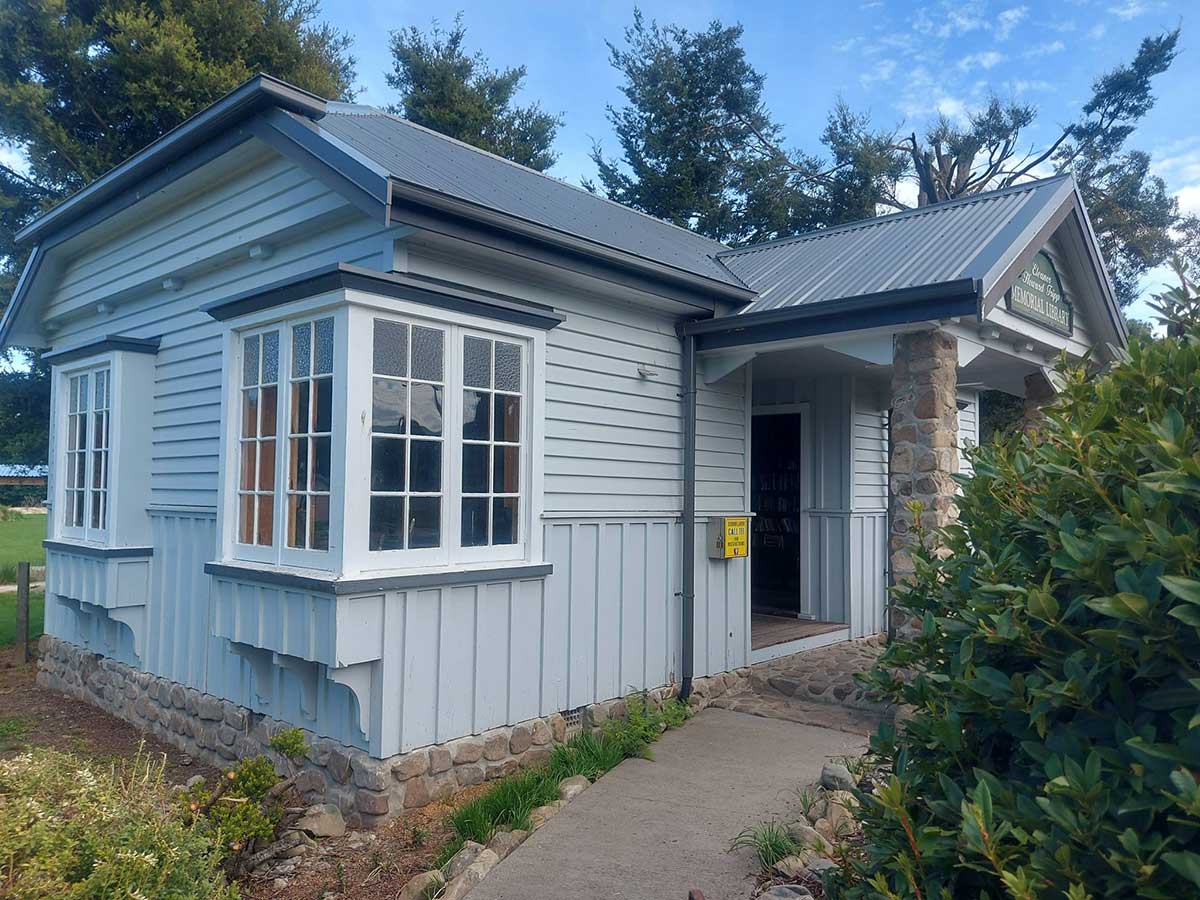
The Eleanor Howard Tripp Memorial Library sits on the corner of Woodbury Road and McKeown Road, over the road from Woodbury’s cafe, beside the school, and behind the war memorial.
It’s small. Quite cute and modest, really. But it has a quaint little confidence that some small buildings have, that suggests it’s been doing its job for a long time and isn’t particularly interested in impressing anyone, but just wants to be well presented and useful.
If you have time, read this amazing book online: https://paperspast.natlib.govt.nz/books/ALMA1929-9917502903502836-My-early-days

The reason it exists is simple... When Eleanor Howard Tripp died in January 1936, the community decided to remember her not with a statue or a plaque, but something practical, something that mattered to her, to create an impact in the village and wider area with a working library.
They raised the money themselves, through local effort and fundraising, and named it for her deliberately. It says a lot about both Eleanor and the place she lived in.
From the outside, the building is Arts and Crafts in style. A small rectangular footprint. A half-hipped roof. A gabled entrance porch supported by stone pillars, with her name set into the gable above. Board and batten walls below, weatherboards above. Casement windows and two bay windows that give the building just enough presence to hold its corner.
What really anchors it, though, is the stone. Local rocks smoothed into rounds by the rivers water are everywhere, underfoot, in the low surrounding walls, and in the way the library visually answers the war memorial in front of it. It feels grounded, literally and otherwise.
It doesn’t shout. It doesn’t need to.
Inside, it becomes something else again...
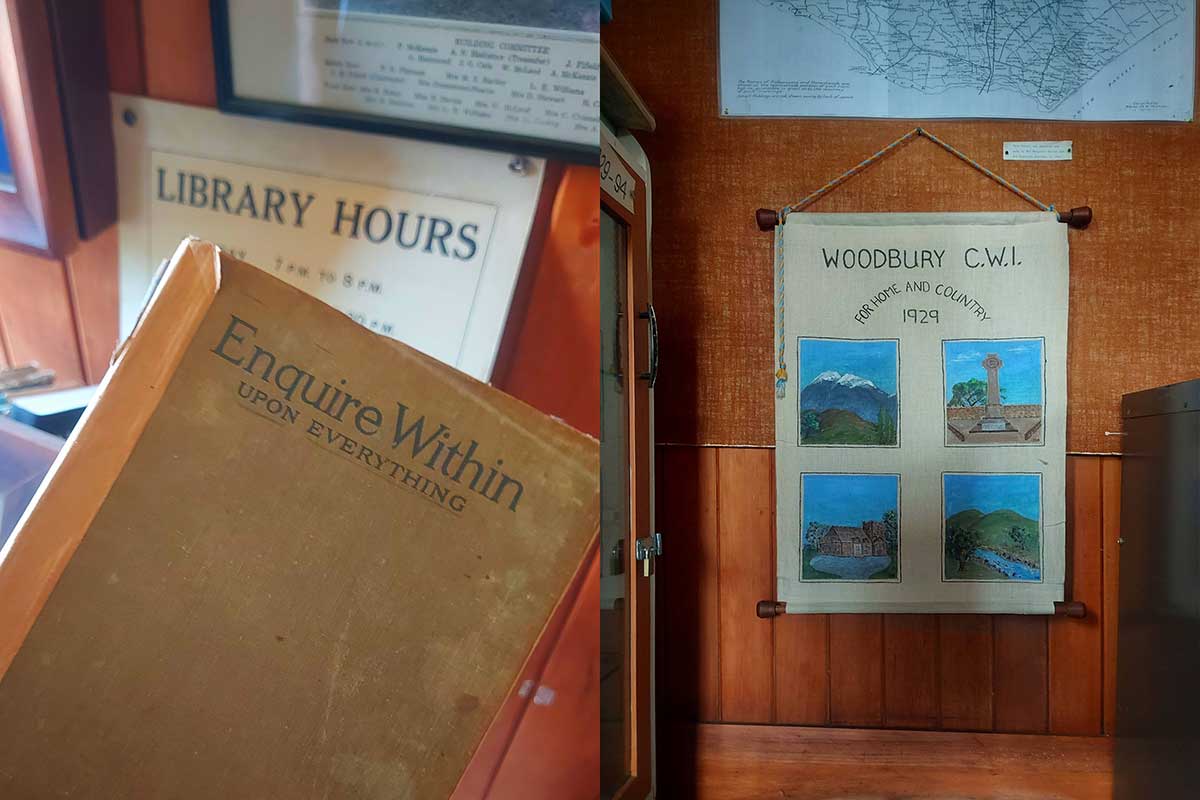
By this point my husband, our two girls, and a couple of their friends had all drifted in as well. The kids loved it straight away. While I found myself completely absorbed in a book explaining, in great detail, everything you needed to know to run a household in the 1930s, they spread themselves out in the sun with armfuls of books, and reading quietly on the porch and the lawn.
It felt so right. A memorial library still being used as a library. No ceremony. No instructions. Just us... exploring and reading.
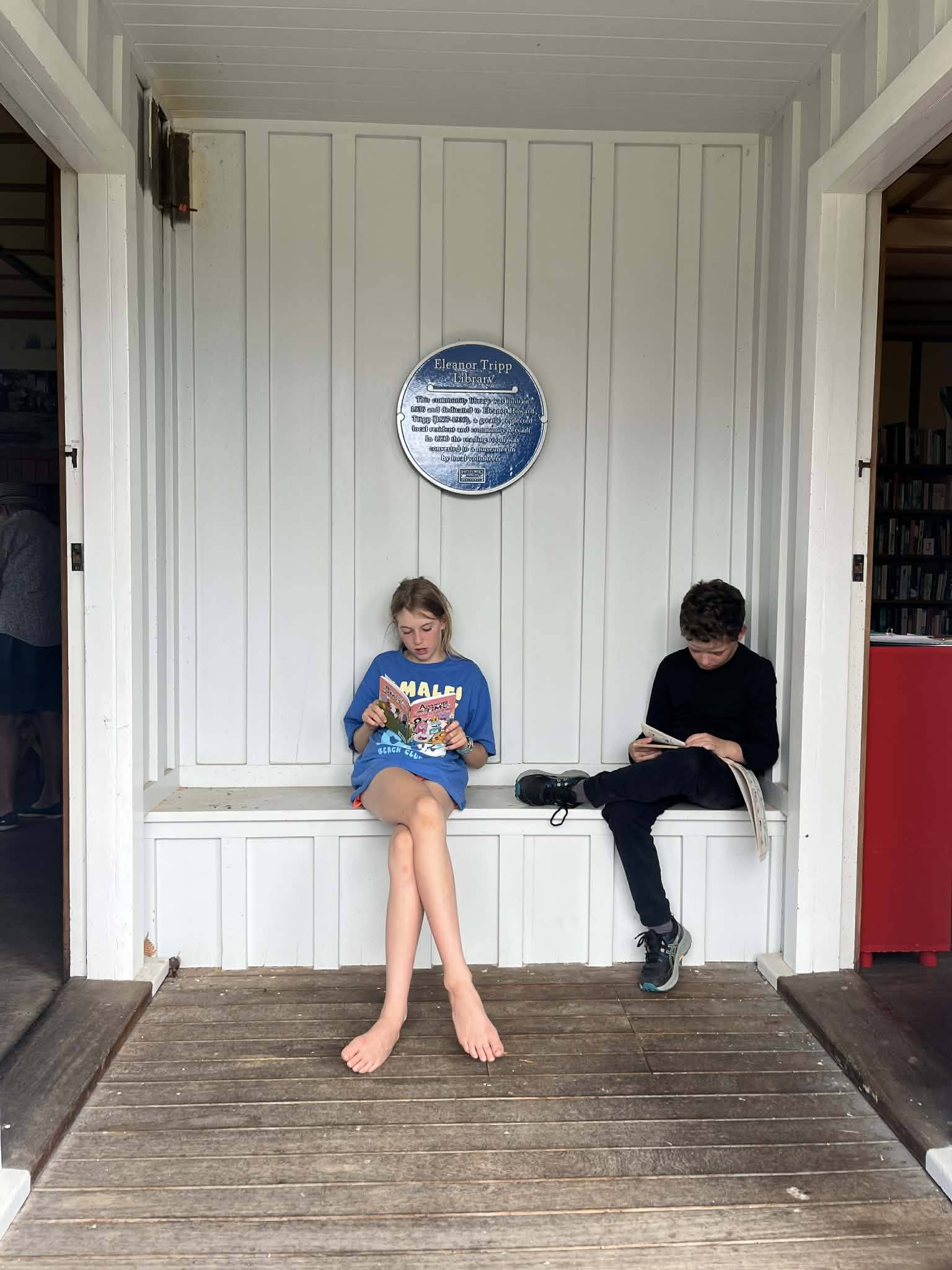
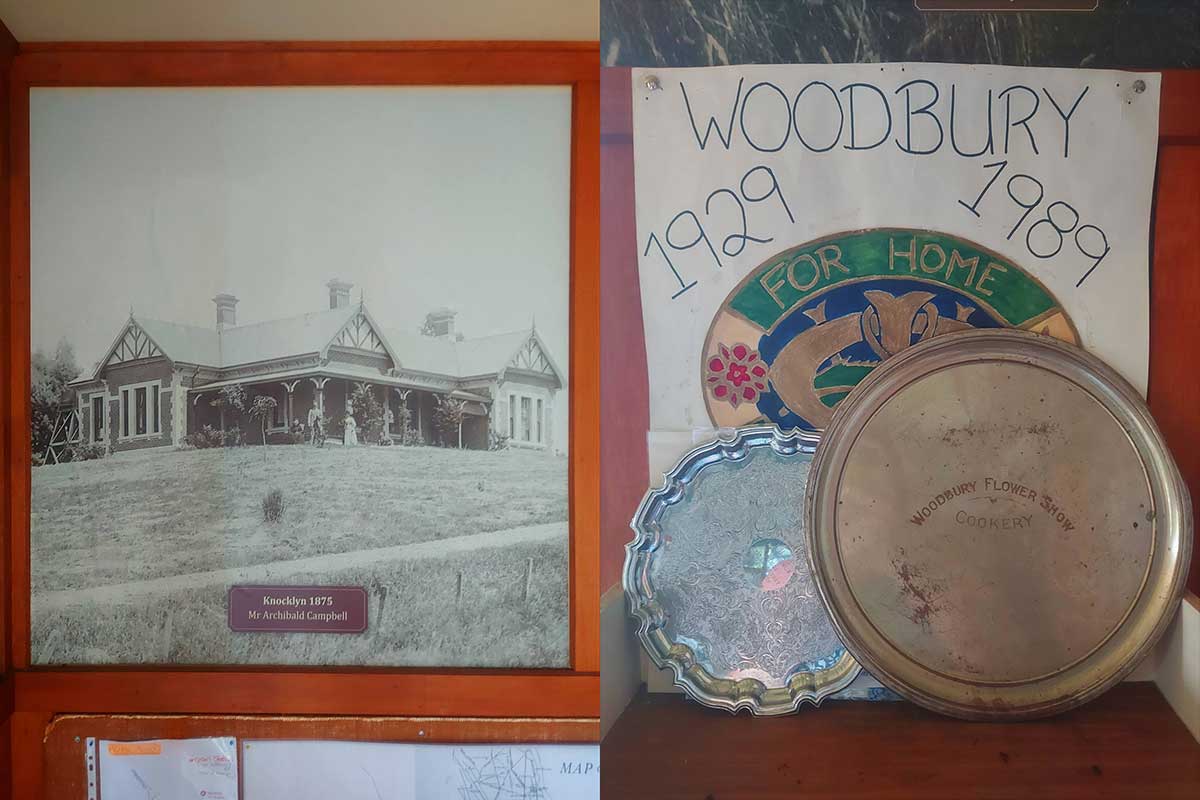
On one side of the buildings entrance is the library to the right. On the left is a small history room with all kinds of treasures, trophy's artwork, photo's, books, and a timeline, carefully put together. This is not a state of the art musuem. It's not flashy or overworked, but clearly done by people who care about getting things right.

(I hope those who care for the building see this, I think you are all doing a wonderful task).
From their history information I learned that Woodbury began as Waihi Bush.
In the 1850s the land was taken up as Raukapuka Station. By the 1860s pit sawyers were working the bush. In 1866 Taylor and Flatman arrived, setting up a sawmill and a store at a place called The Warren. Fires burned for weeks. Sawmills shifted. A school opened in a house in 1872, then properly the following year. A hotel opened in 1874, hosted a ball, and closed again in 1898. Land was set aside early for a Domain.
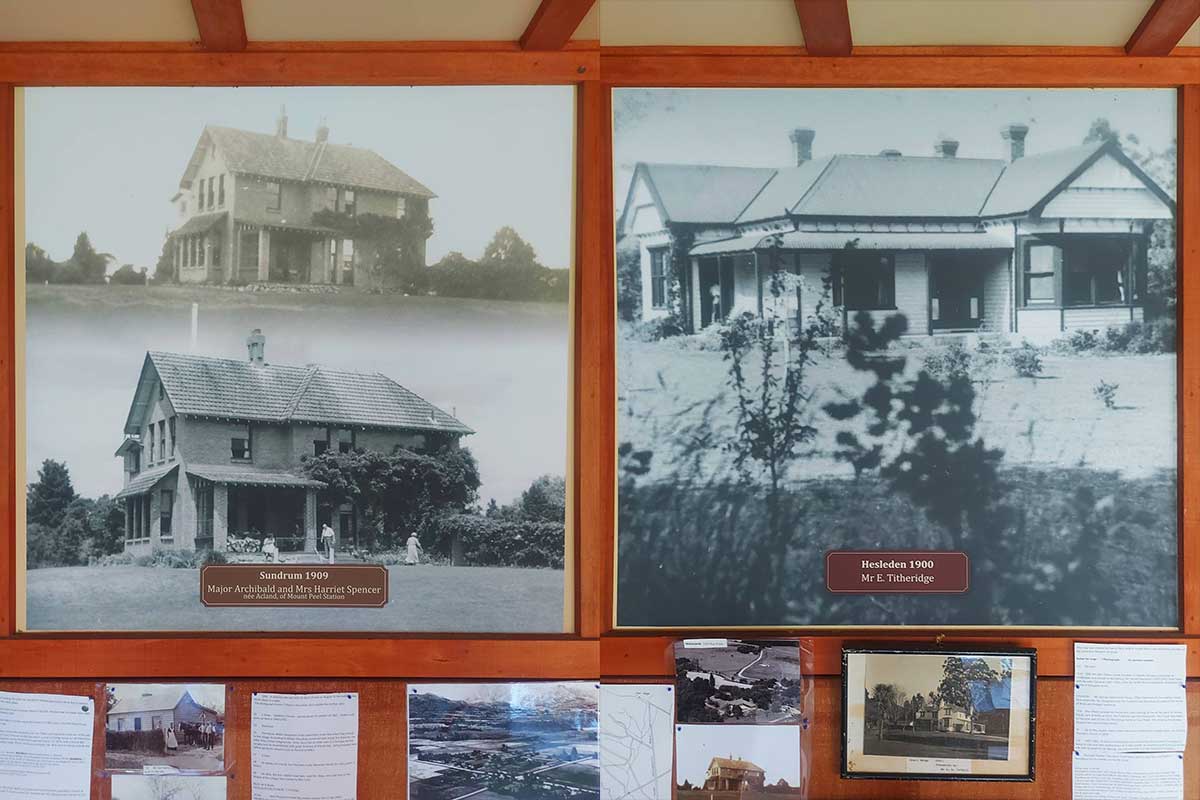
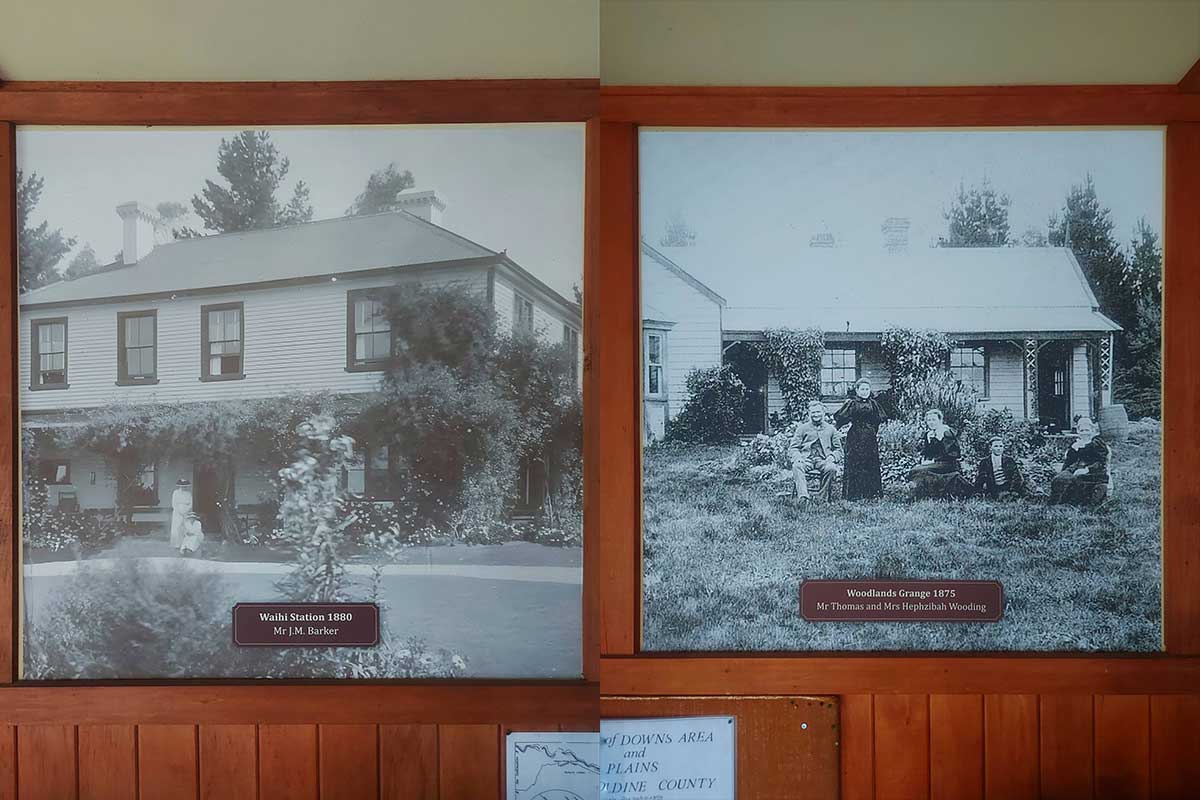
The same names keep appearing. Taylor. Flatman. Barker. Wooding. Donkin... and Tripp.
The Tripp family story helps make sense of the library. I have been to their Christmas Lilly open garden days and explored their stunning chapel and cemetery.
Eleanor’s father, Charles George Tripp, was one of the early pastoral runholders in South Canterbury, associated with Orari Gorge Station, which remained in family hands for generations. But the family’s influence in Woodbury wasn’t just agricultural. They were closely involved in local institutions, particularly St Thomas’s Anglican Church, first opened in 1878 and later rebuilt in 1938 as a memorial to Eleanor’s parents.
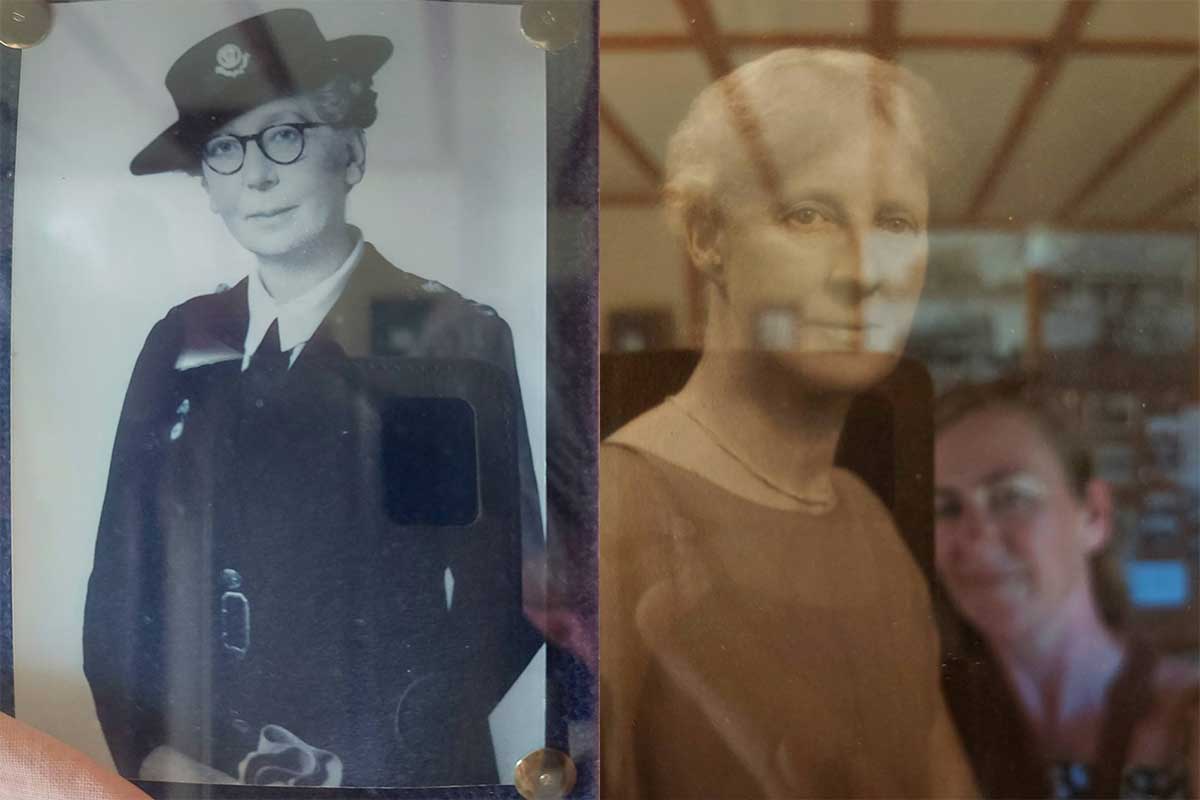
Eleanor herself wasn’t remembered because she was wealthy or prominent in a public sense. She was remembered because she was useful, she cared, she was a villager who got stuck in to support her community. She was involved with the church, supported education, founded the Woodbury Women’s Institute, helped run a lending library from Orari Gorge Station, and served as a committee member for the local orphanage. She organised. She shared. She showed up. I wish I could share a pot of tea and get to know her, hear her stories, and what life was like for her here growing up.
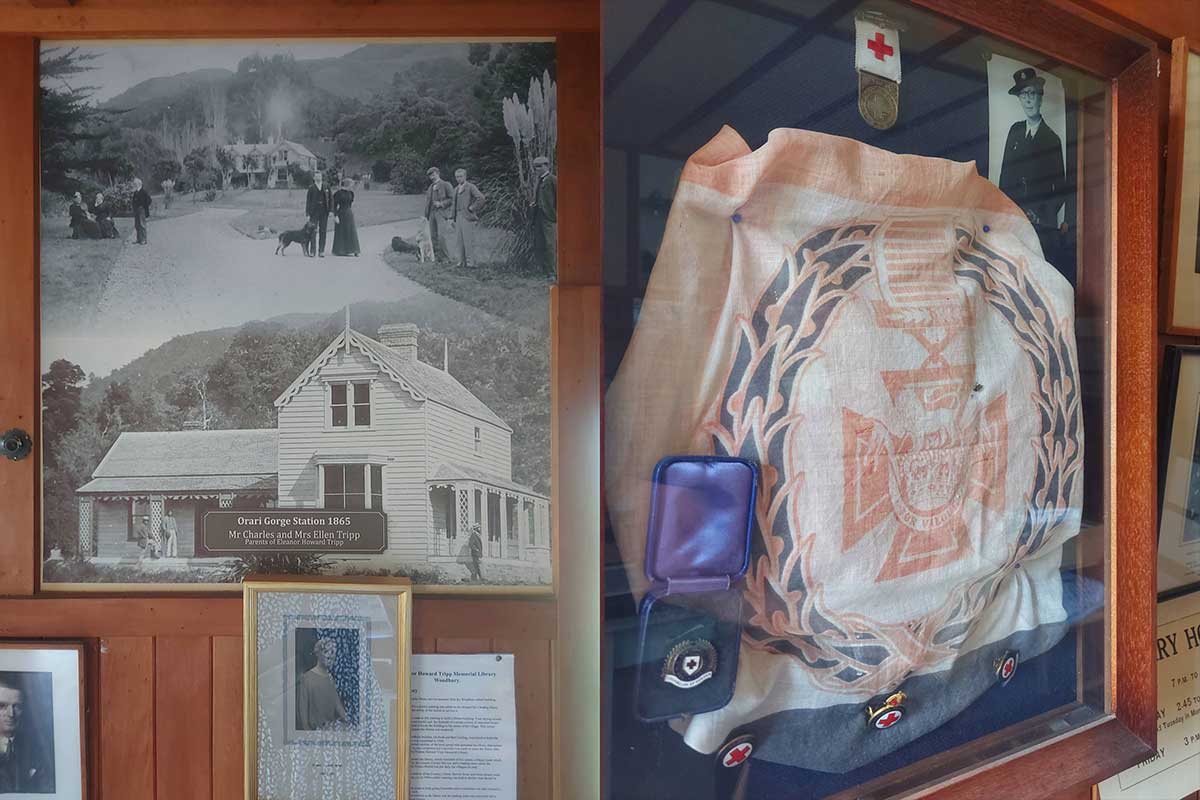
Long before this building existed, books were already circulating. First through informal lending, then through a small library housed at the school. The memorial library formalised something that was already happening.
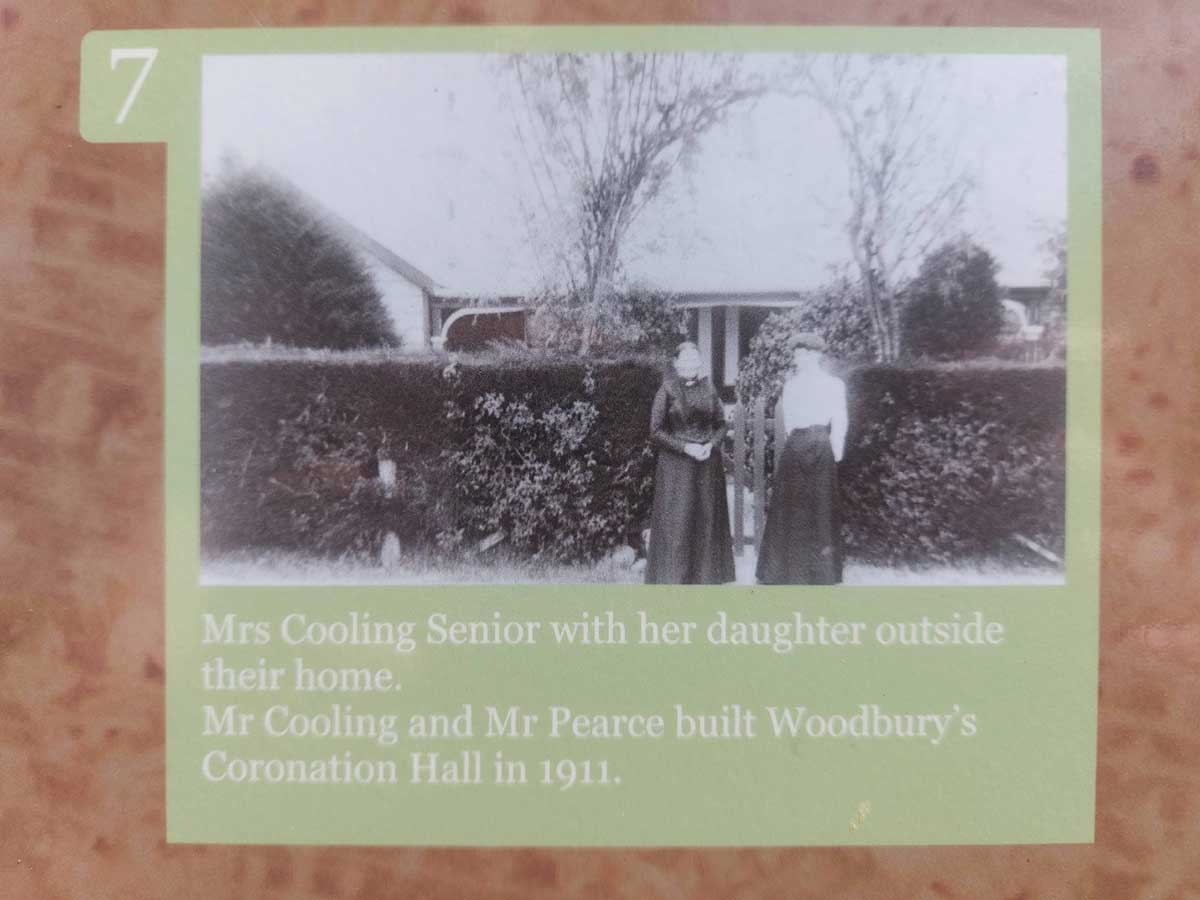
When Eleanor died, the community acted quickly. Within the year, a purpose-built library was opened in her name, designed and built by local contractor Herbert Cooling using local materials. It became one of only a handful of buildings in New Zealand erected to honour an individual woman, and at the time only the second to do so.
That’s an extraordinary decision for a small rural community I think.
Out front stands the Woodbury War Memorial, unveiled in 1922. It lists names and ranks, something that was officially discouraged at the time, but clearly mattered locally. Around it sit the school, the Coronation Hall, and the church. Together they form a small civic cluster. Learning. Memory. Gathering.
The timeline inside doesn’t try to tell every story. It can’t. What it largely reflects is the colonial history of the place, because that’s what was recorded, preserved, and passed on through institutions like schools and churches.
This land, of course, sits within Ngāi Tahu rohe, and that deeper history isn’t fully present here. Noticing that absence matters too. It reminds you that history doesn’t just happen. It’s chosen, shaped, and maintained.
Standing there, it became obvious that places like this only survive because people keep choosing them.
If you want to be in a village, you have to be a villager.
And that turns out to be less about where you live and more about what you’re willing to do.
It looks like Eleanor organising meetings and sharing books when no formal system existed. It looks like a community fundraising to build a library instead of commissioning a monument. It looks like builders using local stone, and people maintaining the space carefully over decades. And it looks like adapting, again, when the rural library service closed and people chose to turn part of the building into a history room rather than letting it fade.
Villager-ness, I realised, isn’t a label. It’s an ongoing action.
The signage outside the library at the gate is a wonderful invitation. It slows you down. I read that Waihi Gorge turns out to have been a campsite for single men after the First World War and during the Depression. There was a tōtara tree so large it had to be quartered in a pit stops being an abstract idea and becomes imaginable. And, this might be my fun fact of the day... that The Woodbury school bell once belonged to the Isabella Ridley, shipwrecked off Timaru in 1877!
By then, we were all in the same state. Calm. Unhurried.
Feeling peaceful. The kids were still reading. No one was asking how long we’d be.
Our family and friends had embraced the side quest. It was a good call to turn around and top and a great way to end the day.
We eventually gathered ourselves up and followed the highway back to Timaru, carrying more with us than we’d planned to find. I photographed what feels like a million pages from a 1930s fascinating book which will no doubt form a future blog.
Woodbury had done what small places often do, if you let them. It had rewarded stopping.
So if you ever notice a blue plaque out of the corner of your eye and feel the urge to keep driving, consider this permission to turn around.
Some of the best stories aren’t hidden... they are there, on the roadside, waiting for you to slow down and do more than take a photo of its plaque.

Author’s note (Roselyn Fauth)
I write these blogs because places often tell you more than you expect, if you give them a bit of time.
They’re not about getting stuck in the past. They’re about using it. To notice how communities have cared for one another. To remember that learning, curiosity, and recreation don’t always need to cost anything. And to be grateful for the people who built and maintain the spaces we still get to enjoy.
This visit was also a reminder that history doesn’t look after itself. The library, its collections, and its signage reflect the ongoing work of people who continue to care for this place. To those who do, thank you. You’ve done it so well. What a special Wuhoo to find this Waitangi Long Weekend.
If this piece makes you slow down, take a detour, or look twice at something small and unassuming, then it’s done exactly what I hoped it would. Thank you for following us, and reading my long blogs... if you got to the bottom, please enjoy an imaginary chocolate fish x
Sources and acknowledgements:
This blog draws on a combination of on-site interpretation, published heritage records, and local historical writing.
Historical details about the Eleanor Howard Tripp Memorial Library and the Woodbury War Memorial are informed by:
On-site signage and timeline at the Eleanor Howard Tripp Memorial Library, Woodbury
Timaru District Council Historic Heritage Item Record Form
Woodbury War Memorial & Eleanor Howard Tripp Memorial Library (Doc #1304579)
Timaru Civic Trust heritage interpretation and Blue Plaque programme
Walton, Mark. “Our Kiwi Home: Woodbury’s hidden history”, The Press, January 6, 2024
https://www.timarucivictrust.co.nz/blog/memorial-library-a-fitting-tribute
https://www.timarucivictrust.co.nz/blog/a-follow-up-on-the-woodbury-library
https://aorakiheritage.recollect.co.nz/nodes/view/3808?keywords=Eleanor+Tripp&type=all&highlights=WyJlbGVhbm9yIiwidHJpcHAsIiwidHJpcHAiXQ%3D%3D
https://www.pressreader.com/new-zealand/the-timaru-herald/20200307/281865825525088
chrome-extension://efaidnbmnnnibpcajpcglclefindmkaj/https://www.timaru.govt.nz/__data/assets/pdf_file/0009/673830/Historic-Heritage-Assessment-Report-HHI7-Woodbury-War-Memorial-and-Eleanor-Howard-Tripp-Memorial-Library-Category-A-NEW.pdf
https://www.pressreader.com/new-zealand/the-timaru-herald/20230324/281479280661695
WOODBURY https://paperspast.natlib.govt.nz/newspapers/THD19370727.2.9
Timaru Herald, Volume CXLIII, Issue 20790, 27 July 1937, Page 3
TRIPP MEMORIAL LIBRARY
There was a small attendance of members at the first annual meeting of the Eleanor Howard Tripp Memorial Library held in St. Thomas’s Sunday Schoolroom.
The annual report, presented by the secretary, Mr A. N. Blakiston, disclosed a very satisfactory year’s working. It stated that “In October the building committee (having completed the new library) authorised this committee to move into the new premises which were thereupon made available to members. On December 5 the library was formally opened as a memorial to the late Miss E. H. Tripp by Mr T. D. Burnett, M.P., and since then the reading room has been open daily (except on Sundays and public holidays) to the general public.” Since the opening the library interest has grown, and the committee has made every endeavour to increase the membership which has more than doubled, there being now 79 members as against 37 a year ago, and subscriptions have increased from £9/13/- to £19/7/3. New books added to the shelves during the year totalled 164—118 of which were given and 46 purchased. There are now on the shelves 1664 books and borrowings amounted to 3,748 in the year, an average of 47 books a member.
Thanks were expressed to the building committee and all those who had assisted in providing the district with the fine library, and to the many who had given books, periodicals, furniture, shrubs, etc., and to the librarians and others who had gratuitously given their time and energy in looking after the books, hiring and caretaking during the year, and to Mrs Brown honorary auditor. The committee also thanked all members for their loyal co-operation.
The balance-sheet showed a very satisfactory financial position and it was decided to set aside half the funds from the gymkhana towards a maintenance fund, the nucleus of which had been the balance left from the building fund.
Before vacating the chair, the president thanked the committee, and especially the secretary, Mr Blakiston, for their loyal support and co-operation during the year.
The election of officers resulted as follows:—President, Mrs Chishall; secretary-treasurer, Mr A. N. Blakiston; assistant treasurer, Mrs Brunton; committee, Mesdames Baker, Stewart and H. Cooling, Messrs O. Scott, J. Pollill, J. Shaw and K. Quaid.
Supper was provided by the ladies of the committee.
WOODBURY. https://paperspast.natlib.govt.nz/newspapers/THD19300218.2.15
Timaru Herald, Volume CXXV, Issue 18496, 18 February 1930, Page 3
At the monthly meeting of the Woodbury Women’s Institute, Mrs L. E. Williams presided over an attendance of sixty ladies.
A letter was received from Mrs Burdon, who is leaving this England, wishing the Institute a very successful year.
The following were elected members:—Mrs W. Scott and Miss Ruth Barker.
Mrs J. S. Barker read a letter defining the position in regard to the punishment of lads convicted of failure to attend military drill, and it was decided that a discussion be held on the subject at a future date, and that the letter be forwarded to the National Council of Women.
Mrs Williams then introduced Mr Riches, who gave a most interesting and instructive address on “The League of Nations.” Mr Riches stated that the object of the League was the establishment of universal peace, and that such a peace can only be established if it is based on social justice. Fifty-six States had signed the Treaty of Versailles, the only ones which had not signed being Russia, Turkey, Mexico, and the United States of America. Mr Riches explained that one of the most powerful weapons of the League was publicity, giving as an instance the following:—A traveller in Persia reported to the League having seen children of from 4 to 6 years of age working daily for 12 hours helping in the manufacture of carpets. A letter was sent to the Government, and in a short time a reply was received stating that the conditions had been greatly improved. In countries under the jurisdiction of the League the condition of the workers was much more favourable than in others. For example hours of labour in these countries are 48 hours a week, while in U.S.A. they are 60 per week. New Zealand was sending three delegates to the next conference at Geneva, one representing the Government, one the employers, and one the workers. Mr Riches gave some information about the National Labour organisation which is the department of the League to which he is attached.
A hearty vote of thanks to Mr Riches was proposed by Mrs J. M. H. Tripp, seconded by Miss Tripp, and carried by acclamation.
Mrs Irwin, Orari, gave a splendid demonstration on netting, and was accorded a very hearty vote of thanks.
It was decided that the committee of the Institute for the ensuing year consist of 15 members.
As Miss Tripp and Miss Blakiston are leaving shortly for England, Mrs Day was appointed to take charge of the Magazine in Miss Tripp’s place, and Mrs Chishnall the competitions in Miss Blakiston’s.
A roll call, “The Noise I Detest Most,” caused a great deal of amusement.
The hostesses were Mesdames Stoneyer, L. E. Williams, Rice and Miss N. Lysaght.
This piece also reflects observations made during a visit to the site. Any reflections or interpretations are my own. Any errors or omissions are unintentional and remain my responsibility.
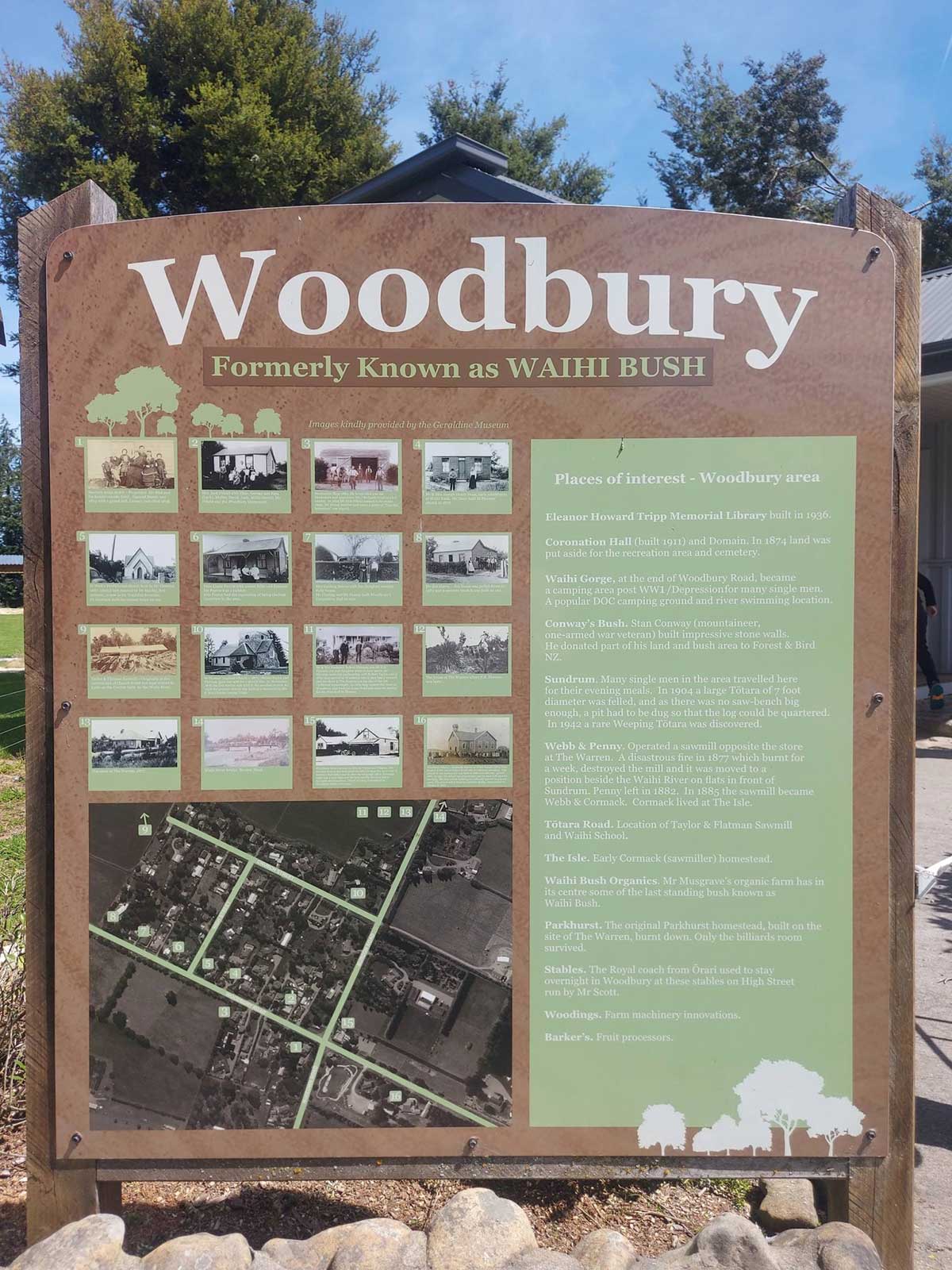
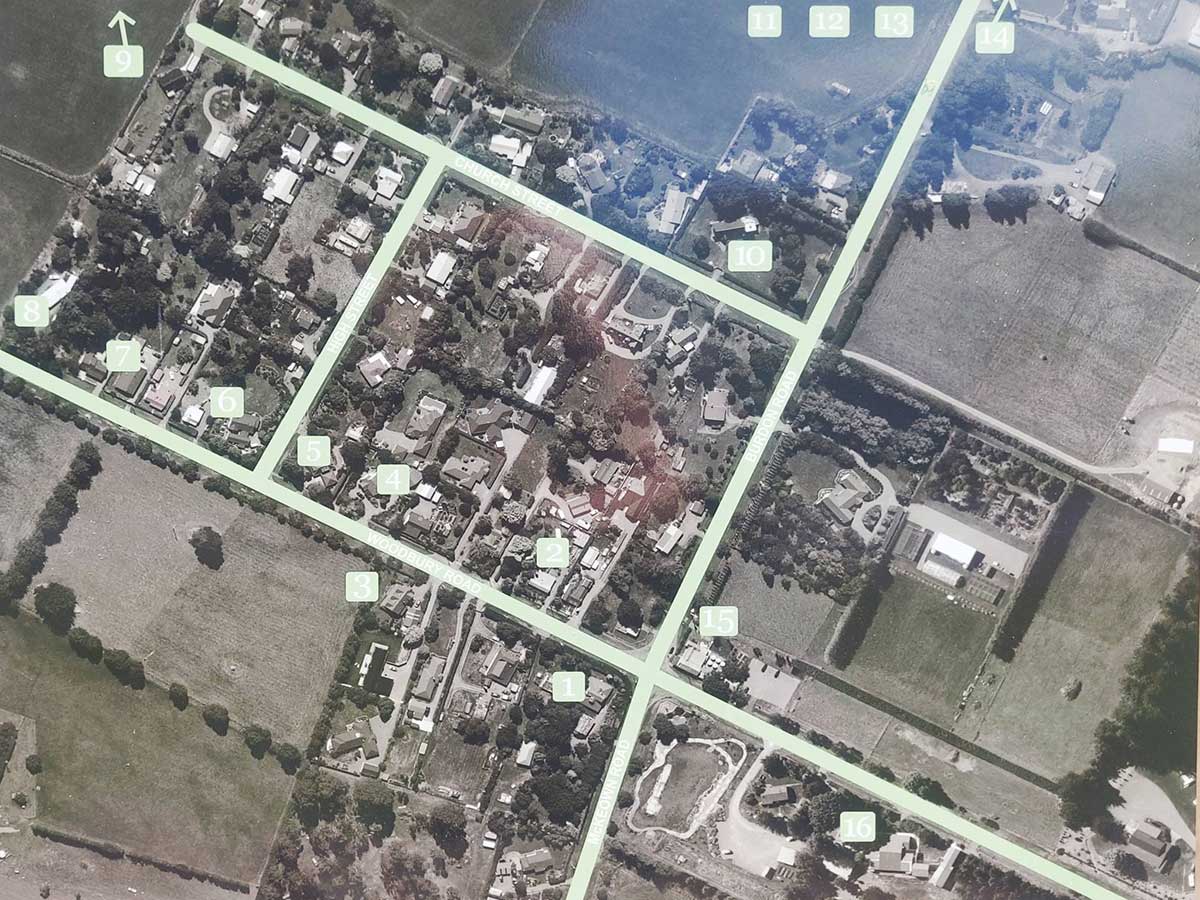
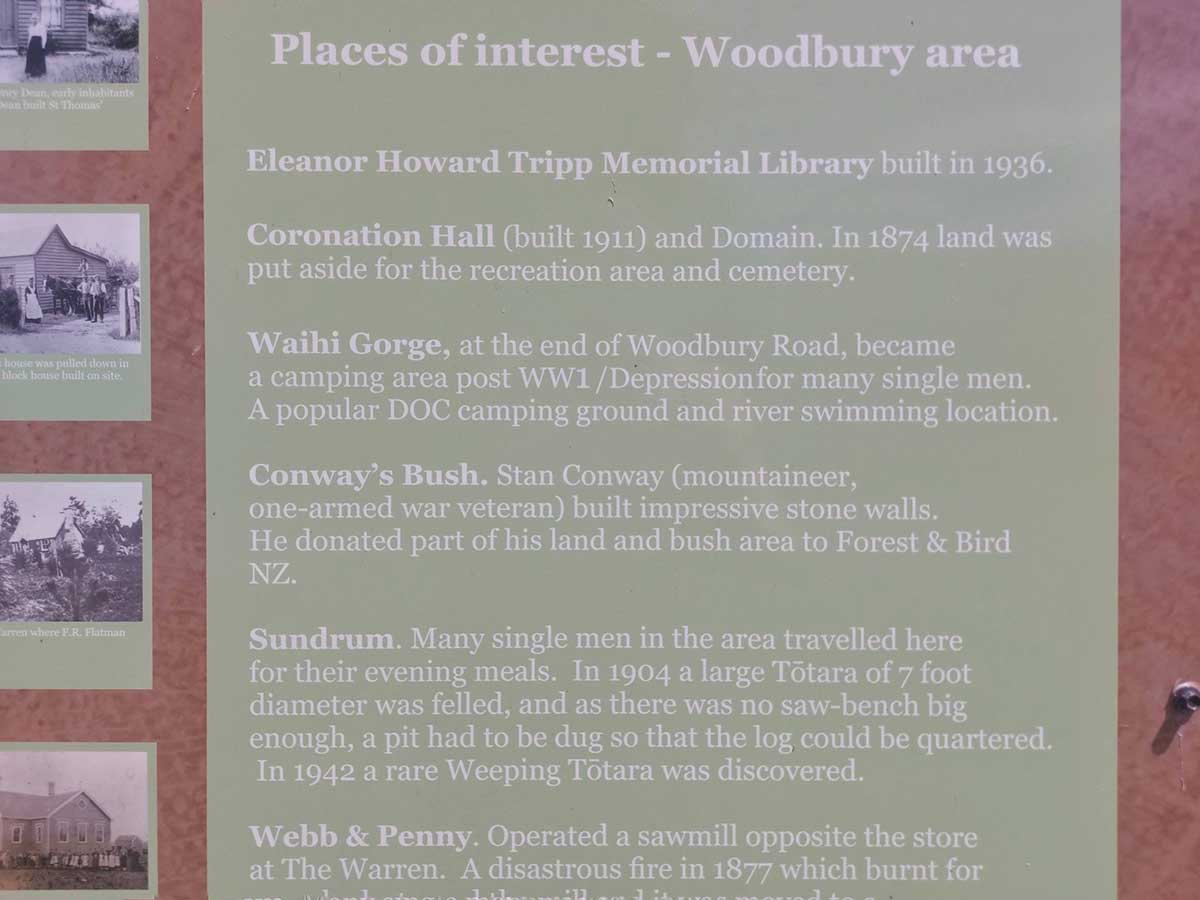

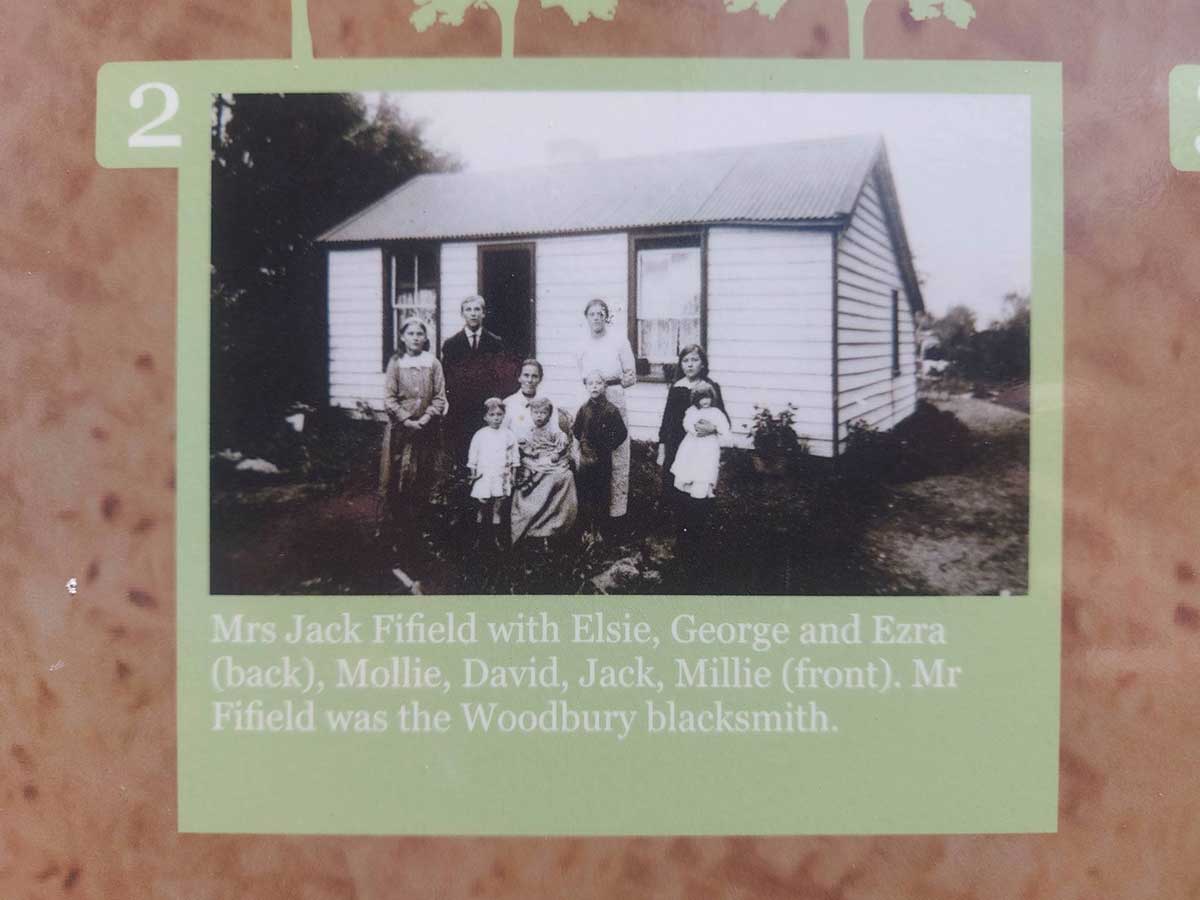
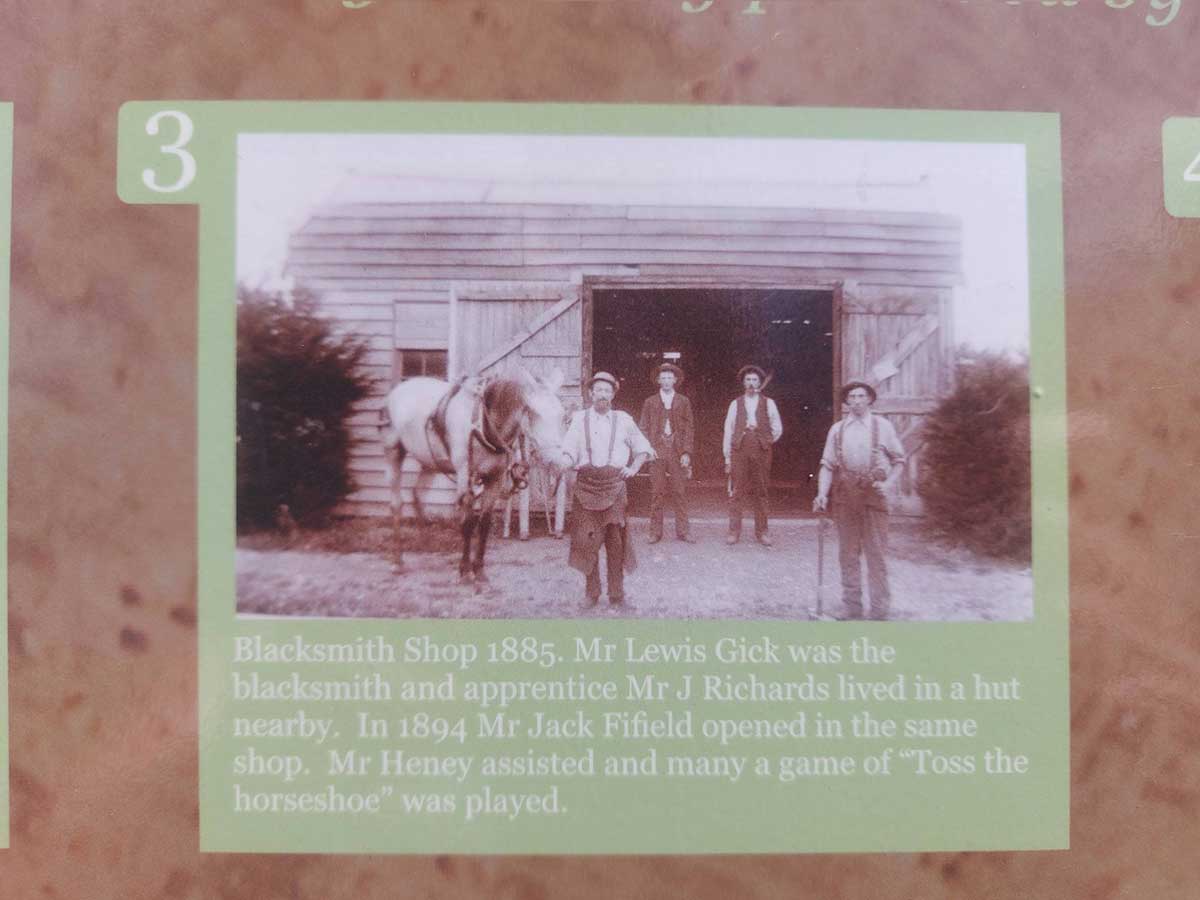
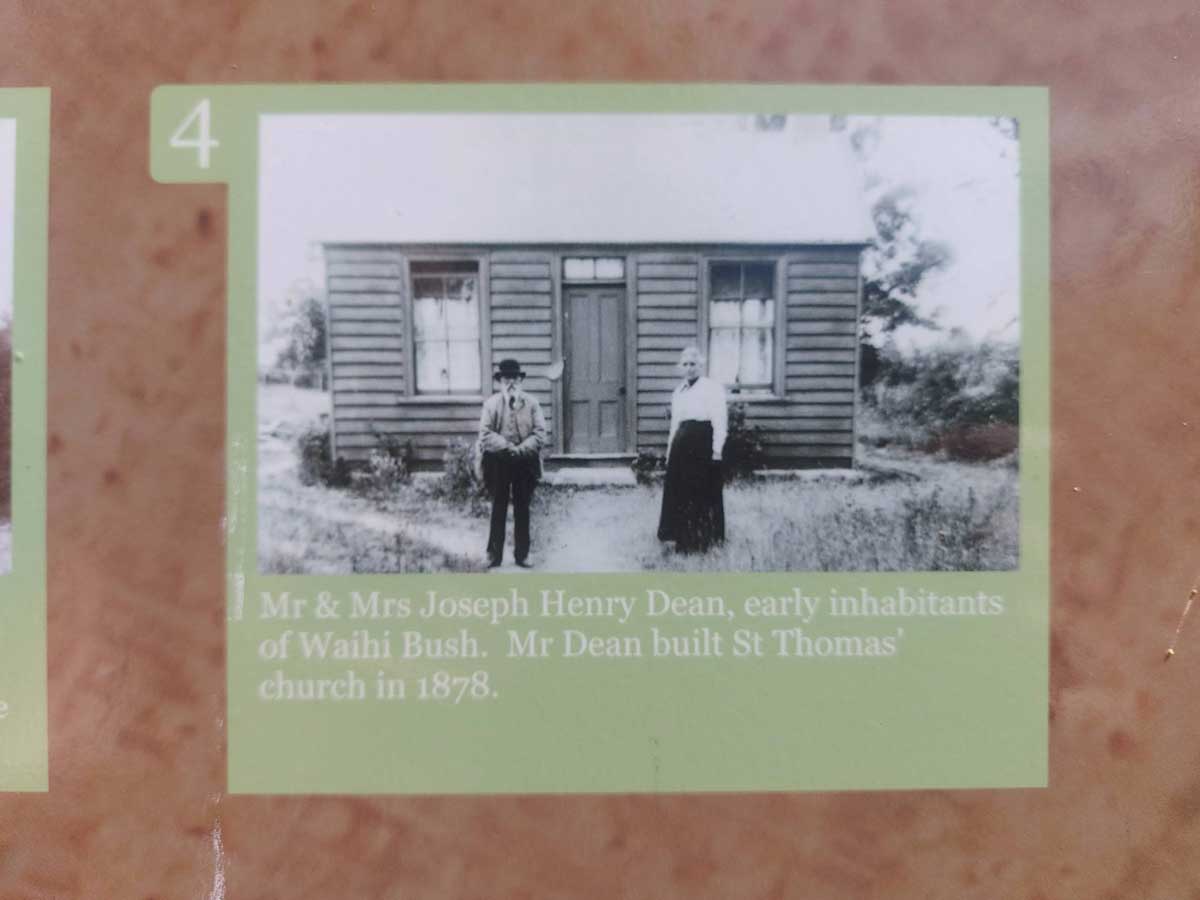
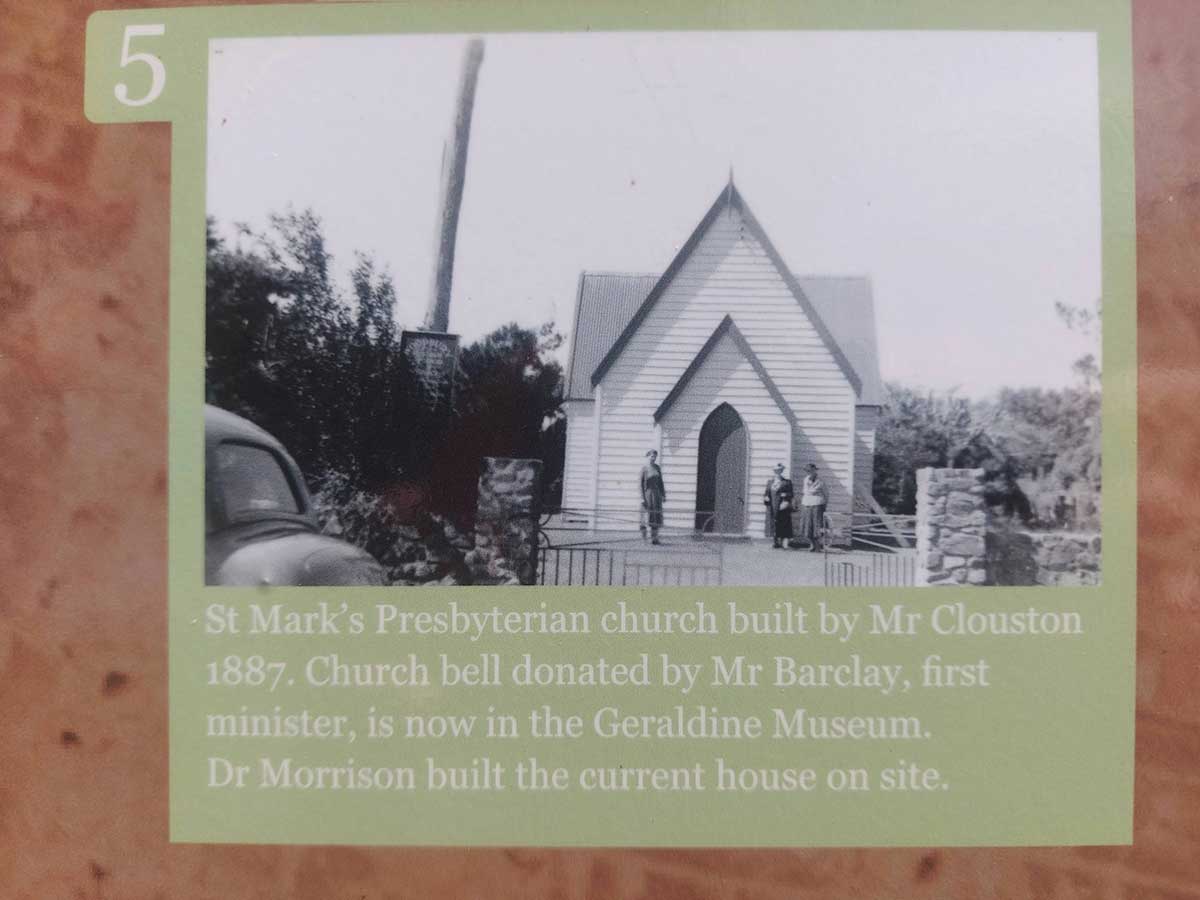



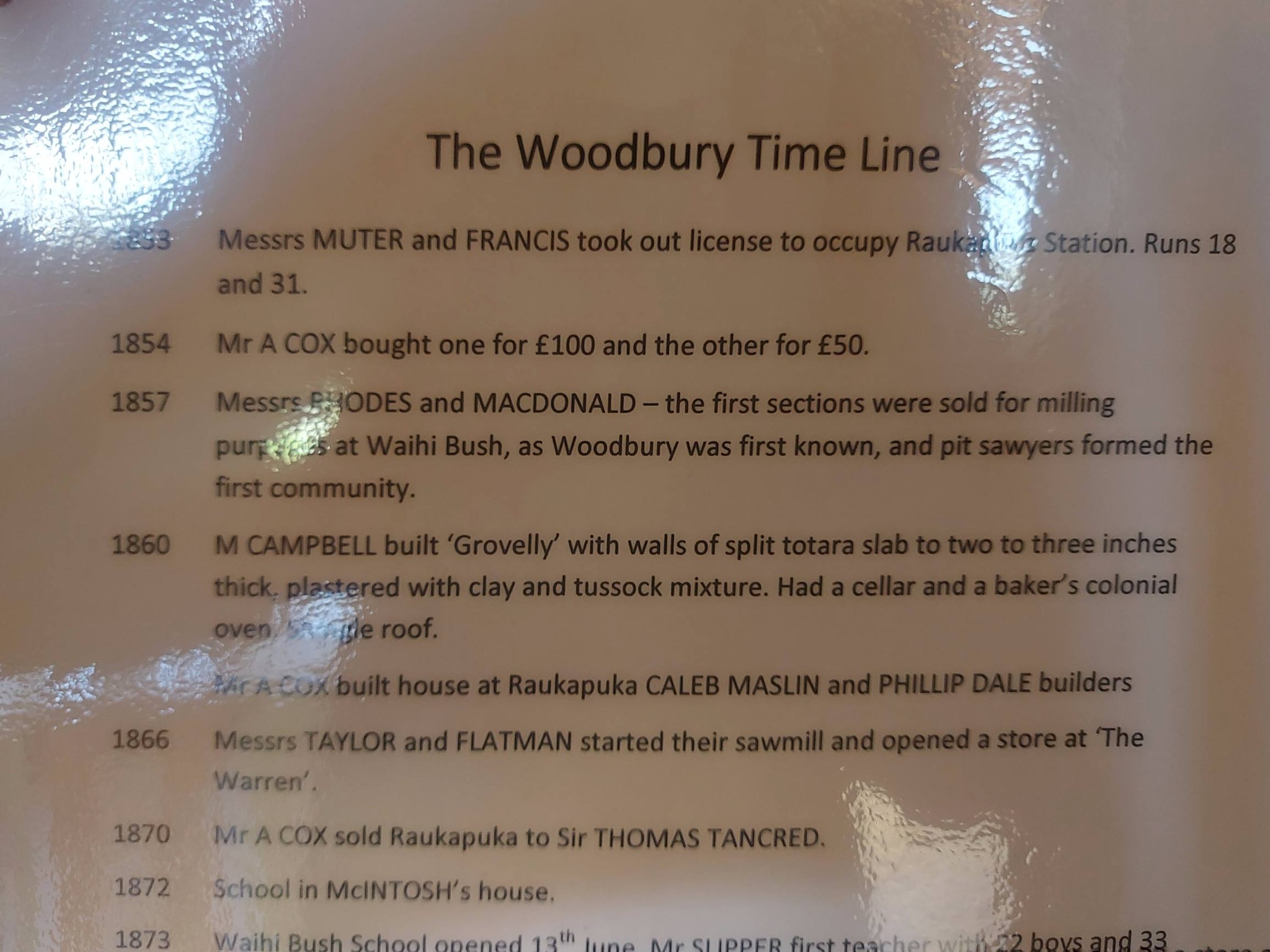
The Woodbury Timeline transcribed from their musuem poster
(formerly Waihi Bush)
Pre-1850s
Ngāi Tahu rohe
The Woodbury area lies within Ngāi Tahu territory. Māori history in this landscape predates European settlement, although it is not fully represented in later colonial records.
1853
Early pastoral occupation
-
Messrs Muter and Francis took out licences to occupy Raukapuka Station, Runs 18 and 31.
-
This marks the beginning of formal European pastoral use of the area.
1854
Land ownership changes
-
A. Cox purchased one run for £100 and the other for £50, consolidating ownership.
1857
Waihi Bush settlement begins
-
Messrs Rhodes and Macdonald sold the first sections at Waihi Bush for milling purposes.
-
Pit sawyers moved into the area, forming the first permanent European community.
-
Timber extraction shaped early settlement patterns.
1860
Early buildings and construction
-
M. Campbell built Grovelly, using split tōtara slabs (2–3 inches thick), plastered with a clay and tussock mixture.
-
Included a cellar and a colonial baker’s oven.
-
Shingle roof.
-
-
A. Cox built a house at Raukapuka, constructed by Caleb Maslin and Phillip Dale.
1866
Commercial and industrial growth
-
Messrs Taylor and Flatman established a sawmill and opened a store at The Warren, strengthening Waihi Bush as a service centre.
1870
Ownership transfer
-
A. Cox sold Raukapuka to Sir Thomas Tancred, a major Canterbury landholder.
1872
Education begins
-
A school operated from McIntosh’s house, marking the start of formal education in the district.
1873
Waihi Bush School opens
-
13 June: Waihi Bush School officially opened.
-
Mr Slipper appointed first teacher, teaching 22 boys and 33 girls.
1874
Rapid village development
-
12 March: Ball held to celebrate opening of the Sawyers Arms Hotel.
-
3 November: Taylor and Flatman’s store officially opened.
-
A blacksmith’s shop under construction.
-
Two sawmills operating.
-
2 October: Township laid out and sections sold.
-
18 February: 136 acres, 3 roods set aside for a Domain, demonstrating early commitment to recreation.
1876
Planning for growth
-
18 August: Plan DP 112 prepared, laying out sections for the future of Woodbury.
1877
Church land and disaster
-
Taylor and Flatman donated sections for a church.
-
A major fire destroyed sawmills and a dwelling and burned for a week.
1878
St Thomas’s Anglican Church established
-
19 November: First service held.
-
Architect: Mr Marley
-
Builder: Mr Joseph Dean
1879
Waihi Bush becomes Woodbury
-
William Turton purchased Waihi Bush from Sir Thomas Tancred.
-
The settlement was renamed Woodbury.
-
J. M. Barker and F. R. Flatman selected a cricket ground.
-
Mr Donkin purchased Parkhurst.
1880
Community organisation
-
2 March: First Domain meeting held.
-
Chair: Mr Donkin
-
Secretary: F. R. Flatman
-
Present: C. G. Tripp and A. Macdonald
-
-
12 acres fenced for recreation.
-
A Woodbury school building constructed.
1881
Village formally named
-
Woodbury officially named.
-
Mr Donkin built Parkhurst.
-
Woodbury School opened on its present site.
1884
Presbyterian church built
-
Mr Clouston built St Mark’s Presbyterian Church on High Street and Woodbury Road.
1888
Water infrastructure
-
25-mile open water race constructed from headworks at Waihi Gorge.
1889
Cemetery established
-
T. Easton appointed first sexton.
-
J. Pearce recorded as first burial.
1890
Residential growth
-
John Dean, undertaker, built a house.
-
Messrs Woodings built a nine-room single-storey house at Woodland Grange.
1891
Communications improve
-
Local store became a telegraph office.
1892
Church expansion
-
St Mark’s Presbyterian Church doubled in size.
1894
Community activity
-
Wind damage affected Domain trees.
-
23 May: Jack Fifield opened a blacksmith’s shop.
1896
Recreation facilities
-
Swimming baths (50 ft by 25 ft) with dressing sheds constructed.
1897
Sporting life
-
Cricket club formed and pitch laid.
1898
End of an era
-
Sawyers Arms Hotel licence cancelled.
1900
Tennis courts built
-
Two courts laid in the Domain.
1901
Dairy industry develops
-
Creamery opened.
1904
Notable residence
-
Norman Campbell built Knocklyn.
1907
Church facilities expand
-
Anglican Sunday School room opened.
1911
Coronation Hall and library
-
Coronation Hall built by Pearce and Cooling.
-
Library moved from school to hall.
-
F. R. Flatman died aged 68.
1912
Infrastructure
-
Ried’s Bridge built over the Waihi River.
1914
Mail service
-
Two mail deliveries per day established.
1915
Industrial change
-
Creamery converted into a cheese factory.
1920
War Memorial constructed
-
Built by Scott and Cooling.
1923
Bridge built
-
Burdon’s Bridge constructed over the Waihi River.
1925
Modernisation
-
Mr Taylor died aged 88.
-
Electric power connected to Woodbury.
1936
Eleanor Howard Tripp Memorial Library
-
5 December: Library opened, built by Cooling and Scott, funded by community effort.
-
Memorial to Eleanor Howard Tripp (1867–1936).
1938
St Thomas’s rebuilt
-
Wooden nave replaced with stone by Scott and Cooling.
-
Consecrated 2 April 1938.
1945
Storm damage
-
Remains of the Sawyers Arms blown down by a gale.
1956
School milestone
-
75th Jubilee gates erected at Woodbury School.
1969
New school building
-
A new Woodbury School opened.