
By Roselyn Fauth with the help of the book: Ellen Shephard Tripp. My Early Days. Christchurch, 1929. Digitised edition, Papers Past, National Library of New Zealand. paperspast.natlib.govt.nz/books/ALMA1929-9917502903502836-My-early-days

This story didn’t begin in an archive or a lecture theatre. It began noticing a blue heritage plaque, doing a u-turn and exploring the Eleanor Tripp Memorial Library in Woodbury. I through I had it all reasonably well understood until I found another breadcrumb with a Google search. I followed the link to a digitised book on Papers Past with a simple, unassuming title: My Early Days. Written by Ellen Shephard Tripp. At first, I wasn’t entirely sure who she was. Ipanicked that after all the research into Eleanor, that she had written a book after all, but then I realised this was a different generation. It took a bit of untangling to work out who was who, how they were connected, and where Ellen sat in relation to Eleanor... Then the penny dropped. Ellen Shephard Tripp was Eleanor Tripp’s grandmother! I felt like finding this book was like striking history gold, and suddenly, thanks to the book being fully digitised online I had a new side quest...
A young woman dies.
A community responds.
A library is built in her name.
That version fits neatly on a plaque. But plaques rarely tell us how outcomes become possible. They tell us what happened, not why it made sense when it did. To understand that, I had to slow down, take a step back in time, and follow the and read the book from that Google search — to a woman writing quietly at a kitchen table decades earlier... Her name was Ellen Shephard Tripp.
And long before a library carried her granddaughter’s name, Ellen was already doing the work that made such a place meaningful. A life formed before libraries existed.
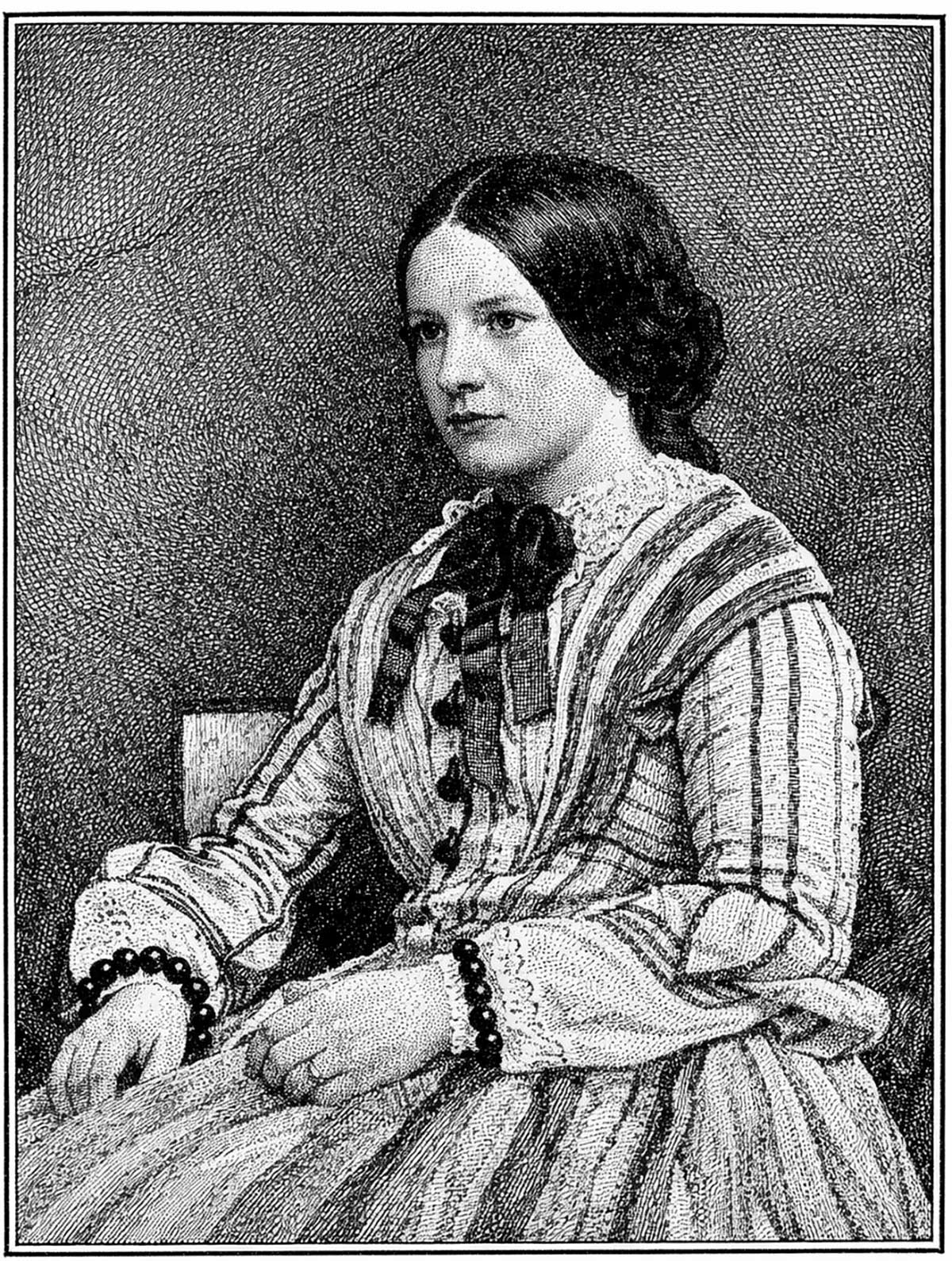
Ellen Shephard Harper aged 21. Chat GTP Generated images based on poor quality scans in online book My early days Ellen Shephard Tripp 1929.
Ellen Shephard Tripp was born on 11 December 1834 at Willowbrook, near Slough and Eton, England. She was the third daughter in a family of eleven children. Her father, Henry John Chitty Harper, supported the household through parish income and by taking pupils. Learning was not separate from domestic life. It was embedded in it.
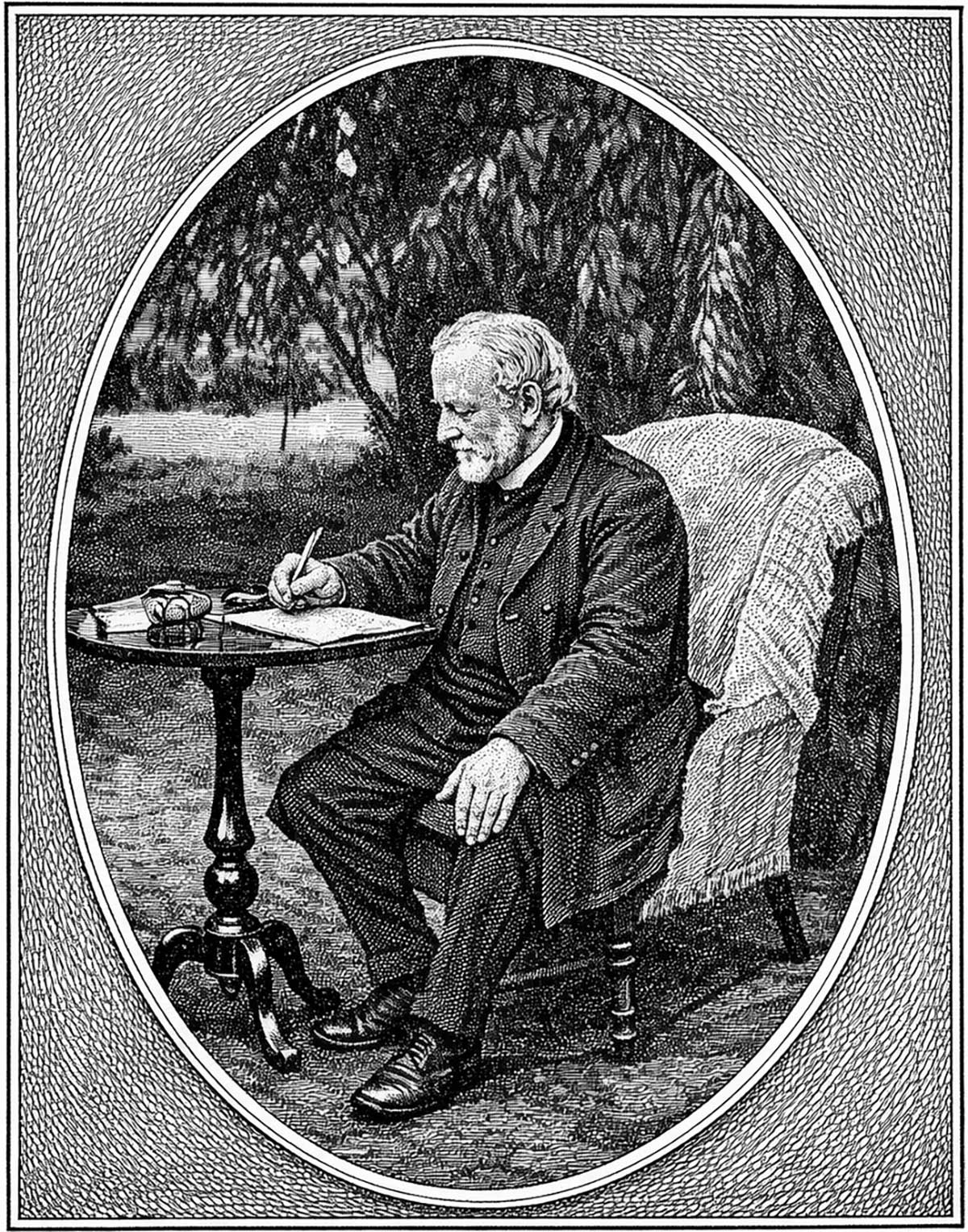
Bishop Harper 1859 - Chat GTP Generated images based on poor quality scans in online book My early days Ellen Shephard Tripp 1929.
Ellen was baptised at Eton College Chapel. She grew up first in Eton, then in Stratfield Mortimer, Berkshire, where the family lived for sixteen years. This was early Victorian England — a world of expanding empire, rising literacy, and firm assumptions about women’s roles. Education mattered, but women’s intellectual lives were largely private, informal, and easily overlooked.
In September 1856, aged twenty-one, Ellen sailed for New Zealand aboard the Egmont. She arrived at Lyttelton on 23 December and crossed the Port Hills on foot the following day, carrying a small bundle containing her “best bonnets and finery”.
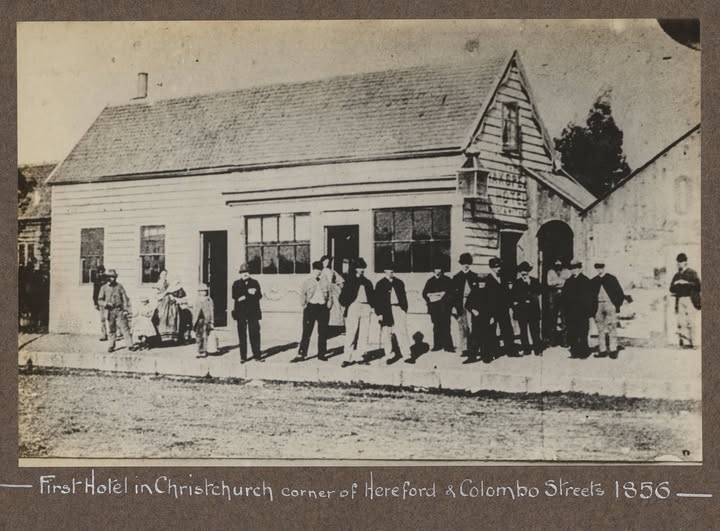
Christchurch, as Ellen encountered it, consisted of a few buildings, one bridge across the Avon, and streets marked out with wooden pegs.
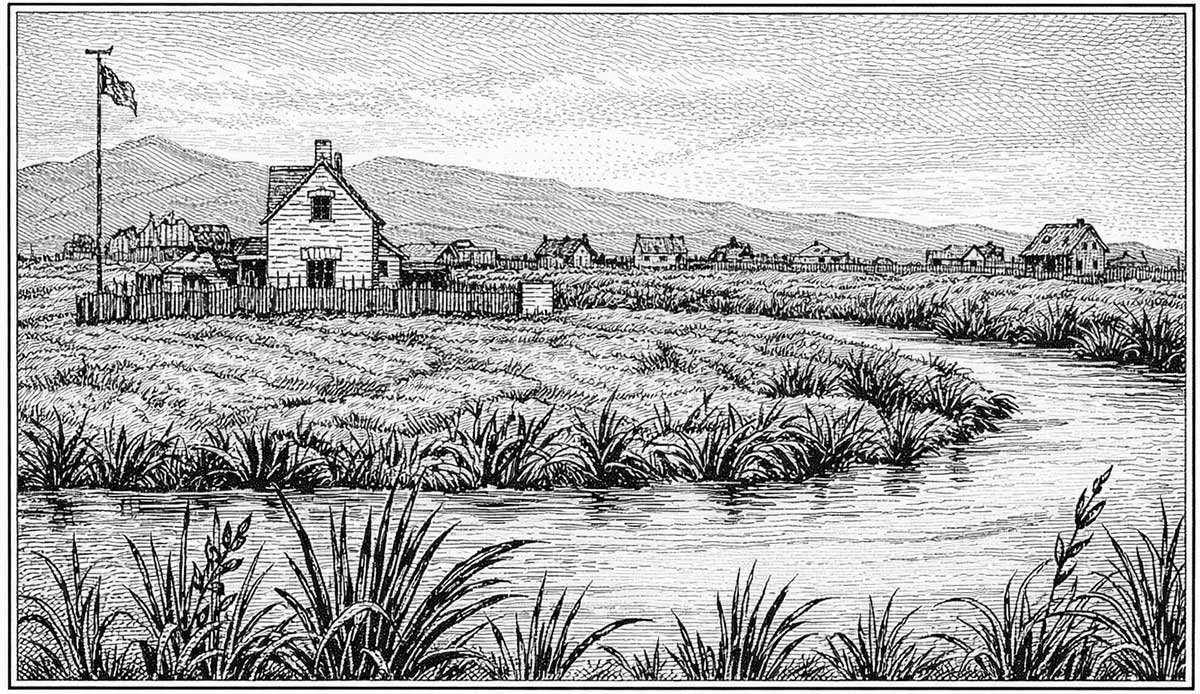
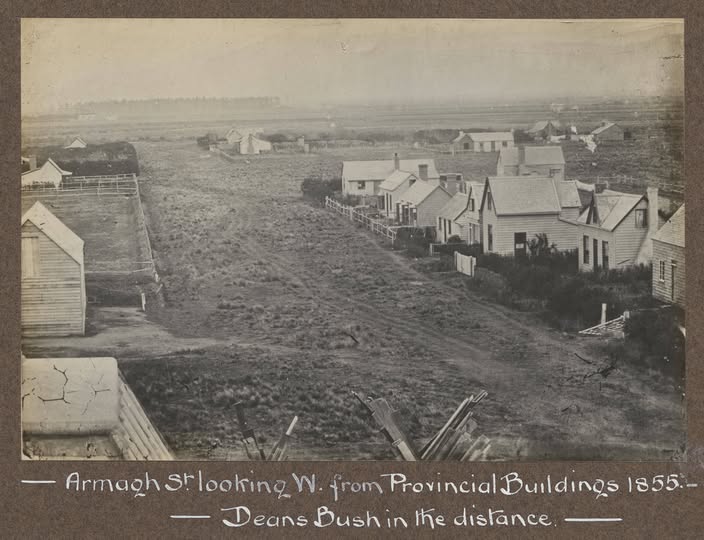
Armagh Street Christchurch 1860 Auckland Libraries Heritage Collections 1430 ALB267 04 1 (Date on the photo is wrong)

Attic Bedroom. Sketched by E.S Tripp, 1856 - scans-in-online-book-My-early-days-Ellen-Shephard-Tripp-1929
It is important to pause here.
Ellen’s memoir is a settler account, written from inside her domestic world. It tells us what she saw, feared, valued and learned. But it is not the whole story of this place. The land she crossed into had names, histories and relationships long before streets were pegged out, and the decade she arrived sat within a wider national period of land pressure and conflict. Reading Ellen well means holding two truths at once: valuing her voice, and staying alert to the voices her world did not centre. That awareness is part of the history hunt too.
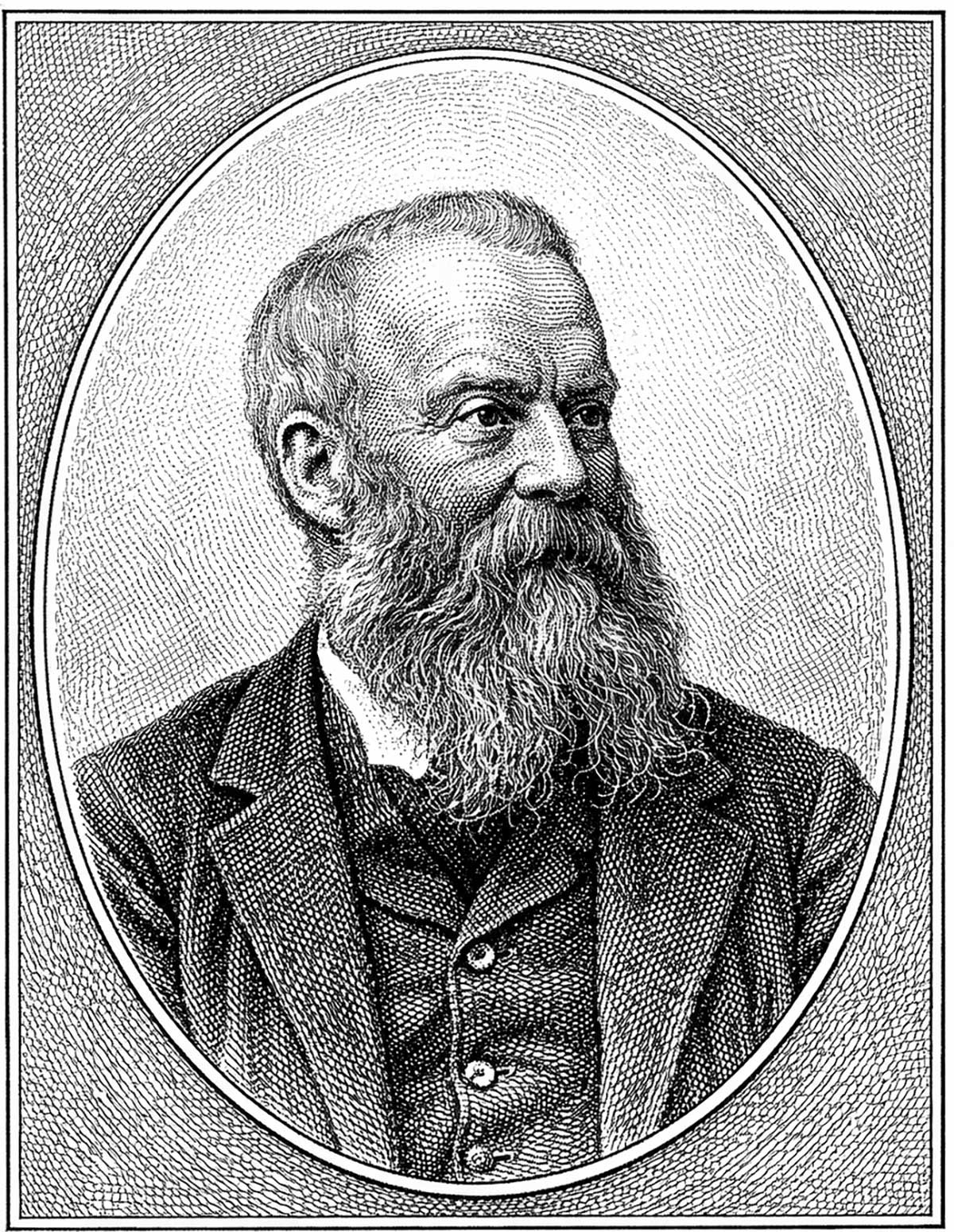
Charles George Tripp 1889 - Chat-GTP-Generated-images-based-on-poor-quality-scans-in-online-book-My-early-days-Ellen-Shephard-Tripp-1929
I learned from her that learning as a form of survival.
Ellen married Charles George Tripp on 23 September 1858 and soon moved to increasingly isolated rural locations, first at Mt Peel and later at Orari Gorge. Her husband worked long hours, often leaving her alone for much of the day.
It is here that Ellen records one of the most revealing facts in My Early Days. She was afraid she might forget her own language. So she set herself a task: memorising The Christian Year by heart. She does not frame this as leisure or devotion. She frames it as necessity. In isolation, the mind needed structure or it risked thinning away. There was no library to visit, no institution to lean on. So she internalised learning instead.
This is a clue to take my time to understand.
Libraries do not begin with buildings. They begin with people who behave as though knowledge is fragile enough to lose and valuable enough to protect. Women’s knowledge, written before it vanished. Thank goodness grandmother Tripp's story is written down.
Ellen gave birth to her first child, Howard, on 1 October 1859. There was no trained nurse. Care came from local women. Equipment was improvised. She recalls making a feeding bottle from a tin and feeding her baby on water gruel and arrowroot.
Throughout her memoir, Ellen records women’s labour with care and specificity: women digging, fencing, managing stations, nursing, teaching children and holding households together under pressure. She names these women. She credits them. She records their competence as fact, not exception.
For nine years, a governess, Miss Jane Andrews, lived with the family. Ellen acknowledges her role explicitly, noting the debt she and her children owed her.
These details matter because women’s work is often where history thins out. Domestic labour, emotional labour, informal teaching — these rarely survive in official records. Ellen wrote them down anyway.
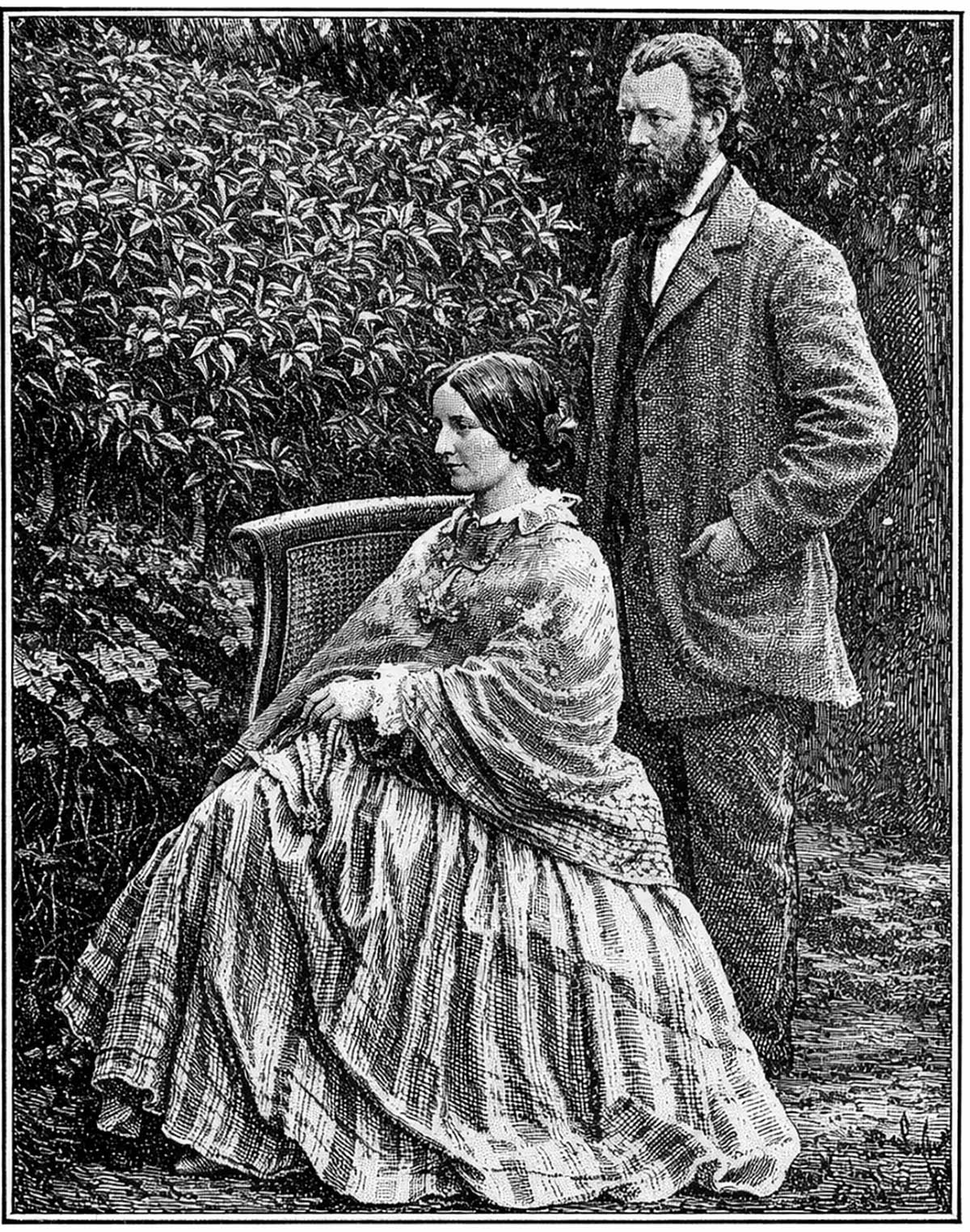
Mr and Mrs Trip 1861. Chat GTP Generated images based on poor quality scans in online book My early days Ellen Shephard Tripp 1929.
What else did women have to invent because systems did not yet exist?
How many women lived lives just as hard, but left no book behind?
I wonder if she felt judgement and being under pressure?
Ellen’s life involved repeated danger. She travelled with infants by horseback and cart, crossed flooded rivers, and endured long delays and uncertainty. In October 1861, during a river crossing, she was swept alone downstream, travelling approximately four miles in about twenty minutes before managing to land safely using a single oar.
Ellen records this without drama. She recounts what happened, what she did, and the outcome. Afterwards, she notes that she disliked crossing rivers thereafter. I think we can all imagine her reasonable dislike.
In describing a voyage to England in 1864 aboard the Iwanhoe, she records starvation, typhoid and the deaths of 26 passengers. She documents neglect, leadership failure, and the quarantine that followed. She does not excuse. She does not sensationalise. She records.
What does it mean to read a source like this sympathetically, but not uncritically? What does it ask of us as readers today?
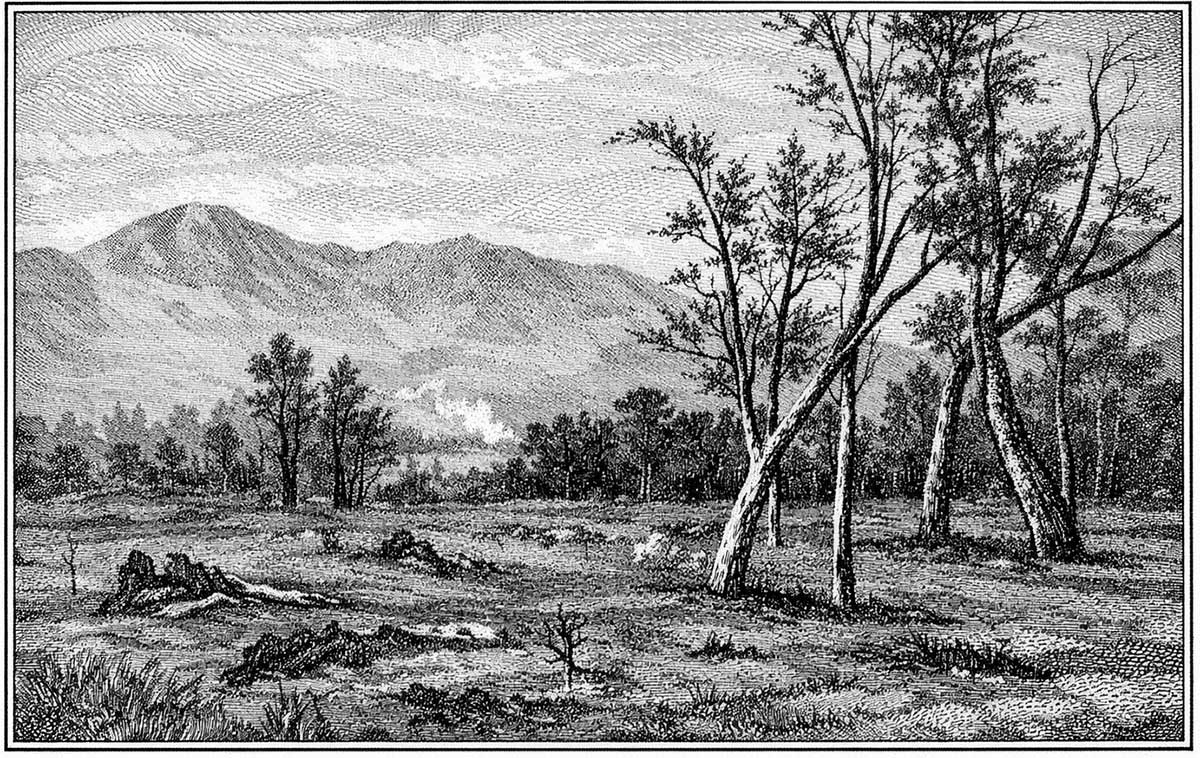
Chat GTP Generated images based South Canterbury Jubilee History Page 550 The Passing of Woodbury
I feel like she was writing with foresight
Ellen completed My Early Days at Orari Gorge in 1915, the year before her death. She wrote, she said, at the request of her children. But the structure of the memoir suggests foresight. She wrote with dates, names and places. She anchored experience in time. She recorded domestic detail alongside major events. She fixed women’s lives to the page in a world that rarely did. She behaved like someone who understood that memory does not survive by accident.
This, fundamentally, is the work libraries exist to do. The granddaughter and the visible outcome
Eleanor Tripp, Ellen Shephard Tripp’s granddaughter, was born into a family culture already shaped by these habits. By the time Eleanor was growing up in South Canterbury, education, reading and teaching were assumed parts of life. Children were taught at home. Governesses were employed. Learning was treated as essential rather than ornamental.
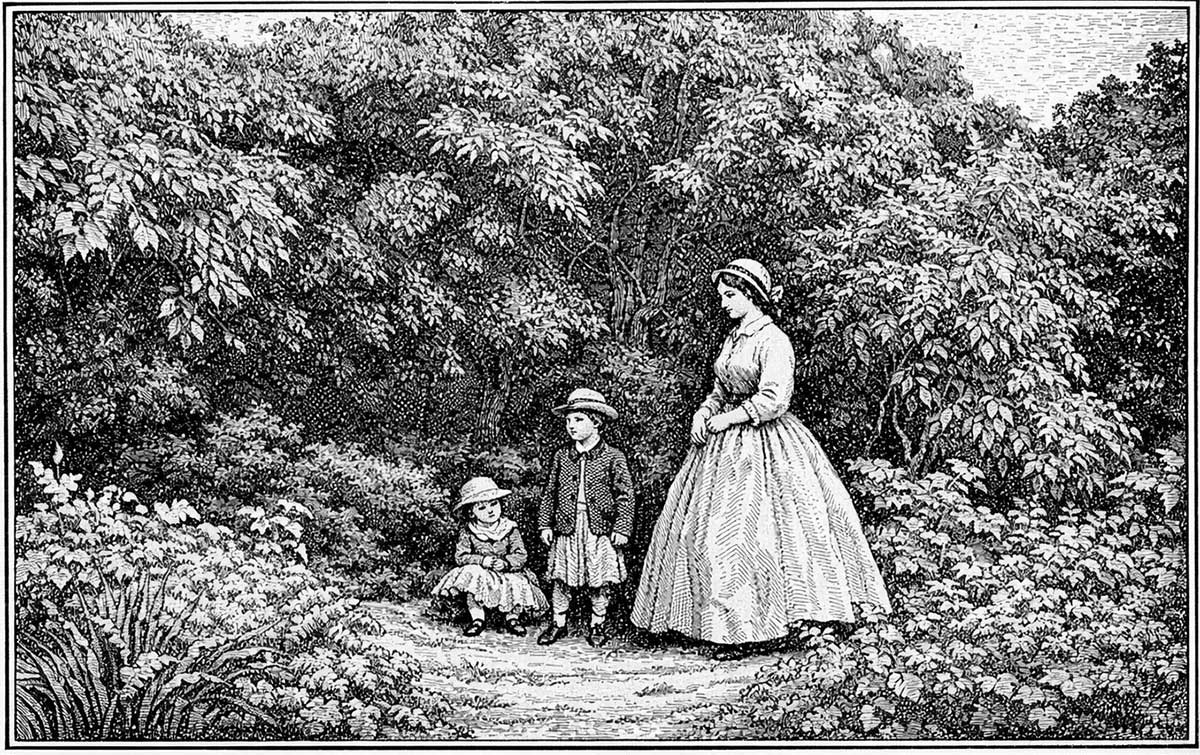
Mrs Tripp and two eldest children - Chat GTP Generated images based on poor quality scans in online book My early days Ellen Shephard Tripp 1929

Employees at Orari Gorge Station 1880 - South Canterbury Museum CN 1966
No one planned a memorial library when Eleanor was young.
But when Eleanor’s life ended prematurely, the community responded by establishing one. That decision did not arise in a vacuum. It arose in a place where learning had long been practised, valued and supported — particularly within the domestic and familial sphere shaped by women.
The library that bears Eleanor’s name is the public expression of values that had been lived privately for generations.
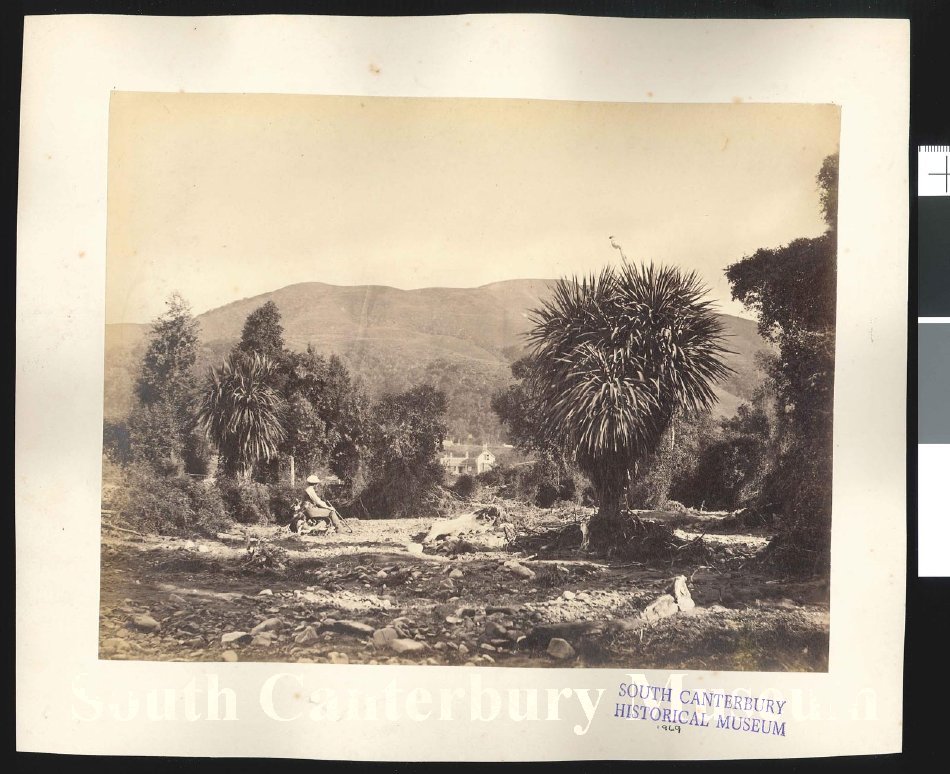
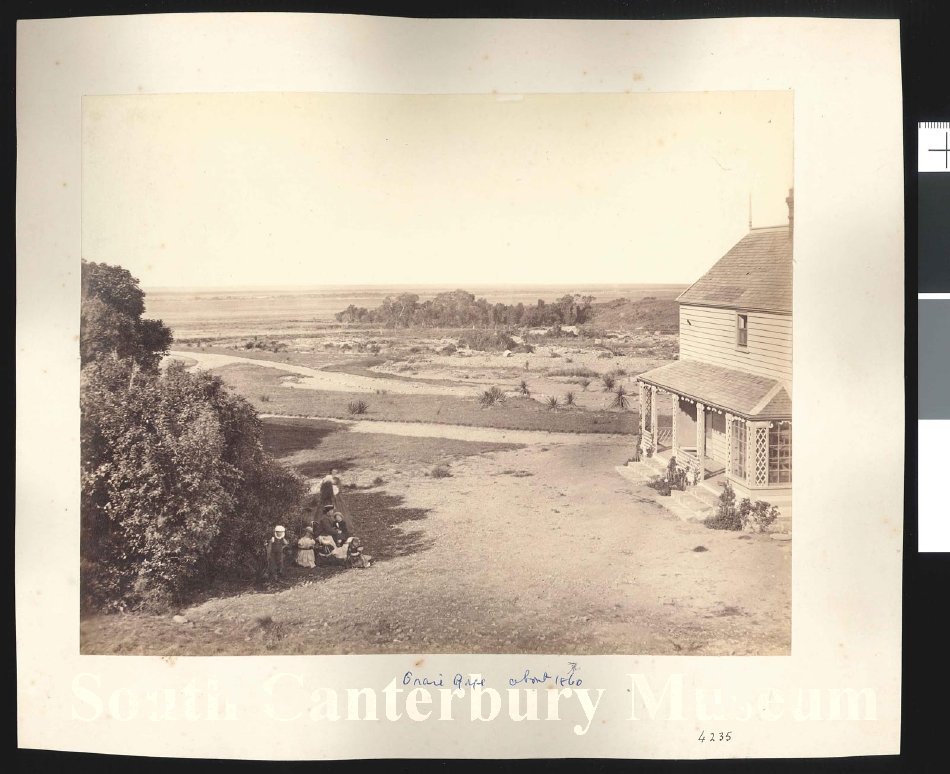
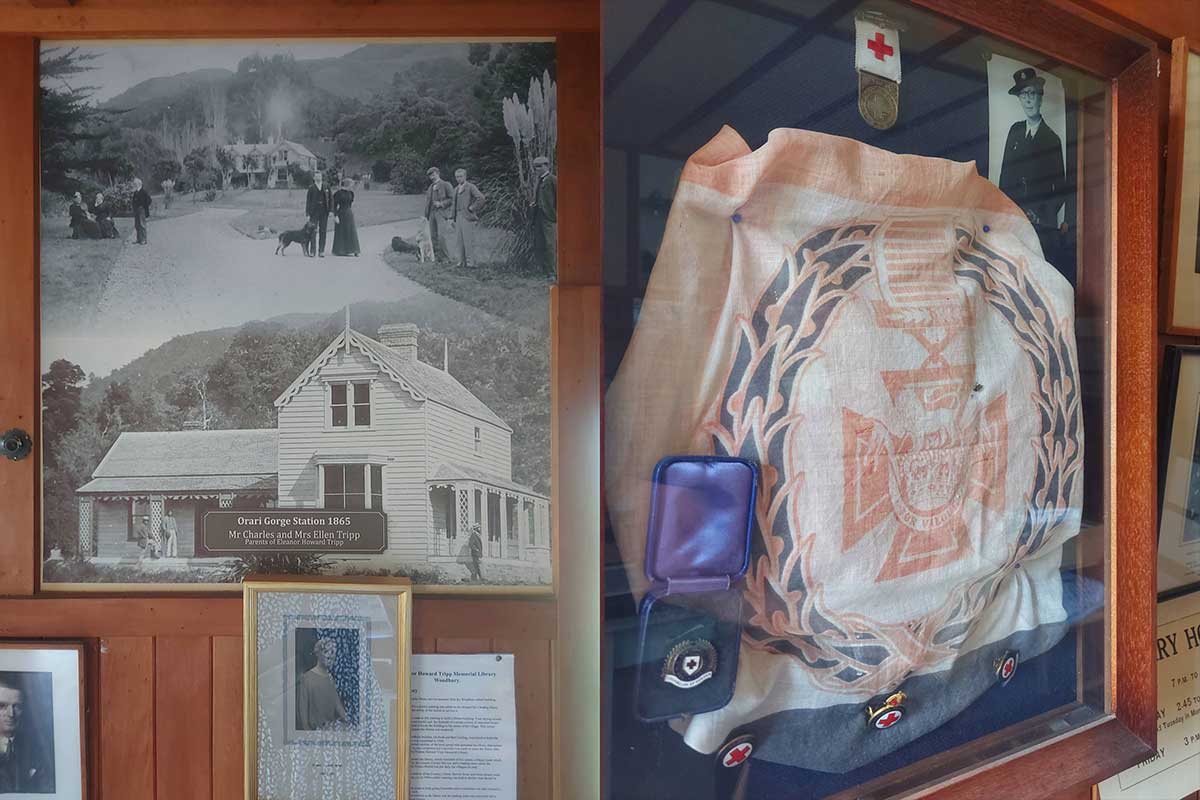
A pair of images of Orari Gorge, probably from soon after a 'great flood' in 1868 which nearly washed the homestead away. The first image (#1969) depicts Charles Tripp sitting amongst flood debris with the Orari Gorge homestead visible through the trees in the background. On the verso another image, labelled 'Orari Gorge about 1860 [which appears to have been modified to 1867 and (faintly)) to 1868] (#4235), looks down towards the flood debris from next to the homestead (visible on the right). A pair of women and children are also posed in the foreground left.
Orari Gorge Station South Canterbury Museum 1969
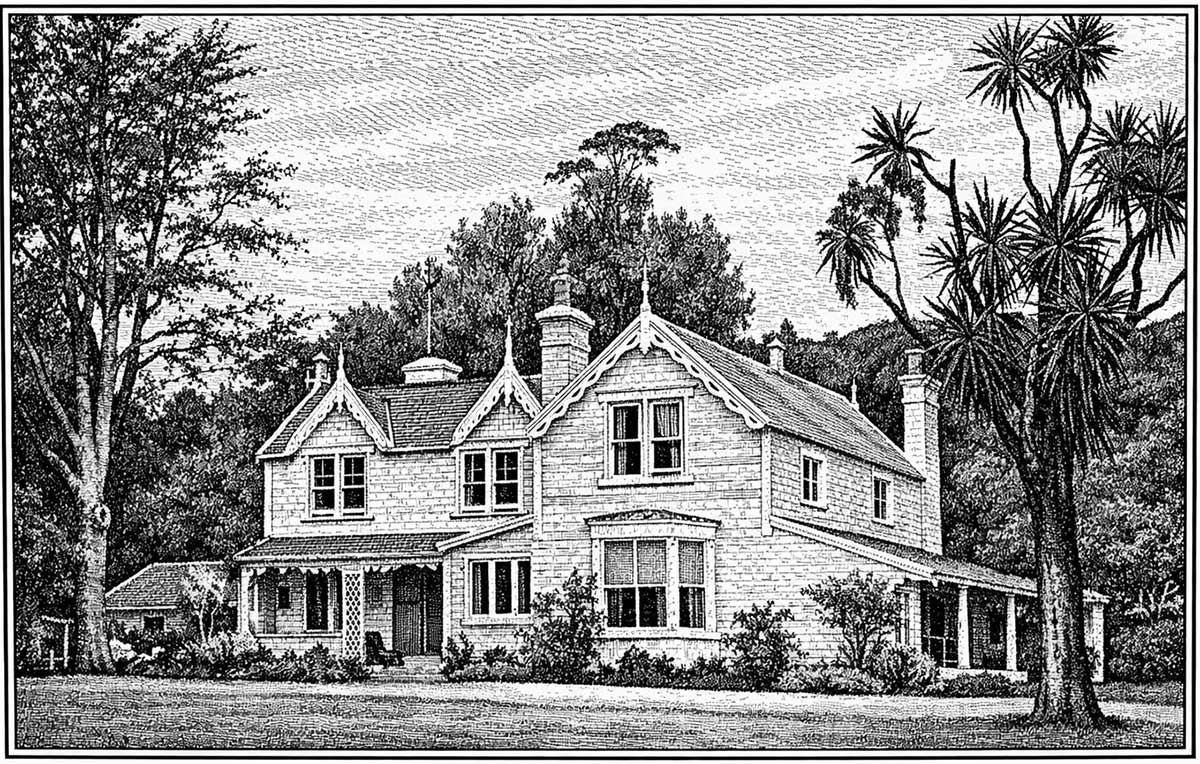
Chat GTP Generated images based on poor quality scans in online book My early days Ellen Shephard Tripp 1929
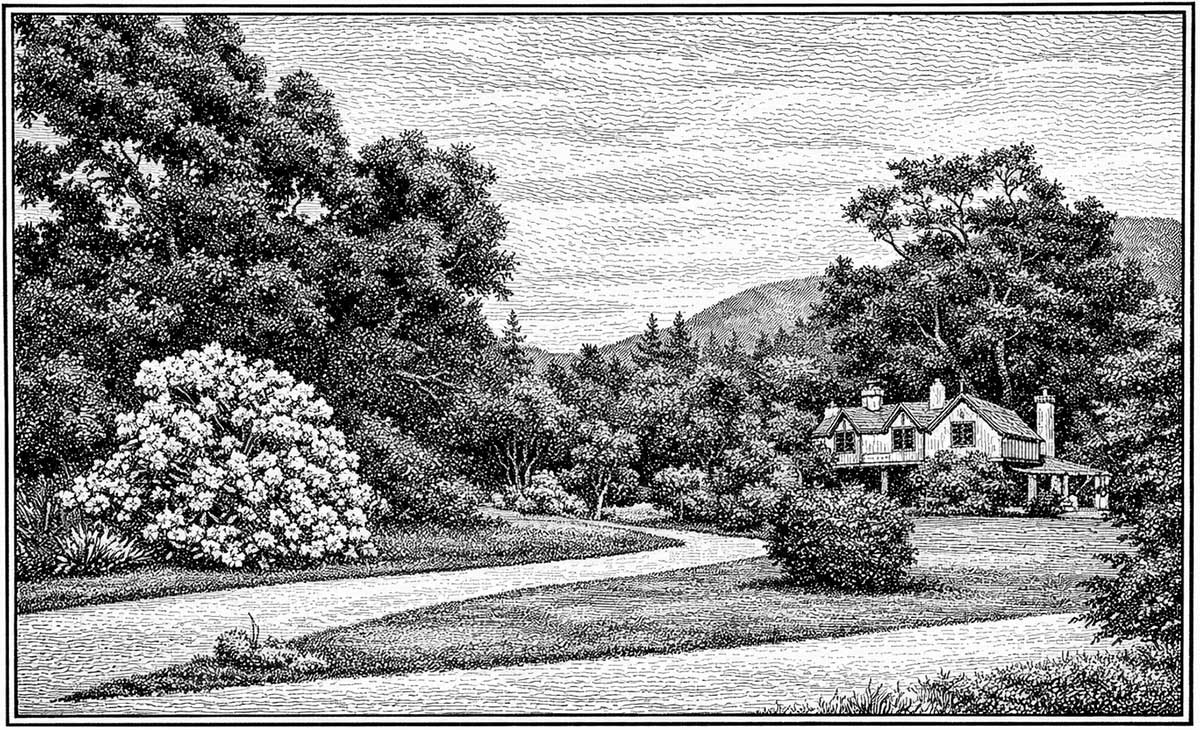
Orari Cottage 1913. Chat GTP Generated images based on poor quality scans in online book My early days Ellen Shephard Tripp 1929.
Intergenerations and ripples
Ellen Shephard Tripp did not build a library. She lived before such institutions were common or accessible.
She protected language when it was fragile.
She recorded women’s work when it was easily lost.
She treated learning as something worth carrying across rivers, through floods, and into the future.
Those choices shaped the world her children and grandchildren lived in. Over time, they shaped what a community felt was worth honouring. I think this can be how women’s influence often works. It is cumulative, relational and behind the scenes. Someomes only becoming visible only generations later.
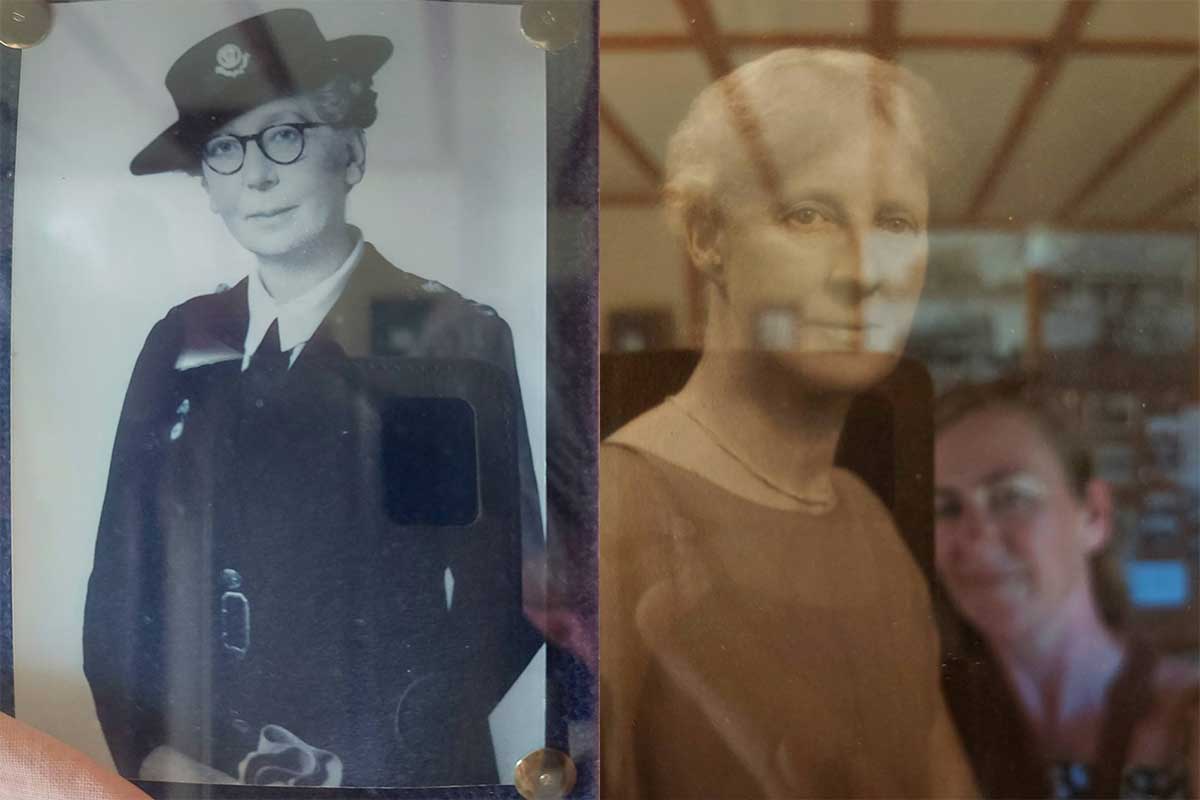
So when we walk into the Eleanor Tripp Memorial Library, we are not just entering a building. We are stepping into a ripple.
A ripple that began with a woman memorising poetry so she would not forget herself.
A ripple carried forward through family, habit and expectation.
A ripple that eventually took physical form.

What this kind of history gives us
This story is not just about the past. It is about orientation.
It grounds us by showing how much of what we inherit was built through unseen labour.
It invites gratitude for systems we now take for granted.
It challenges us to think critically about whose work is remembered and whose is not.
And it empowers us by reminding us that ordinary, thoughtful choices can ripple forward in ways we may never live to see.
If Ellen Shephard Tripp could protect language and memory on the edge of a young colony, what might we protect now?
What might our own quiet commitments make possible?
And who might one day thank us for them?
Thank you Ellen and your family for having the foresight to record this story. What a history tale it is indeed.
Source
Tripp, Ellen Shephard. My Early Days. Christchurch, 1929. Digitised edition, Papers Past, National Library of New Zealand.
https://paperspast.natlib.govt.nz/books/ALMA1929-9917502903502836-My-early-days
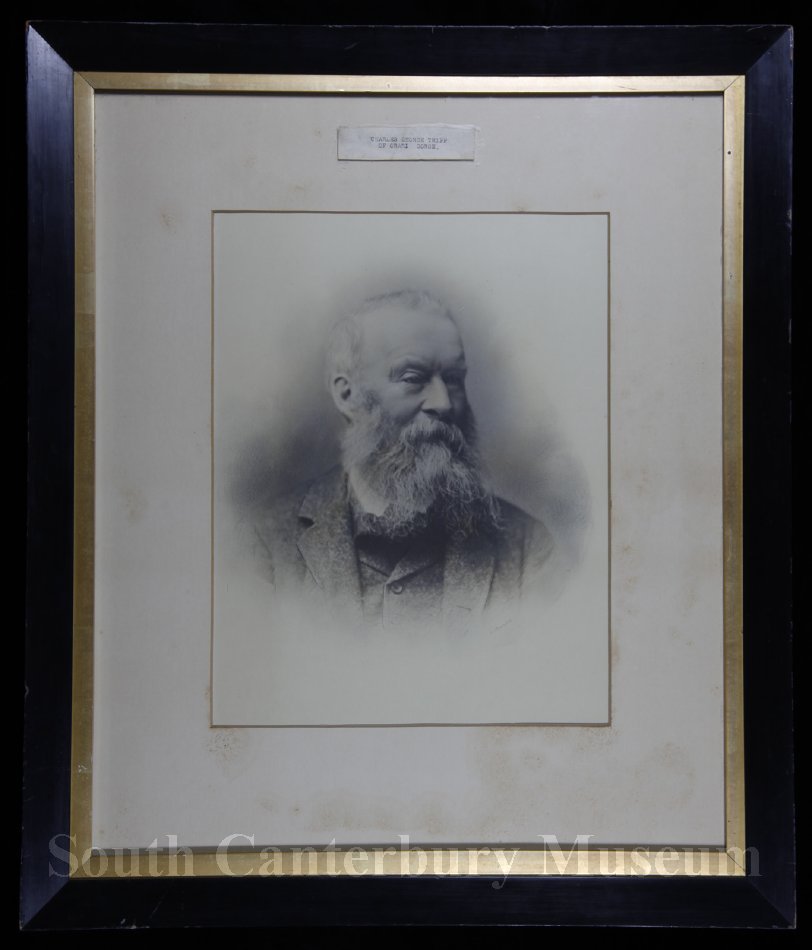
George Tripp South Canterbury Museum 3462 - Portrait of Charles George Tripp of Orari Gorge, circa 1890.

A group portrait of the Timaru Harbour Board members in 1923, posed against the outside wall of a wooden building. South Canterbury Museum 2000210090
Those pictured are (from left to right): BACK ROW: F Metson (Clerk), J A Gasson (Reporter, "Timaru Post"), R Orwin, E R Isaac, A R Guild, F Y Lysaght, H B S Johnstone, D McDougall, C G Wightman (Secretary and Treasurer), F W Clarke (Resident Engineer); FRONT ROW: B E H Tripp (CBE), W Hayman, C N Orbell, F J Rolleston (Chairman),J S Rutherford, J Bitchener (MP), T B Garrick, J M H Tripp.
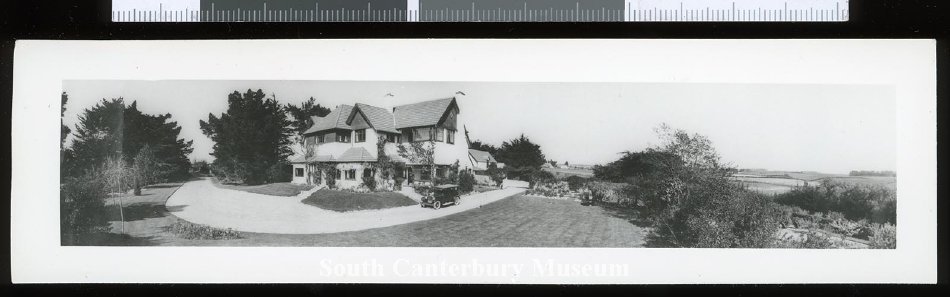
An undated panoramic image of Orielton Gleniti Bernard Tripps Homestead Timaru circa 1920s South Canterbury Museum 201514801
Timeline: The Life of Ellen Shephard Tripp (1834–1916)
1834–1856: Early life in England
11 December 1834
Born at Willowbrook, near Slough and Eton, England.
Third daughter in a family of eleven children.
1834–1840
Lived in Eton.
Baptised at Eton College Chapel.
1840
Family moved to Stratfield Mortimer, Berkshire, when her father received the living there.
1840–1856
Childhood and adolescence at Stratfield Mortimer.
Raised in a large clerical household where education and reading were part of daily life.
Father supplemented income by taking pupils.
10 August 1856
Father, Henry John Chitty Harper, consecrated as the first Bishop of Christchurch, New Zealand.
1856: Migration to New Zealand
10 September 1856
Sailed for New Zealand aboard the Egmont (787 tons), with parents and siblings.
23 December 1856
Arrived at Lyttelton.
24 December 1856 (Christmas Eve)
Crossed the Port Hills on foot via the Bridle Track into Christchurch, carrying personal belongings.
1856–1858
Lived in Cambridge Terrace, Christchurch.
Witnessed Christchurch as a very early settlement with minimal infrastructure.
Social life included dances, picnics, riding parties.
1858–1859: Marriage and settlement
23 September 1858
Married Charles George Tripp in Christchurch.
Late September–October 1858
Honeymooned in Akaroa, travelling by horseback and on foot.
27 October 1858
Travelled by horseback to Mt Peel, South Canterbury.
Late 1858–1859
Lived at Mt Peel in a small newly built cottage.
Experienced isolation while husband worked long hours.
Set herself intellectual tasks to maintain language and mental sharpness.
1859–1861: Motherhood and danger
1 October 1859
Birth of first child, Howard Tripp.
1859–1860
Early motherhood without trained medical support.
Infant feeding improvised using handmade equipment.
Relied on local women for care and assistance.
January 1860
Travelled by cart to Christchurch with infant.
1860
Dissolution of partnership arrangements affecting Mt Peel and Orari Gorge.
24 March 1861
Birth of a daughter.
October 1861
Swept alone down a flooded river during a crossing.
Travelled approximately four miles before landing safely.
1862–1864: Movement and loss
October 1862
Sailed to Melbourne aboard the Gothenburg.
1862
Birth of second son in Melbourne.
1864
Sailed to England aboard the Iwanhoe.
1864 (voyage)
Voyage marked by starvation, typhoid and the deaths of twenty-six passengers.
Ship quarantined on arrival.
1864–1866
Lived in England for approximately two years.
1866–1879: Return and rebuilding in New Zealand
1866
Returned to New Zealand.
Settled at Orari Gorge, South Canterbury.
6 August 1866
Birth of third daughter.
1867
Major flood at Orari Gorge.
Family forced to evacuate home temporarily.
Late 1860s–1870s
Rebuilt home and farm infrastructure.
Employed governess Miss Jane Andrews for nine years.
Actively involved in church and community life.
Raised children in rural South Canterbury.
1879
Ellen marks this year as the end of the “real early days” of the district, noting the arrival of new neighbours and changes in settlement patterns.
1915–1916: Writing and legacy
1915
Completed My Early Days at Orari Gorge, written at the request of her children.
1916
Died in New Zealand.
December 1916
Obituary published, recognising her endurance, cheerfulness, and quiet courage, and noting the historical value of her memoir.
After her lifetime
1929
My Early Days published posthumously in Christchurch.
Later 20th century
Her granddaughter, Eleanor Tripp, commemorated through the establishment of the Eleanor Tripp Memorial Library, reflecting a family and community culture that valued learning and education.
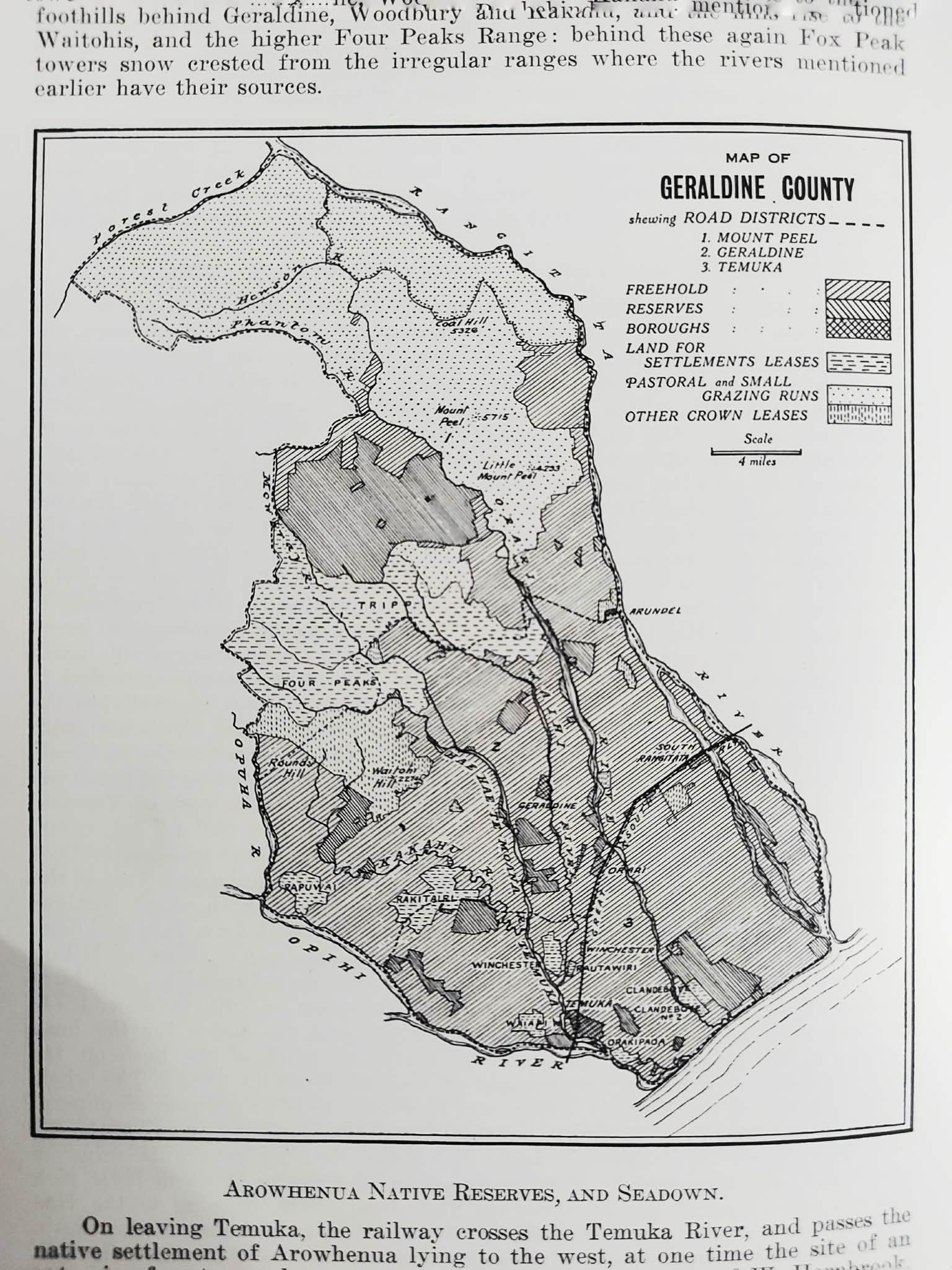
Jubilee History of South Canterbury page 570 Geraldine County