By Roselyn Fauth

In 2013 The Oxford Restaurant moved into the Oxford Building. This listed 1925 Historic gem, in the old heart of Timaru. A beautiful corner building, it has embossed 15 foot ceilings on all four floors which was the inspiration behind the restaurants branding. timaru.govt.nz/Historic-Heritage-Assessment-Report-HHI61-Oxford-Buildings-Category-B.pdf
Well, I didn’t expect to end up here — standing looking up at one of my favourite buildings in Timaru, celebrating its 100th year — all because of a lockdown walk through the cemetery.
Like many, we spent those quiet Covid days exploring close to home. I found myself drawn to the cemetery gates, reading names and wondering about the people behind them. One day, I noticed a tall monument right in the centre. It wasn’t a grave, but a memorial to Richard Turnbull, one of Timaru’s founding citizens. I went home to find out who he was, and that search turned into years of research, side quests, and discoveries about the Turnbull family and their part in shaping our town.
Which is how I’ve ended up here tonight, celebrating the Oxford Building — one of their finest legacies...
“Richard Turnbull and David Clarkson first developed this site in 1864. The Oxford is the third building on the site to be built by the Turnbull family, and was designed by architects Turnbull & Rule for D.C. Turnbull & Co. and opened in 1925.” - Historic Places Aotearoa Blue Plaque
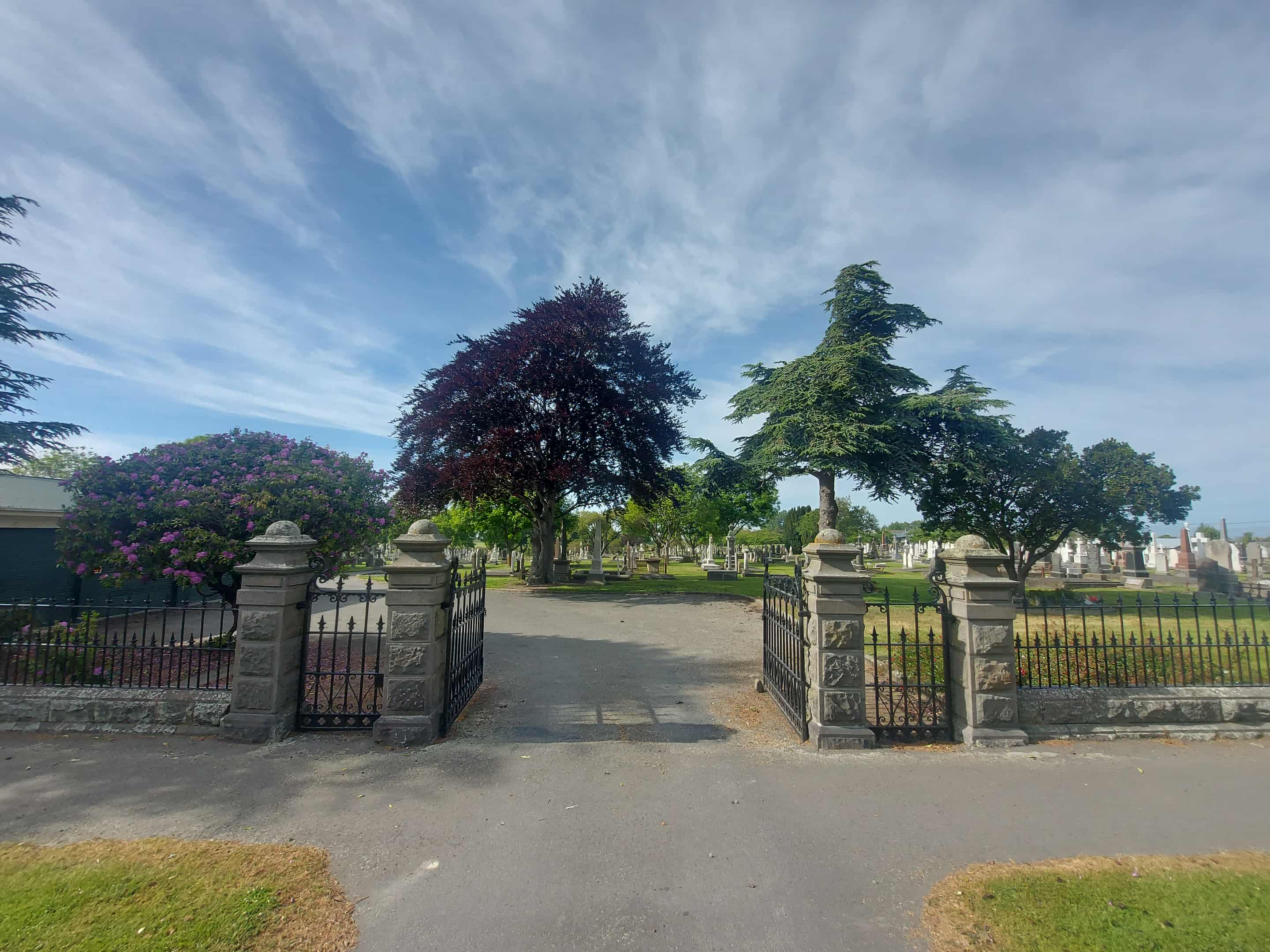
Gates of the timaru cemetery designed by James Turnbull - his fathers monument is the white oblisk - Photo Roselyn Fauth 2025
The story of Timaru's Oxford begins with Richard Turnbull. In the 1864, with his business partner David Clarkson, built a wooden store on this very corner of Stafford and George Streets. It was part of the busy commercial heart of early Timaru.
Richard Turnbull was born in Oxford, England 1826 and moved with his wife Mary and children, to Timaru to establish Clarkson and Turnbull, as general importers, drapers, and clothiers, general store with business partner David Clarkson. They also opened a store in Temuka 1865.
Clarkson had established Dunstable Store in 1854 Christchurch, which was later purchased and renamed Ballantyne & Co. in 1920.
They were the first to export local flour from Timaru to the UK.
A manager of Clarkson and Turnbull, Charles Bowker went on to become a successful land agent. You might recognise his name as he gifted a band rotunda for Alexandra Square, and the Bowker gates at Centennial Park.
In 1865 the partners could see that to grow the town, they had to grow the port. Mooring out at sea was time consuming, risky and dangerous. So the pair created a penny token in 1865, at the time the Port was just a dream. But eventually Richard would host a town meeting and help form the first harbour board to get the dream moving into reality of the first breakwater construction and development. Our region would not be what it is today, without the local port logistic connection to global markets.
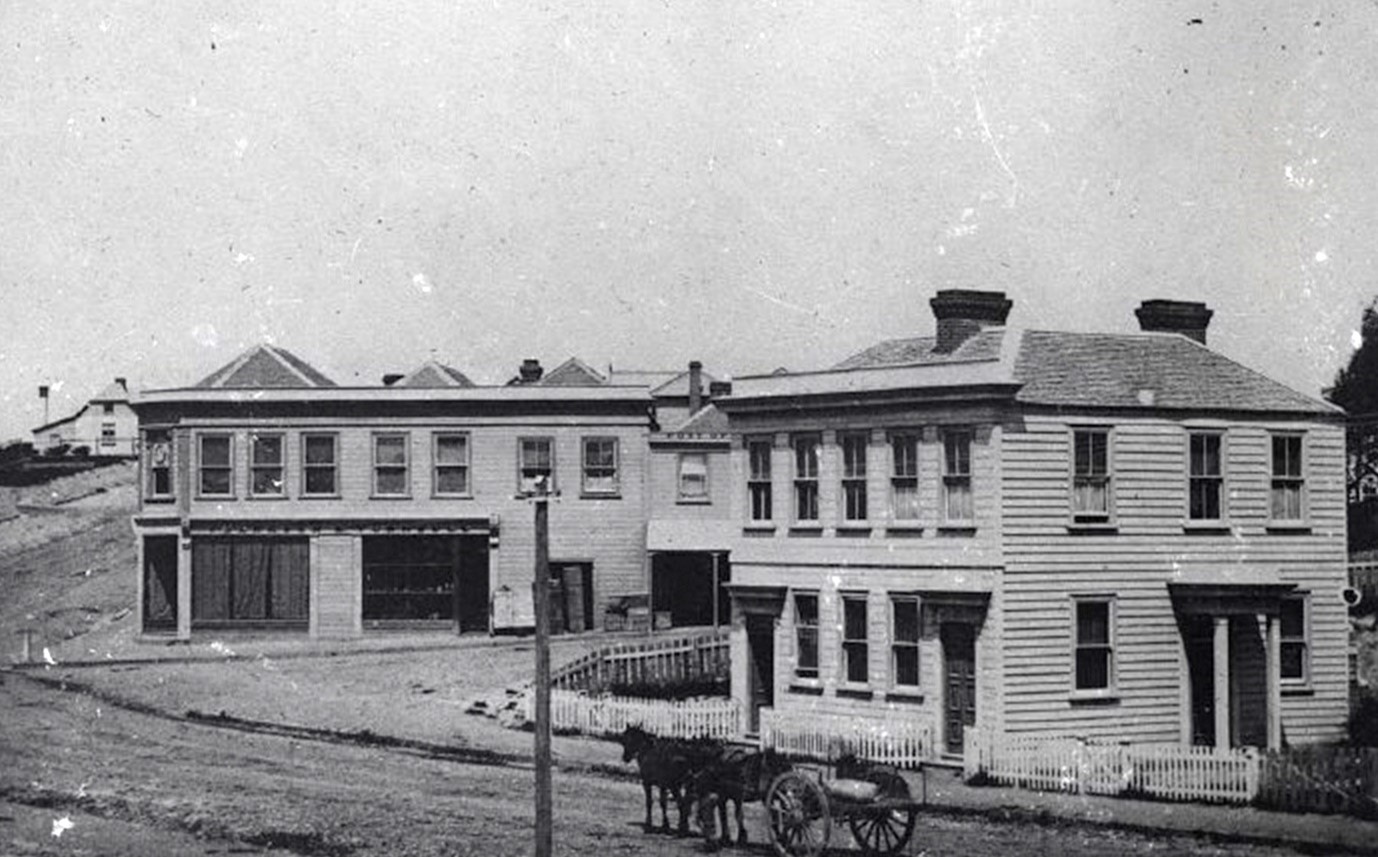
ABOVE: Turnbull and Clarkson’s wooden shop ‘The Corner’ on Stafford St and George St around 1862-68 before the Great fire. – South Canterbury Museum CN 201904932. Their partnership created one of Timaru’s earliest wholesale and drapery businesses (Clarkson & Turnbull Ltd, 1863–68), forming a bridge between Christchurch’s Cashel Street trade (Dunstable House) and Timaru’s provincial commercial development. On 7 December 1868, Timaru burned. A fire tore through the business district, destroying three quarters of the wooden towns shops, offices, and homes. Fanned by a hot nor wester, flames leap from roof to roof. Neighbours formed bucket lines, but little could be done. From the shock, the grief of loss of all their hard work, they mustered the energy to rebuild. They built stronger, in brick and stone. The corner where the Oxford stands today, was destroyed in the fire. Rebuilt. And Rebuilt again in 1925.
A key moment in Timaru's European history was the devistating great fire of December 1868. Fanned by a hot nor’wester, flames tore through the town and destroyed more than three-quarters of the commercial centre’s wooden buildings. From Church Street almost to Woollcombe Street, homes and livelihoods were lost — including not only the Turnbull & Clarkson Corner shop, but the Turnbull's family home next door on George Street as well.
It must have been a real test of resiliance, as the people of Timaru rebuilt stronger in brick and stone creating the Victorian and Edwardian architecture sturdy CBD we enjoy today.
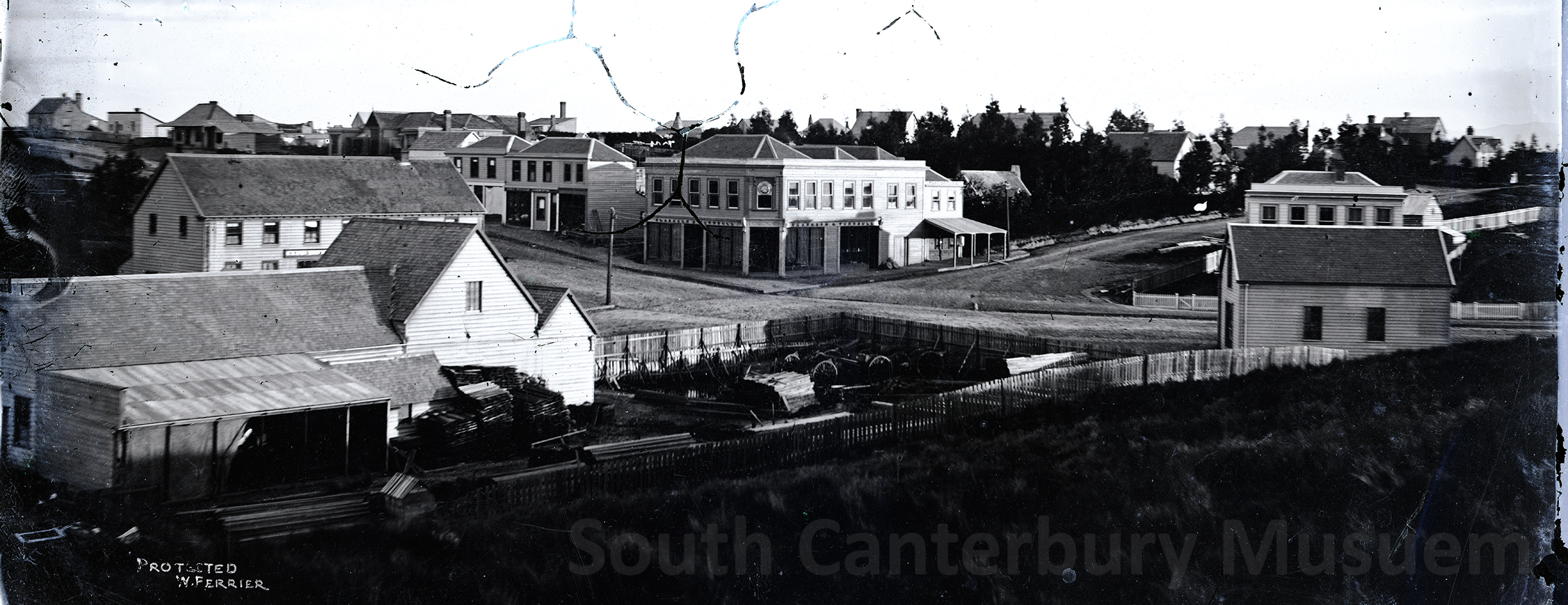
Clarkson and Turnbull Corner Store - South Canterbury Musuem 6108
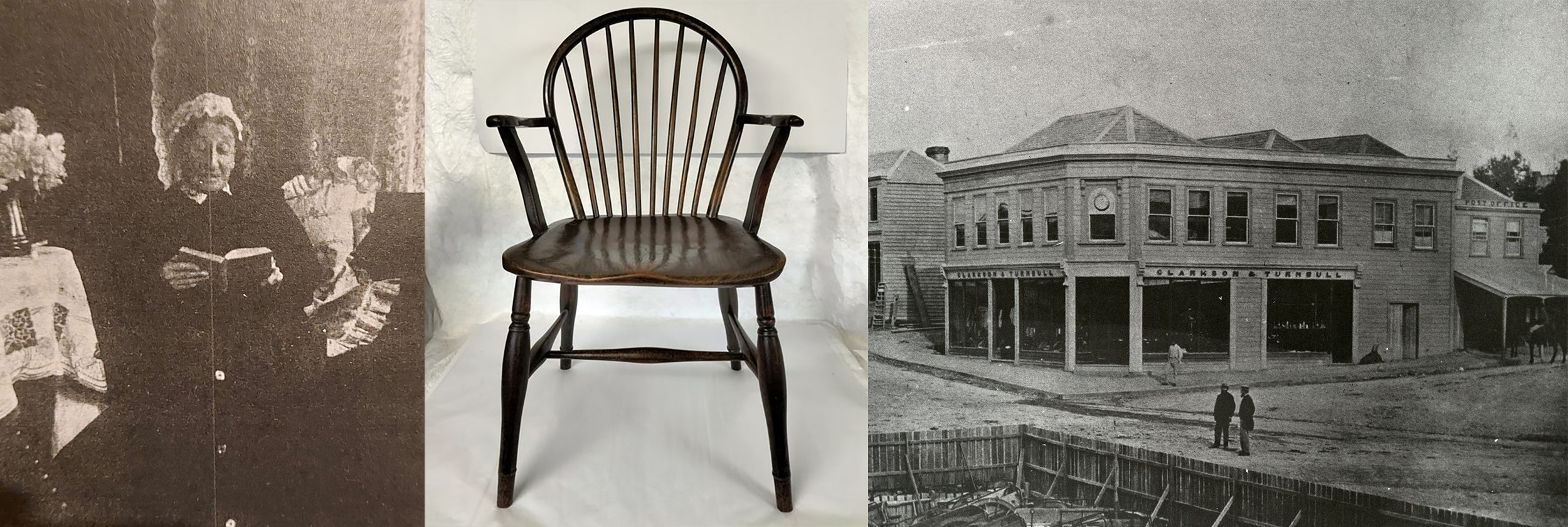
Mary Hepzibah Turnbull (Book Richard Turnbull a Timaru Pioneer) Richard Turnbulls Chair South Canterbury Museum-CN-6108. Right Clarkson and Turnbulls wooden store on the Corner of what is now Stafford Street and George Street. The Turnbulls Home was next door.
Mary Hepzibah Turnbull (nee Watts) was born in 1830 in rural Oxfordshire, England, at a time when the Swing Riots swept through the countryside as farm labourers rebelled against low wages and the rise of machines. In 1851, at 21, she married Richard Turnbull and, already pregnant, sailed from England aboard the Fatima as part of the Canterbury Association’s settlement scheme. After a three-month voyage, she arrived in Lyttelton in December 1851, where her first child was born and died a month later. Over the next decade she and Richard had six more children while he farmed at Halswell near Christchurch, before moving south to Timaru in 1864 — then little more than a scattered landing place on the open shore. There the Turnbulls established the store Clarkson & Turnbull on George Street, and Mary raised a large family through fires, floods, and losses with no servant help — “each one does their part to help,” she wrote home in 1881. Her children grew up to play their own roles in Timaru’s history: her son Arthur helped crew the lifeboat Alexandra in the tragic 1882 Benvenue rescue, and David Clarkson Turnbull later became a prominent merchant and harbour advocate. By the time Mary died in Timaru on 14 October 1902, aged 73, the muddy settlement she had arrived in had grown into a prosperous port town of stone buildings and street lights. She was buried beside Richard in Timaru Cemetery — a pioneer mother whose life traced the transformation of both family and town. https://www.wuhootimaru.co.nz/blog/958-imagining-mary-hepzibah-turnbull-s-life-through-a-chair

Before you could turn on a tap in Timaru, you had to make a trip to your local well. This photo taken by Burton Brothers, Dunedin 1868 on George Street looking up to the original wooden BNZ building. Clarkson and Turnbull is across the road (left of centre) and the Club Hotel and Flockton Well in the foreground at the left-hand side of the image. There is a man standing on the well and two boys in front of it. The Russell Ritchie and Co. building is on the right corner. Photograph of Flockton Well near the corner of George St and the Great North Road (Stafford St), between April and December 1868. It is viewed looking along George St to the west. The original wooden Bank of New Zealand building is visible on the corner (centre of image), with Clarkson and Turnbull across the road (left of centre) and the Club Hotel and Flockton Well in the foreground at the left-hand side of the image. There is a man standing on the well and two boys in front of it. The Russell Ritchie and Co. building is on the right corner. The photograph is mounted on a card backing with the photographers' details and "View Up George St., Timaru." handwritten on lower edge. There are also handwritten labels on the top and lower edges of the mount (with small arrows pointing to the appropriate site) that identify the buildings. - nzmuseums.co.nz/3359/flockton-well-corner-of-george-st-and-the-great-north-roadSouth Canterbury Museum
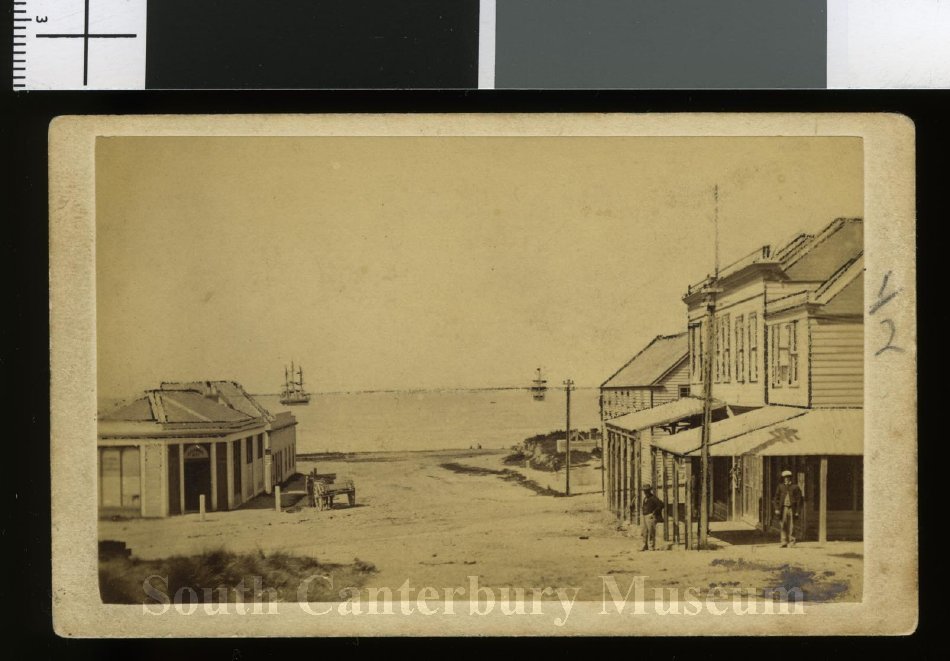
Overdrawn photograph looking down George St and across Great North Road (Stafford St) to the sea, circa 1864. The buildings of Clarkson & Turnbull plus the Post Office appearon the right. Two men are pictured standing outside the Post Office while a horse and wagon can be seen outside Russell Ritchie and Co. on the left. In the background two ships are visible in the roadstead. South Canterbury Museum CN: 2094
1869
Gabities Corner
The Turnbulls rebuilt three times on this same corner. The fire of 1868 destroyed their store and family home, they rebuilt and Gabities operated here for almost 100 years.
Richard rebuilt the store on the corner, and constructed a warehouse for his grain merchant and auctioneer business up the road where the Theatre Royal is today. In that building, he hosted a public meeting resulting in the first harbour board to champion Timaru’s new breakwater. Their Port dream was becoming a reality.
Arthur Gabities who had been a manager for Clarkson & Turnbull, established his drapery clothing company here, called it Gabities and Plain in 1872. They operated here for nearly a century giving the corner the nickname of Gabities Corner.
There were three other retailers in the smaller shops along Stafford Street.
Richard helped establish the first school and mechanics’ institute.
He served on the first borough council (1870) and in the Canterbury Provincial Council, securing £100,000 for Timaru’s harbour.
After Sir Edward Stafford (Stafford St’s namesake) resigned, Richard was elected to Parliament for Timaru in 1877, serving until his death on 17 July 1890.
A Liberal, he supported education, workers’ rights, and led religious services at the hospital and gaol, often visiting the prisoners to read letters to them. He also served on the harbour board.

ABOVE: 1870 photograph of what was then known as South Road, Timaru (present day Stafford Street) showing construction underway of Richard Turnbull’s Stone Store up the hill on the left. On the corner is Richard Turnbulls shop that was rebuilt in stone after the 1868 fire. – Alfred Charles Barker, Canterbury Museum ID 13/57.
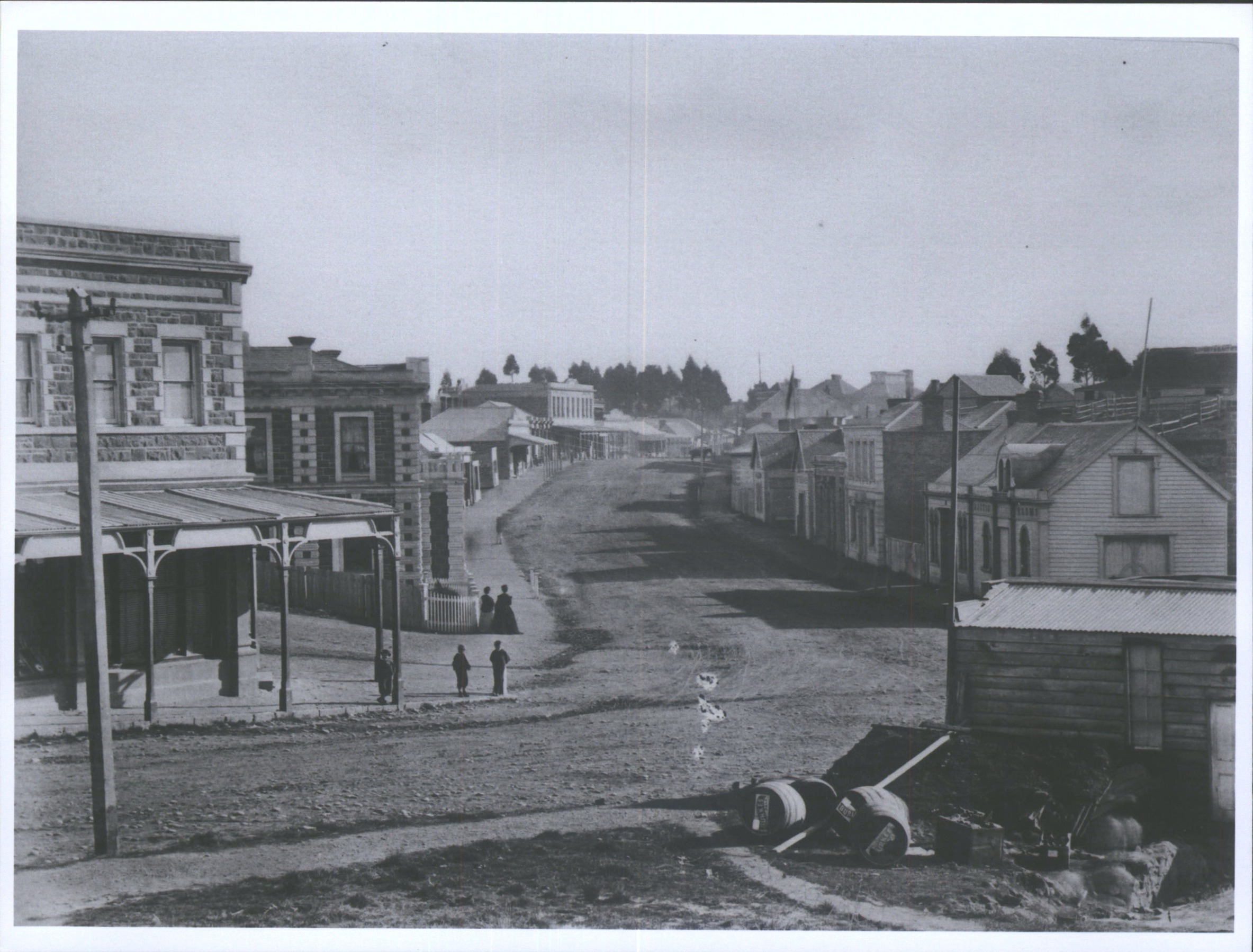
George Street, Timaru. Hocken Digital Collections, accessed 17/04/2025, https://hocken.recollect.co.nz/nodes/view/23495
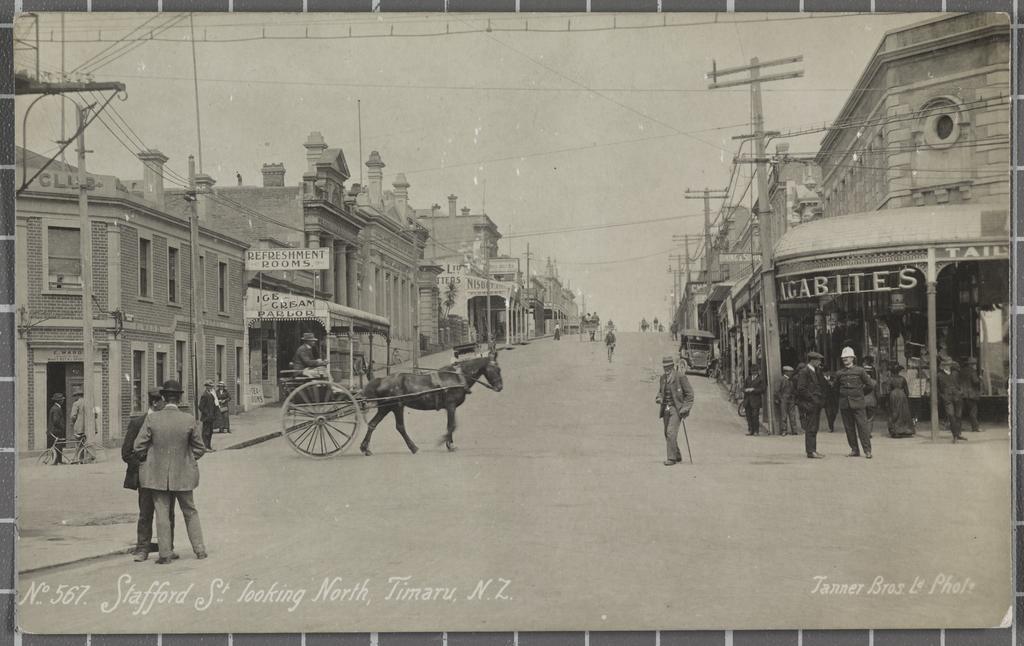
The Post Office and the Public Library, Timaru. Hocken Digital Collections, accessed 10/09/2025, https://hocken.recollect.co.nz/nodes/view/23731
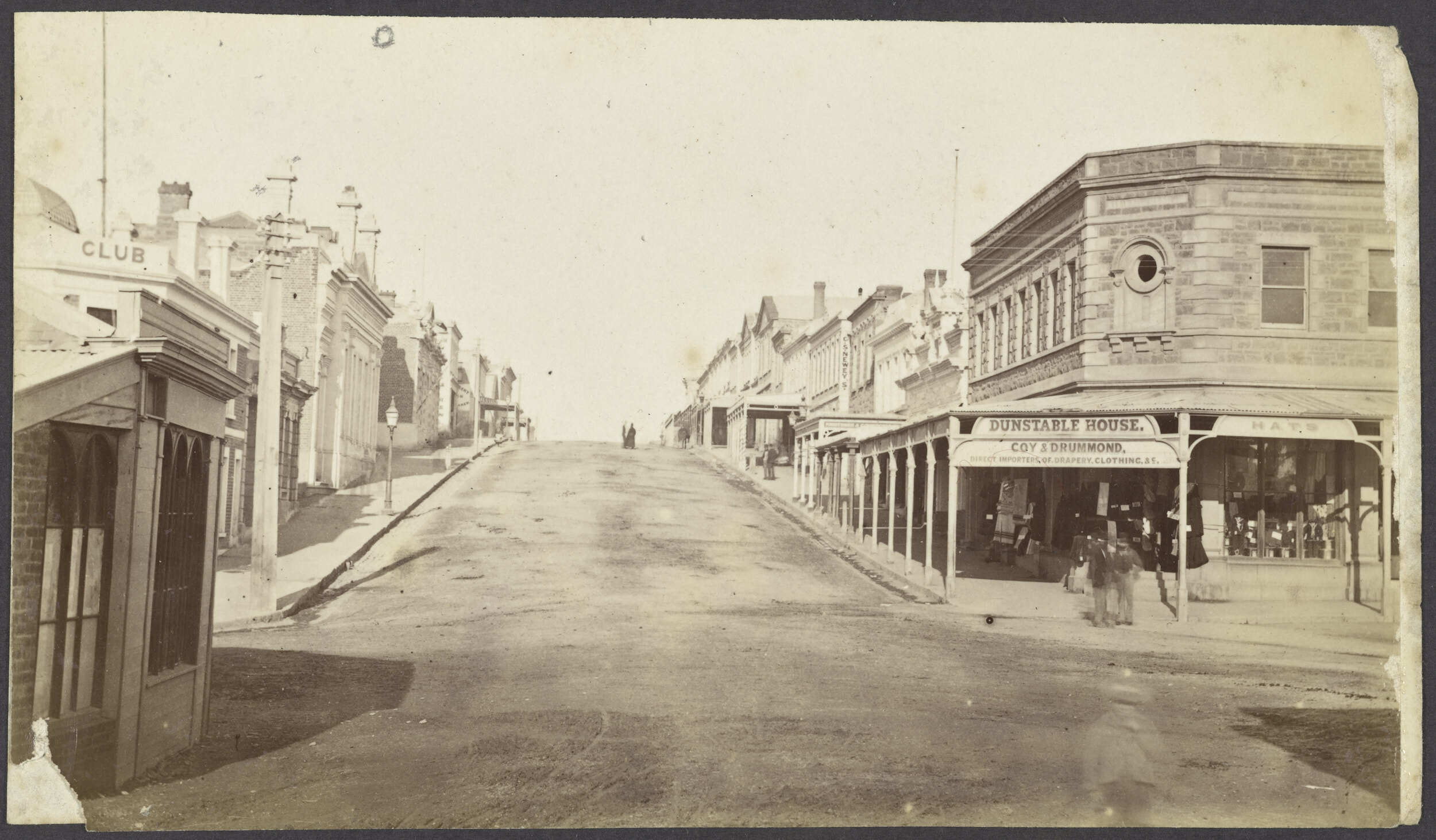
Stafford Street, Timaru (1880-1884). Hocken Digital Collections, accessed 10/09/2025, https://hocken.recollect.co.nz/nodes/view/66686
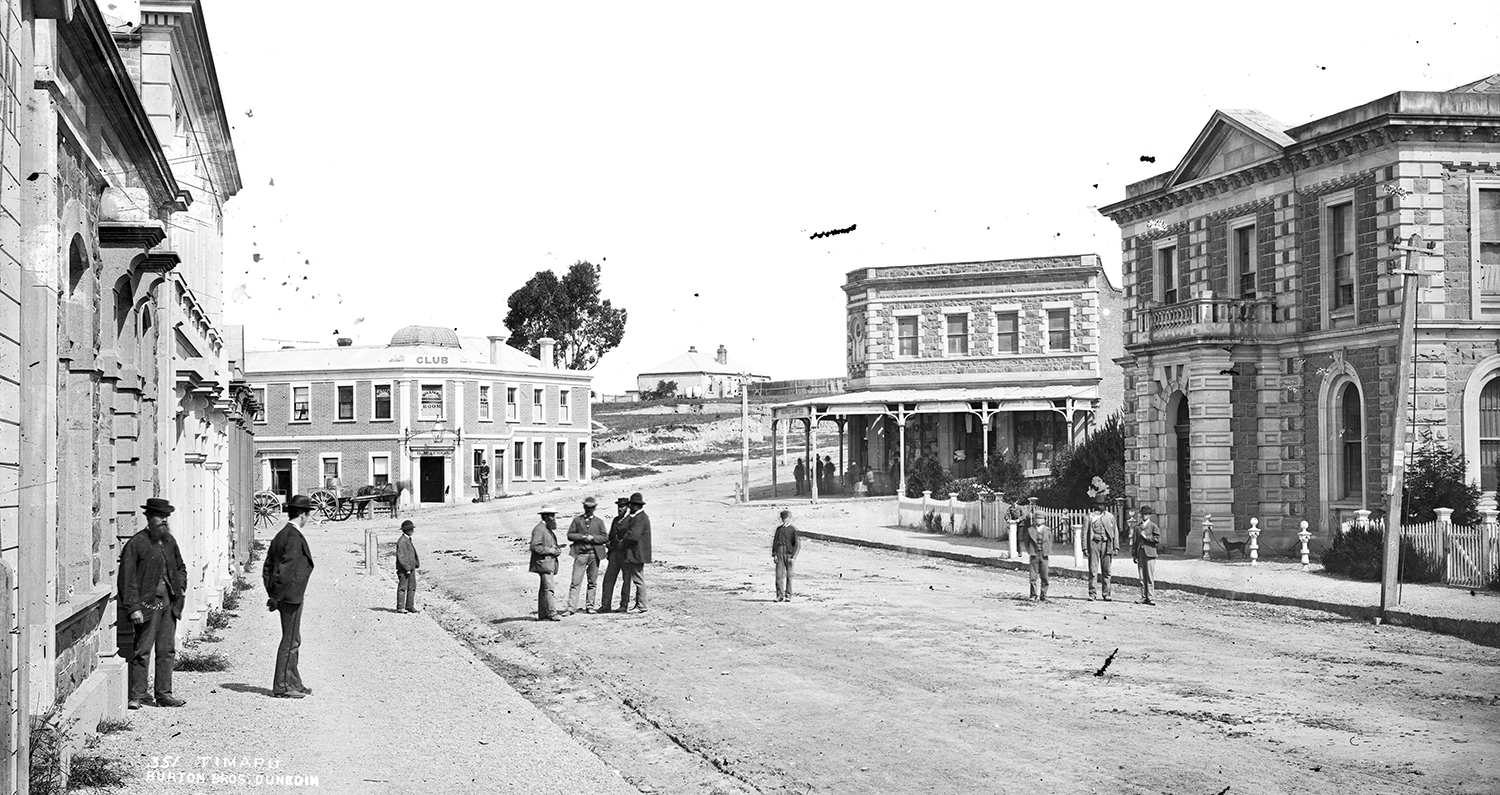
Timaru, 1875, Dunedin, by Burton Brothers, Alfred Burton. Te Papa (C.014371)
Stafford Street, Timaru (1880-1884). Hocken Digital Collections, accessed 10/09/2025, https://hocken.recollect.co.nz/nodes/view/66686
The Post Office and the Public Library, Timaru. Hocken Digital Collections, accessed 10/09/2025, https://hocken.recollect.co.nz/nodes/view/23731
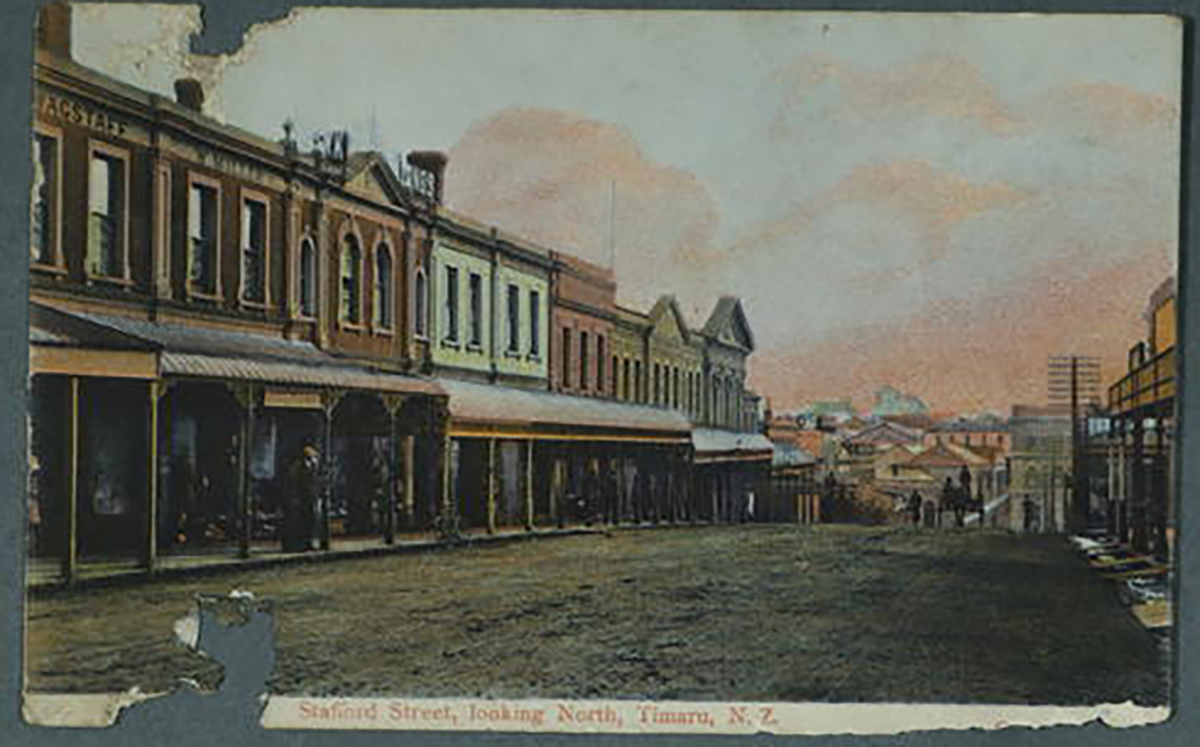
1907 Dunstable House and Ballentines in Timaru - Stafford Street looking North Timaru NZ Industria series Addressed to Miss L Roberts and postmarked
1925
The Oxford Building
Historic Place Category 2
David left school aged 14 to work for him and after his fathers death, established his seed merchant business DC Turnbull & Co in 1894.
D.C purchased the Miles Co & Archer buildings on 1–7 Strathallan Street and had his architect brother James Stuart Turnbull (1864–1947) design the 1901 offices.
James had been working in Melbourne and moved to Timaru to establish his practice in mid 1890s.
D.C grew the business to engage in the wool, seed, grain, and frozen meat trades, he was a shareholder in many companies, invested in property, and even had his own sailing vessels to carry consignments to global markets.
The Oxford Buildings were erected for DC Turnbull & Co. in 1924–25 as a commercial building designed by Turnbull and Rule.
It was going to be three stories, but a fourth was added, making it the tallest in Timaru at the time. If you look closely you can see union jacks in the building. These and the buildings name link back to brothers father, Richard and where he was born, Oxford.
the building was strong, modern, proud, and full of optimism.
The local branch of the Press and the Weekly Press moved into an office on the first floor in April 1927.
Government Life Insurance purchased the building in the early 1950s.
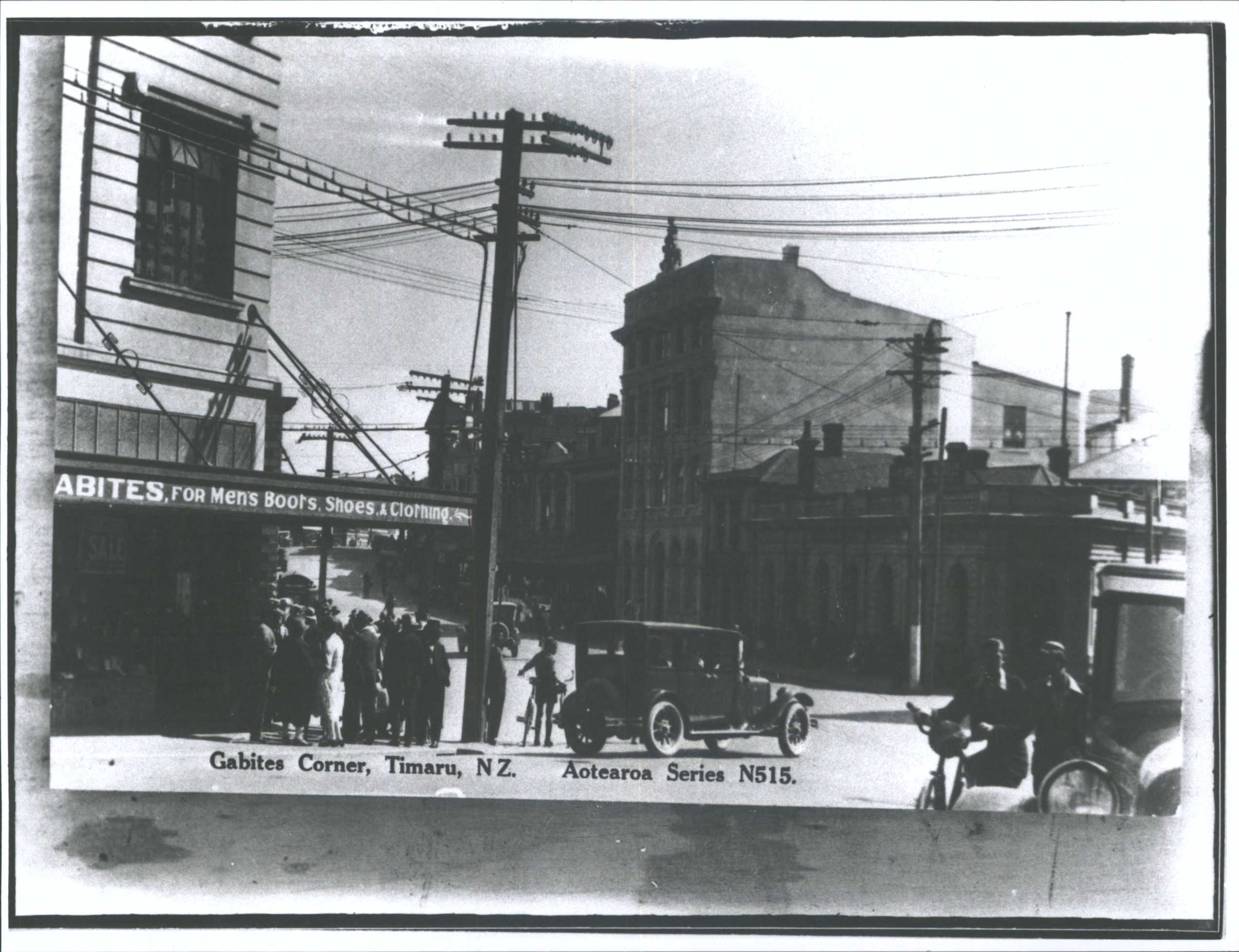
Gabites Corner, Timaru, N.Z.. Hocken Digital Collections, accessed 17/04/2025, https://hocken.recollect.co.nz/nodes/view/23620

A great example of removing the old to make way for the new. The Oxford building opened late 1925, and has stood for a century. A stunning landmark with a story of its own on the site. - Photography By Roselyn Fauth May 2018.

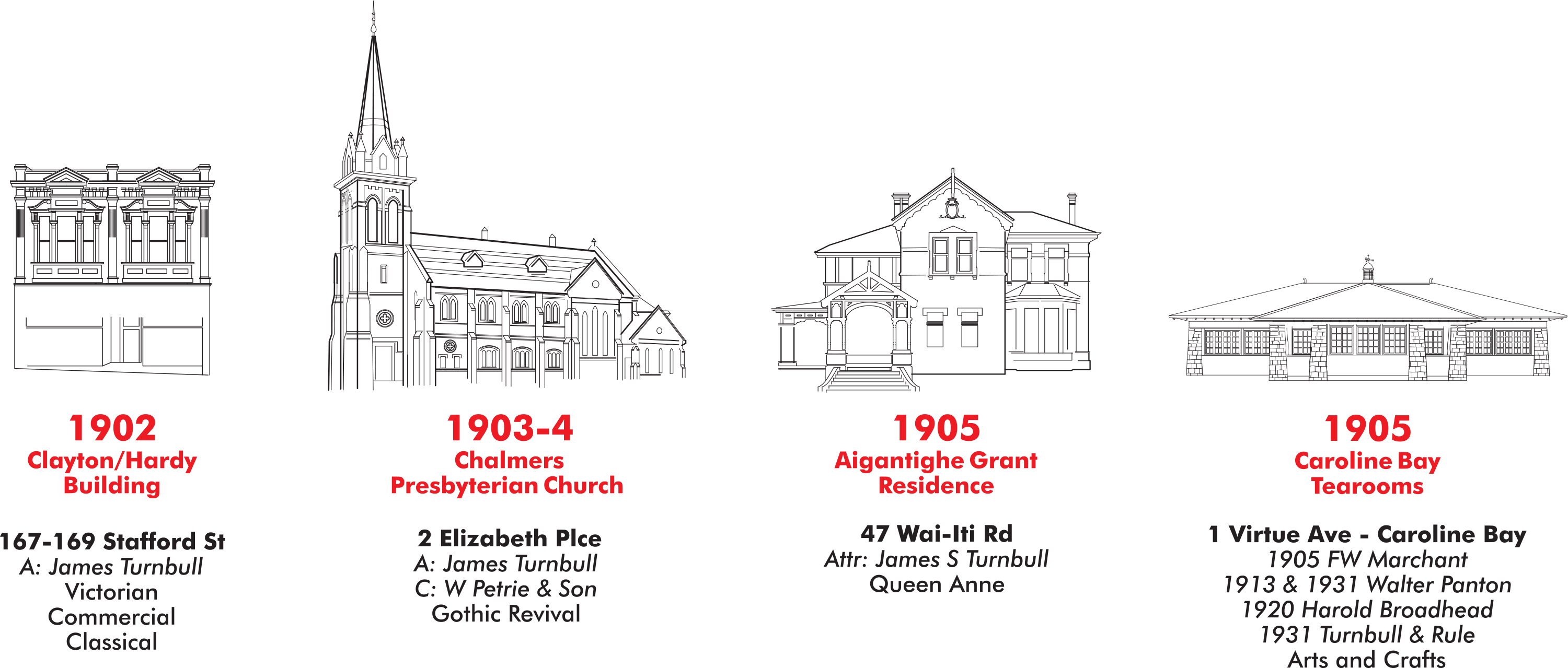

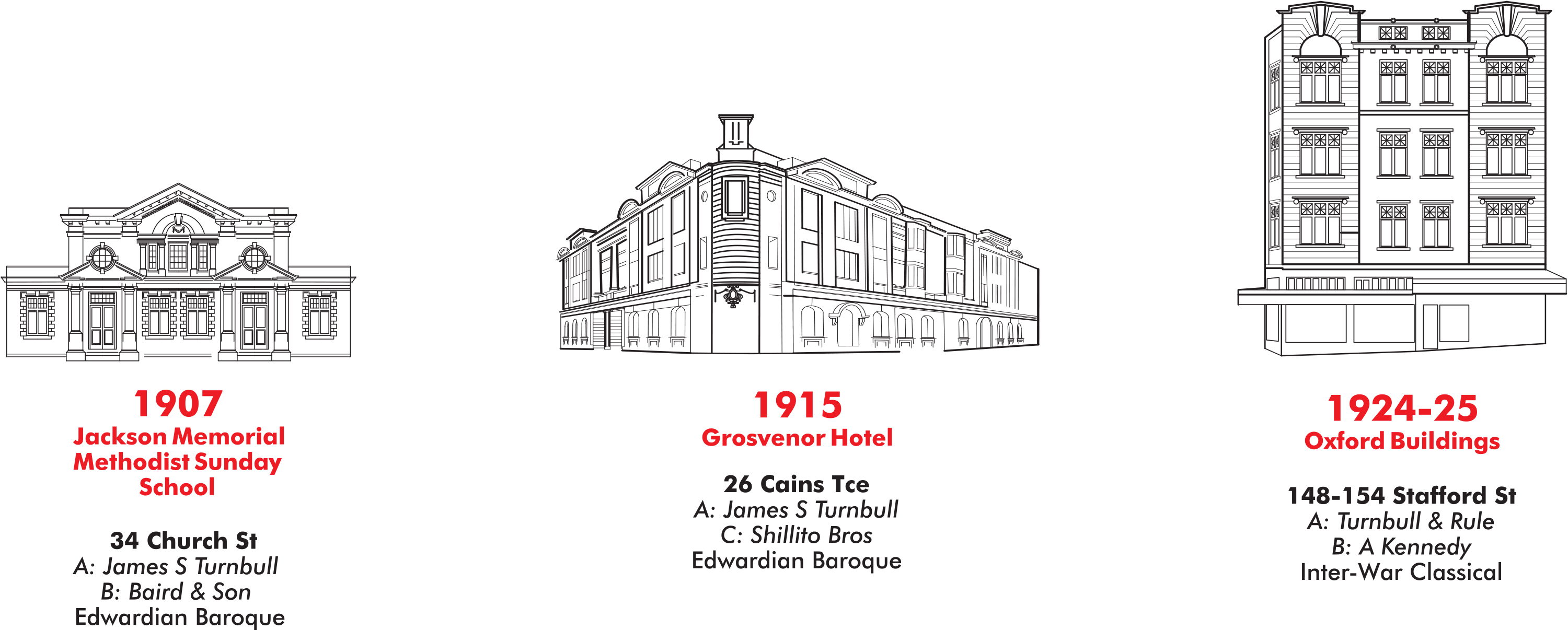
Illustrations of James Turnbull and Percy Watts Rule properties - by Roselyn Fauth - copyright 2025/
The firm also designed the Timaru Boys’ High School War Memorial Library (1924), the A.M.P. Society building, St John’s Church at Highfield, the Anglican Church at Cave, major blocks of the Timaru Public Hospital including the gold-medal-winning Surgical Block (1939), the Timaru Technical College, and numerous private residences and commercial buildings throughout South Canterbury.
https://www.heritage.org.nz/list-details/4994/Listing#details
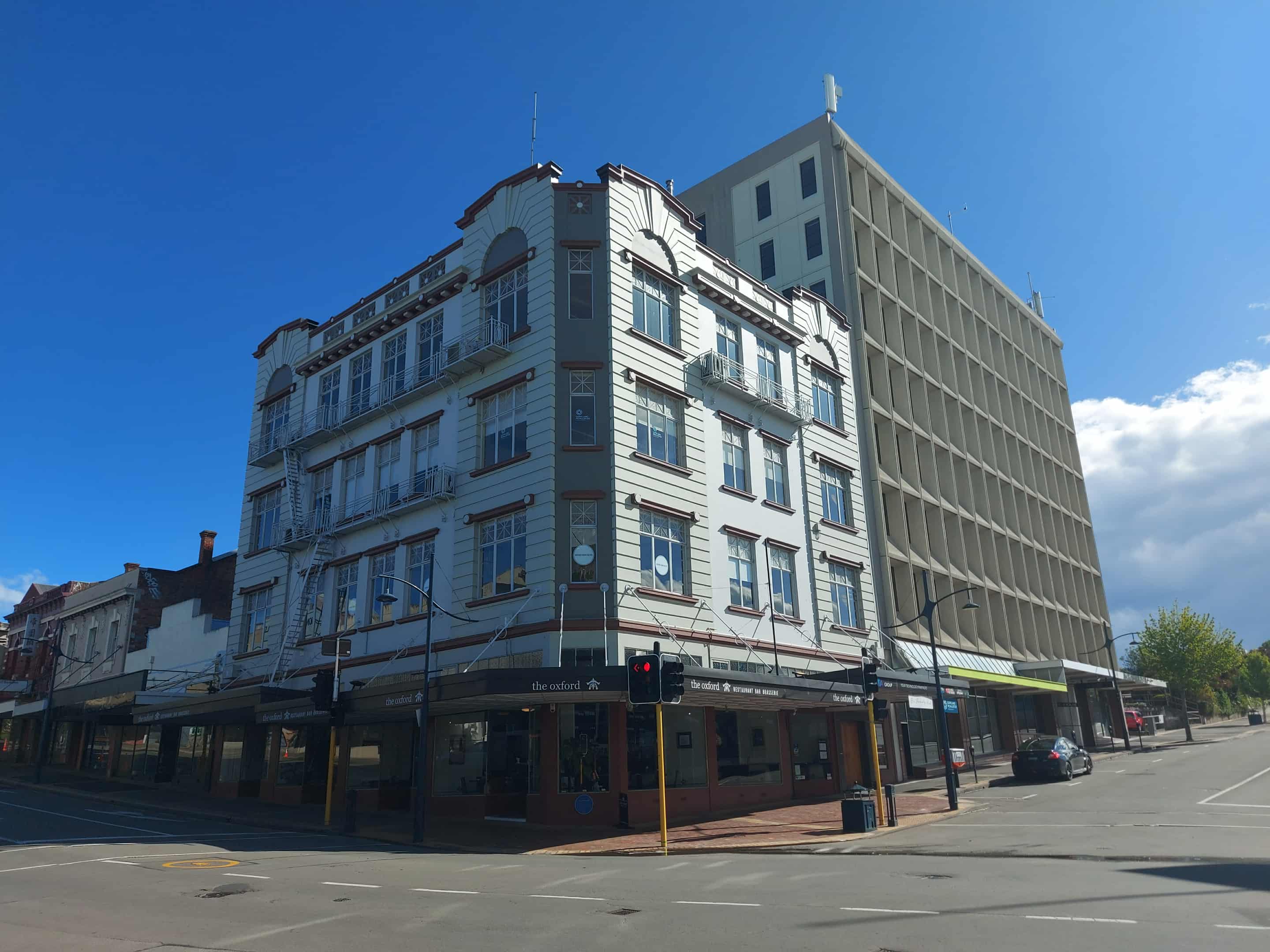
The Oxford built for DC turnbull - designed by turnbull and rule opened Dec 2025. Photo Roselyn Fauth 2025
James Turnbull: Many say he was the Gentleman Architect
James Stewart Turnbull was born in Timaru in 1864, third of nine surviving children to Richard Turnbull and Mary Hepzibah née Watts) and their first child to be born in Timaru. His brother David Clarkson was born a few years later in 1868, the year of the Great Fire in Timaru. the couple had married in Oxford, England, in 1851 and emigrated to New Zealand aboard the Fatima that December. James' father Richard was a merchant, shopkeeper, councillor, and Member of Parliament, and his mother ran a busy household that raised future builders, merchants, and farmers.
James apprenticed as a builder for 4-5 years, trained in Christchurch as an architect under R. W. England, and then worked for Crouch & Son (over 2 years, as their inspector of works) and F. W. Grey (and possibly Lawson & Grey). It was while in the offices of the respected Melbourne architects that he connected to the Arts and Crafts movement. He learned the value of honest materials and good proportions — of design that was practical, beautiful, and made to last.
When he returned home in 1892, Timaru was booming with shipping, wool, and ambition. He opened his own practice and went on to design many of the buildings that define our town’s skyline:
- D.C. Turnbull & Co Offices (1901, Strathallan Street)
- Coronation Buildings (1902, Stafford Street)
- Chalmers Presbyterian Church (1903–04, Elizabeth Place)
- The Grosvenor Hotel (1915, Cains Terrace)
Many attribute him to the design of the Aigantighe House, now the Aigantighe Art Gallery. While the records are unconfirmed, the style is unmistakably his — thoughtful, well-proportioned, and built to last.
When the New Zealand Institute of Architects was formed in 1905, James was made a Fellow, recognising both his skill and his contribution to the profession. He designed not only for strength and function, but for grace and community. He joined the NZIA Council in 1910.
James married Katherine Laing-Meason, early 1915; home in Sefton Street.
The New Zealand Institute of Architects: A Mark of Distinction
The New Zealand Institute of Architects (now known as Te Kāhui Whaihanga) was founded in 1905 to uphold excellence in design and practice across the country. It recognised those who built not just structures, but the identity of Aotearoa.
James Turnbull was among the first Fellows. His later partner Percy Watts Rule would also become a Fellow, serve as the Institute’s Secretary, and in 1939 receive the NZIA Gold Medal for his design of the Surgical Wing at Timaru Hospital — the highest honour in New Zealand architecture.
For both men to be recognised at that level, I think says a lot about the respect they earned nationally and the quality of the work they left behind here in South Canterbury.

Grave of James Stuart Turnbull (1864–1947) and Katharine Turnbull (1878–1972). James Stuart Turnbull passed away on 9 June 1947, aged 82, and was interred the following day in the Timaru Cemetery. His wife, Katharine Turnbull, of Bidwill Hospital, Seaview, Timaru, died on 10 December 1972, aged 94, and was laid to rest beside him in the General Section, Row 130, Plot 430. - Photo Roselyn Fauth 2025
Percy Watts Rule: The Perfectionist and Polymath
Percy Watts Rule was born in Napier on 4 October 1888, the eldest son of Alexander P. and Clara J. Rule, Scottish settlers from Paisley who arrived in Timaru in 1890. Percy attended the Anglican Church, and was educated at Timaru Main School and Timaru Boys’ High School, where he won a Junior Scholarship — a sign of the determination and intellect that would shape his life.
After leaving school, he apprenticed with G. O. Clayton, a local builder. The skills he learned there — attention to craft, a feel for proportion, and respect for materials — would stay with him throughout his architectural career.
Percy joined Turnbull’s office starting as a junior 1907, rose to first assistant, and became a partner in 1919. Where James was traditional and steady, Percy probably brought fresh ideas, discipline, and a touch of imagination. Together they created a partnership that defined much of Timaru’s interwar architecture.
Percy was the principal designer for many of the firm’s later projects, including:
- Timaru Boys’ High School Memorial Library (1924), built to honour the 52 Old Boys who gave their lives in the First World War. It remains the only original building on the North Street site, later extended in 1955 with a memorial window for those lost in the Second World War.
- Temuka Library (1926–27)
- St Mary’s Hall, Timaru (1928–29)
- St James’ Anglican Church, Franz Josef (1928–31)
- Additions to the Bank Street Methodist Church (1930)
- The Surgical Wing, Timaru Hospital (1936–40), for which he received the NZIA Gold Medal.
Outside his professional life, Percy was one of Timaru’s great cultural champions. He was Secretary of the NZ Institute of Architects, a Fellow of the same body, and a passionate book collector. His private “Earlham Library” contained rare Bibles, manuscripts, and first editions. He was also president of the South Canterbury Historical Society, vice-president of the Timaru Choral Society, and honorary architect to the Kindergarten Association and the YWCA.
Percy's and his wife Kathleen (Kathie) (FYI, don't get confused with James' wife Katherine) both shared a love of learning and community. Their daughter Hazel was born in 1915.
Percy married Kathleen (Kathie) Rule, and they made their home at 25 Sefton Street in Timaru — a grand residence of over 1,500 square metres of land and a 360 m² house.
It was the kind of home only an architect would design: generous yet unpretentious, beautifully proportioned, and built to last. Their daughter, Hazel Ewing Rule, was born in 1915 and later married the Rev. Harold G. Norris, Vicar of St Peter’s, Riccarton, Christchurch.
Even now, the Sefton Street property still reflects the hallmarks of Percy’s design — well-planned, light-filled, and enduring. The house has since been converted into flats, but its bones remain true to the thoughtful architect who lived there.
Unearthing Percy Watts Rule: A Story from the Aoraki Heritage Archive
By Roselyn Fauth - based on obituary from the Aoraki Heritage Archive.
I’ve spent the past few years tracing the Turnbull family — their buildings, their lives, their part in shaping Timaru’s early skyline. I’ve followed their story through streets, plaques, and the city’s old newspapers, building a picture of how one family left such an enduring architectural mark.
But one day, while scrolling through the Aoraki Heritage Archive at the Timaru Library, I came across an obituary clipped from a 1953 newspaper. The headline simply read: “Timaru Community Was Well Served by Mr P. W. Rule.”
Until then, Percy Watts Rule had been just a second name in the partnership of Turnbull & Rule — a quiet presence beside the Turnbull legacy I’d come to know so well. But this obituary was something else entirely. It wasn’t just a list of buildings and titles. It was a portrait of a man who was deeply cultured, endlessly curious, and loved by his community.
The more I read, the more I realised how much of Timaru still bears his touch — and how much of his story has quietly slipped through the cracks of time.
So this is my attempt to put him back in the frame...
Percy Watts Rule was born in Napier on 4 October 1888, the eldest son of Alexander P. and Clara J. Rule, Scottish settlers from Paisley who arrived in Timaru in 1890. Percy attended the Anglican Church, and was educated at Timaru Main School and Timaru Boys’ High School, where he won a Junior Scholarship — a sign of the determination and intellect that would shape his life.
After leaving school, he apprenticed with G. O. Clayton, a local builder. The skills he learned there — attention to craft, a feel for proportion, and respect for materials — would stay with him throughout his architectural career.
In 1907, he joined the office of James S. Turnbull, one of Timaru’s leading architects. Percy started as a junior, rose to first assistant, and in 1919, was made a partner. Together, they formed Turnbull & Rule, a partnership that would define South Canterbury’s interwar architecture.
The Turnbull & Rule Years
Turnbull and Rule were responsible for many of Timaru’s best-known buildings. Their designs blended timeless classical composition with modern sensibility. The pair created schools, churches, and commercial buildings that still anchor the town’s streetscape today.
Their portfolio included:
- Timaru Boys’ High School War Memorial Library (1924) — a small but exquisite memorial to 52 Old Boys who lost their lives in WWI.
- Temuka Library (1926–27).
- St James’ Anglican Church, Franz Josef (1928–31).
- The Oxford Building (1924–25), commissioned by David Clarkson Turnbull and now celebrating its 100th year.
By the late 1920s, Percy had become the principal designer within the firm. His architectural voice was assured — clean lines, symmetry, and subtle ornament that carried both dignity and warmth.
The Oxford Building, with its pastel façade, sunrise parapets, and Union Jack motifs, perfectly captured that spirit. It represented optimism after war and hardship — a balance between restraint and celebration.
Though built several years before the 1931 Napier earthquake, the Oxford’s geometric composition and rhythmic ornamentation suggest that Percy was already exploring ideas that would later define New Zealand’s Art Deco era. It’s tempting to think he would have been fascinated by the Napier rebuild — a national conversation about modernism, colour, and renewal that echoed his own instincts.
A Life of Culture and Curiosity
The more I read about Percy, the more it became clear he wasn’t just an architect — he was a collector of beauty in many forms. His obituary described him as “known nationally as an architect and internationally as a connoisseur.”
He loved music, art, natural history, and astronomy. He was an active member of the Timaru Choral Society, and his home was said to be filled with paintings, antiques, and rare books.
In fact, his private collection, known as the Earlham Library, was legendary. It included some of the rarest printed works in New Zealand:
- A Koburger Bible (1480) bound in blind-tooled pigskin.
- A Bugge Bible (1549) and a Breeches Bible (1602).
- A Harrison’s Bible (1562) printed in black letter.
- A Fourth Folio Shakespeare, bound in panelled Morocco.
- More than 130 editions of The Rubaiyat and over 100 works by Oscar Wilde.
- Fifteenth-century illuminated manuscripts with coloured initials and burnished gold.
He also maintained a numismatic cabinet, collecting coins and medals, and created a special section devoted to A. Edward Newton, the famed American bibliophile. Percy even bound many of his own volumes in full-tooled leather — the mark of a true craftsman and lifelong learner.
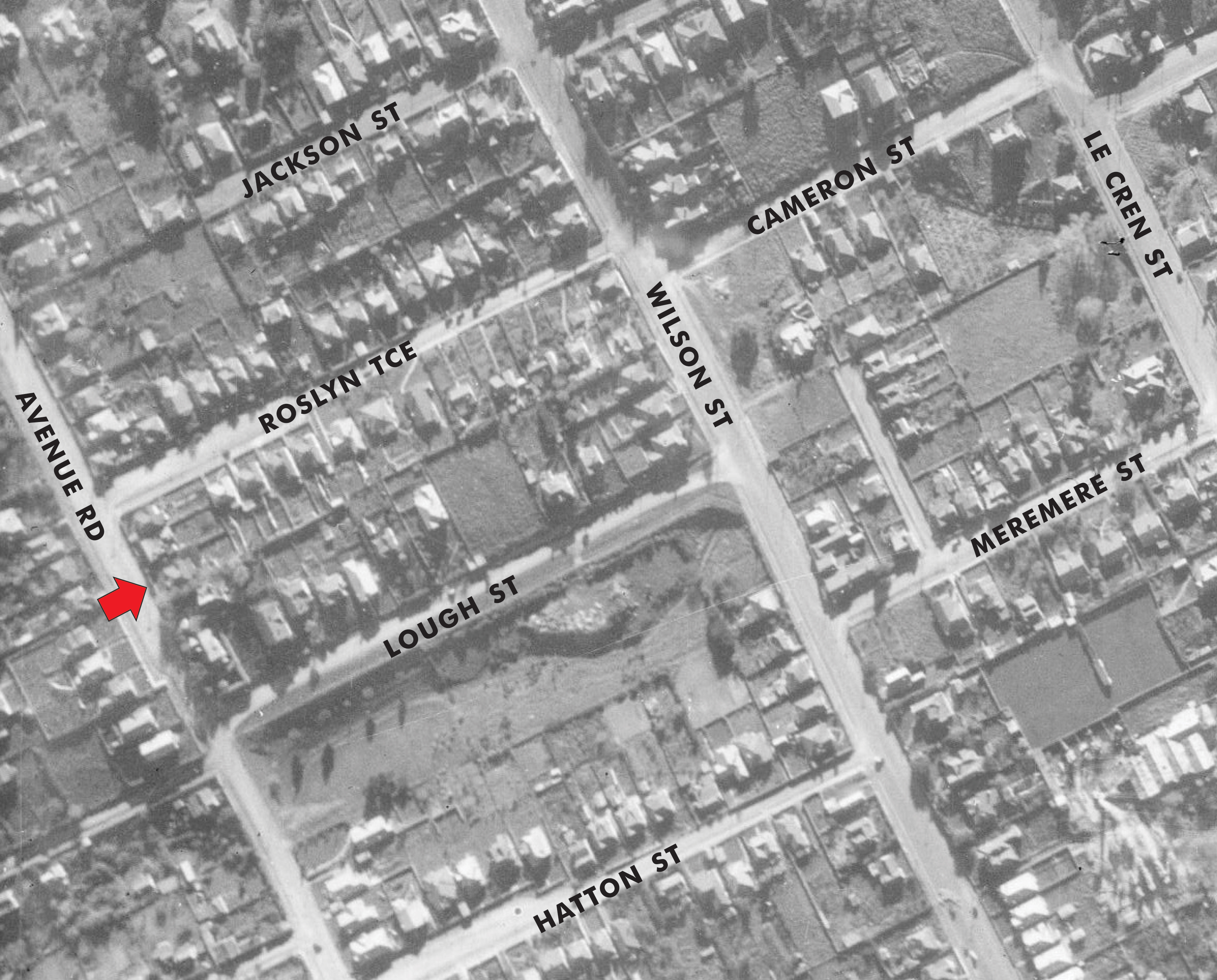
Percy designed their family home on 75 Avenue Road, and it stood on the site until it was demolished in 2025. https://retrolens.co.nz/ 1938 survey photograph over Timaru.
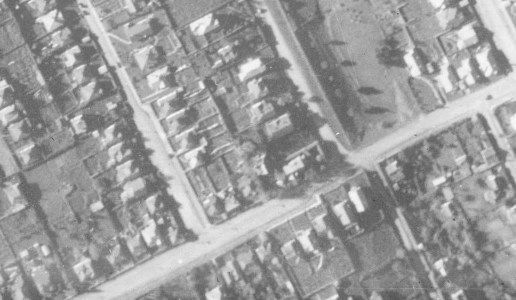
Home of Percy Watts Rule, 1889-1953. Architect and book collector. Of the Timaru architectural firm, Turnbull & Rule; and secretary of NZ Institute of Architects. Husband of Kathleen (Kathie) Rule (d 1952), and father of Hazel Ewing Rule (b 1915).
Archdeacon Pays Tribute To Mr P W Rule As Citizen (May 1953). Aoraki Heritage Collection, accessed 04/11/2025, https://aorakiheritage.recollect.co.nz/nodes/view/1057
Describing him as one of Timaru’s most respected and most valued citizens, the Ven. W. W. Averill, Archdeacon of Timaru, paid tribute to the late Mr P. W. Rule at a funeral service in St. Mary’s Church yesterday morning. The Archdeacon was assisted in the service by the Rev. R. P. Andrews, Vicar of St. John’s, Highfield, and the large congregation included the Mayor, Mr W. L. Richards, and representatives of the many organisations with which Mr Rule was connected during his long residence in Timaru.
“In the passing of Percy Watts Rule, the district has lost one whose interest in the cultural life of the community has been profound, if not unequalled,” said Archdeacon Averill. “In his profession as an architect he has left behind him a contribution to the aesthetic beauty of the community in which he lived which will serve as a permanent memorial to his imaginative genius and his passion for correctness of detail. I would refer only to such gems of architectural symmetry as the Timaru Boys’ High School Memorial Library, St. John’s Church, Highfield, the new Anglican Church at Cave, the carved oak work which you see in this church and a magnificent carved screen which will be erected between the chancel and the chapel within the next few weeks.”
“But apart from his contribution to Timaru and South Canterbury as a designer of beautiful buildings and interior decoration, who could possibly assess adequately the value to New Zealand of the many pursuits and interests which somehow Mr Rule found time to cultivate and foster?” continued Archdeacon Averill. “To each and every one of his many interests he always gave his complete attention and the full measure of a discerning mind, ripe wisdom and mature judgement.”
“But most of all, perhaps, Percy Rule will be remembered for his gracious unassuming personality, his dislike for ostentation, his agreeable manner and ready smile which endeared him personally to an amazingly wide and diverse circle of friends and fellow workers,” said the Archdeacon. “Our sympathy goes out in all sincerity to the members of his family. We can assure them that we, the citizens of Timaru and South Canterbury, are united with them in mourning the loss of a distinguished fellow citizen and trusted friend.”
After the service the funeral left for the Christchurch crematorium, where the service was conducted by the Dean of Christchurch, the Very Rev. Martin Sullivan. The bearers at the church were Messrs H. G. Naylor (Dunedin), W. Hart-Smith, E. O. Hall, G. H. Andrews, R. A. Heaney and John Arthur.
High Honour Won Timaru Architects: Dominion Gold Medal Public Hospital Design (12 Apr 1940). Aoraki Heritage Collection, accessed 04/11/2025, https://aorakiheritage.recollect.co.nz/nodes/view/7619
Advice has been received from London that the jury of the Royal Institute of British Architects has awarded the New Zealand 1939 gold medal for a building of exceptional merit to Messrs Turnbull and Rule, of Timaru, who designed the Surgical Block at the Timaru Public Hospital which was opened on June 30, 1939.
The advice was forwarded by telegram by Mr J. M. Dawson, president of the New Zealand Institute of Architects, who conveyed his congratulations to Messrs Turnbull and Rule.
The competition, which was inaugurated some years ago by the New Zealand Institute of Architects, was introduced with a view to encouraging excellence of design in architecture. The Institute agreed to award a gold medal annually for the design of a building of exceptional merit. The die for the medal, together with the first medal, were presented to the Institute by the late Mr Alfred Atkins, a former president.
Drawings, including elevations and photographs, are forwarded to the Royal Institute of British Architects in London which nominates a jury to make the award.
South Island recipients of the gold medal have been very few, North Island architects winning the larger number. The late Mr Herbert Hall, of Timaru, won the gold medal for his design of St. David’s Memorial Church at Cave.
Building Described
The Surgical Block at the Timaru Public Hospital was built and equipped at a cost of £53,000, and in the words of Mr E. Macdonald, chairman of the South Canterbury Hospital Board at the opening ceremony, is “the last word in hospital buildings in New Zealand.” Designed in long straight lines the building is a striking example of modern construction with no waste of ornamentation. The large area of windows is a feature and the sympathetic treatment of the tower blends tastefully with the whole.
The building, which accommodates 76 patients, is 220ft long with an average width of 40ft. It comprises three storeys and a basement, and is carried out in reinforced concrete earthquake resisting construction faced with brickwork.
The building provides for 26 patients in the men’s surgical ward on the ground floor, 26 in the women’s surgical ward on the first floor and 24 in the maternity ward on the top floor. The nursery accommodates 24 cots. In addition to the wards and services, the building includes a complete X-ray block, a comprehensive operating suite and an ante-natal clinic. The basement contains a complete training unit for the nurses with separate lobby and hall, large lecture room 40ft by 31ft, a smaller lecture room 24ft by 11ft and a tutor sister’s office and a demonstration room.
Hazel NORRIS Obituary NORRIS, Hazel Ewing - On February 19 2013, very peacefully, in Christchurch, in her 98th year. Dearly loved wife, and widow of the late Archdeacon Harold Norris (died 1969), and treasured mother of Paul and Michael. Much loved mother-in-law of Caroline and Patsy, and beloved grandmother to Hamish, Rachel, Rebecca, George and James. The family wish to thank the wonderful staff of Bishopspark and Diana Isaac Retirement Village for their devoted care of Hazel in recent times. In lieu of flowers, Hazel's wish was that any donations offered should be made to the Christchurch City Mission, one of her favourite charities. A Funeral service in celebration of Hazel's life will be held in the Christ's College Chapel, This Day (Monday), at 3.00 p.m.

Clara Jenkins Rule (died 23 March 1940, aged 76), Kathleen Ann Rule (died 5 January 1952, aged 60), and Percy Watts Rule (died 17 May 1953, aged 64) — all remembered together in Timaru Cemetery, Section General, Row 34, Plot 389. - Photo Roselyn Fauth 2025

Family and Home
Percy married Kathleen (Kathie) Rule in 1914. According to his grandson Michael Norris, and they made their home at 75 Avenue Road - (Just been demolished a few months ago in 2025). Percy's brother Cyril Rainsford served in World War I. - https://museum.timaru.govt.nz/explore/scroll_kiosk/scroll/profile
It was the kind of home only an architect would design: generous yet unpretentious, beautifully proportioned, and built to last. Their daughter, Hazel Ewing Rule, was born in 1915 and later married the Rev. Harold G. Norris, Vicar of St Peter’s, Riccarton, Christchurch.
Service and Recognition
- Percy believed architecture should serve people. His community involvement was extraordinary:
- President, South Canterbury Historical Society
- Vice-President, Timaru Choral Society
- Past-President, Timaru Philatelic Society
- Vice-President, New Zealand Numismatic Society
- Vice-President, New Zealand Ex Libris Society
- Secretary, South Canterbury Art Society
- Honorary Architect, Kindergarten Association and Y.W.C.A.
He was also active in the Timaru Beautifying Association, Horticultural Society, Craighead Diocesan School Board, and the South Canterbury Advisory Committee for Adult Education.
Professionally, Percy achieved what few regional architects did. He was a Fellow of the New Zealand Institute of Architects (NZIA), later serving as its Secretary — a role that placed him at the heart of his profession.
In 1939, he received the NZIA Gold Medal, the country’s highest architectural honour, for his design of the Surgical Block at Timaru Hospital — a structure admired for its grace, light, and human scale.
When Percy passed away in 1953, the Timaru Herald described him as “one whose interest in the cultural life of the community was profound, if not unequalled.”
The Oxford: Sunshine Parapets and Union Jacks
When the Oxford was completed in 1925, it was the tallest commercial building in Timaru — a modern, four-storey landmark built in reinforced concrete by A. Kennedy.
Its façade still catches the light beautifully. The soft art deco pastels, the rhythm of the windows and arches, the rusticated bays and sunrise motifs. And those wonderful Union Jack patterns in the parapets are more than decoration, they were a symbol of confidence and connection to what many still referred to as the homeland — Britain, and of the optimism of a country stepping into the modern age.
On the corner, Arthur Gabites’ Drapery and Clothing Company opened for business, for years locals called it “Gabites’ Corner.” Upstairs were offices for The Press, The Weekly Press, and later Government Life Insurance. It was a hub of energy, trade, and conversation — a real sign of the times.
Legacy in Brick, Timber, and Story
Across South Canterbury, many families still live in homes designed by James Turnbull or the partnership of Turnbull & Rule. Their houses were well planned, beautifully built, and made to last. They designed schools, churches, and civic buildings with care and pride. Each structure reflected not just its era, but the community it was built for. And at the heart of it all stands the Oxford — its sunshine parapets and Union Jacks still gleaming at the corner a century on.
A Building, A Family, A City
For many of us, The Oxford’s story is not just about the past, but what it endures.
When you look to the façade, you see more than architecture. You see the persistence of Richard Turnbull, who rebuilt after fire. You see the wealth that enables David Clarkson Turnbull to invest in property. You see James Turnbull, who gave our city its distinctive rhythm of red brick and balance. And you see Percy Rule, whose artistry and intellect helped shape the city we live in today.
A hundred years later, the Oxford still stands proud on a site linked to over 160 years of stories.
Heritage isn’t just about old buildings. It’s about what we choose to keep standing, and the stories we continue to tell about who built them, and why.
Aren’t we lucky to have built heritage like this in Timaru? Visitors are often amazed by our architecture — something I truly love too. The façades are more than decoration; they’re like art history, a visual signpost in time, guiding us back to the people and the places that made this town what it is.

King Street, Temuka, New Zealand, 1912, Temuka, by Muir & Moodie. Purchased 1998 with New Zealand Lottery Grants Board funds. Te Papa (PS.001496) No Known Copyright Restrictions
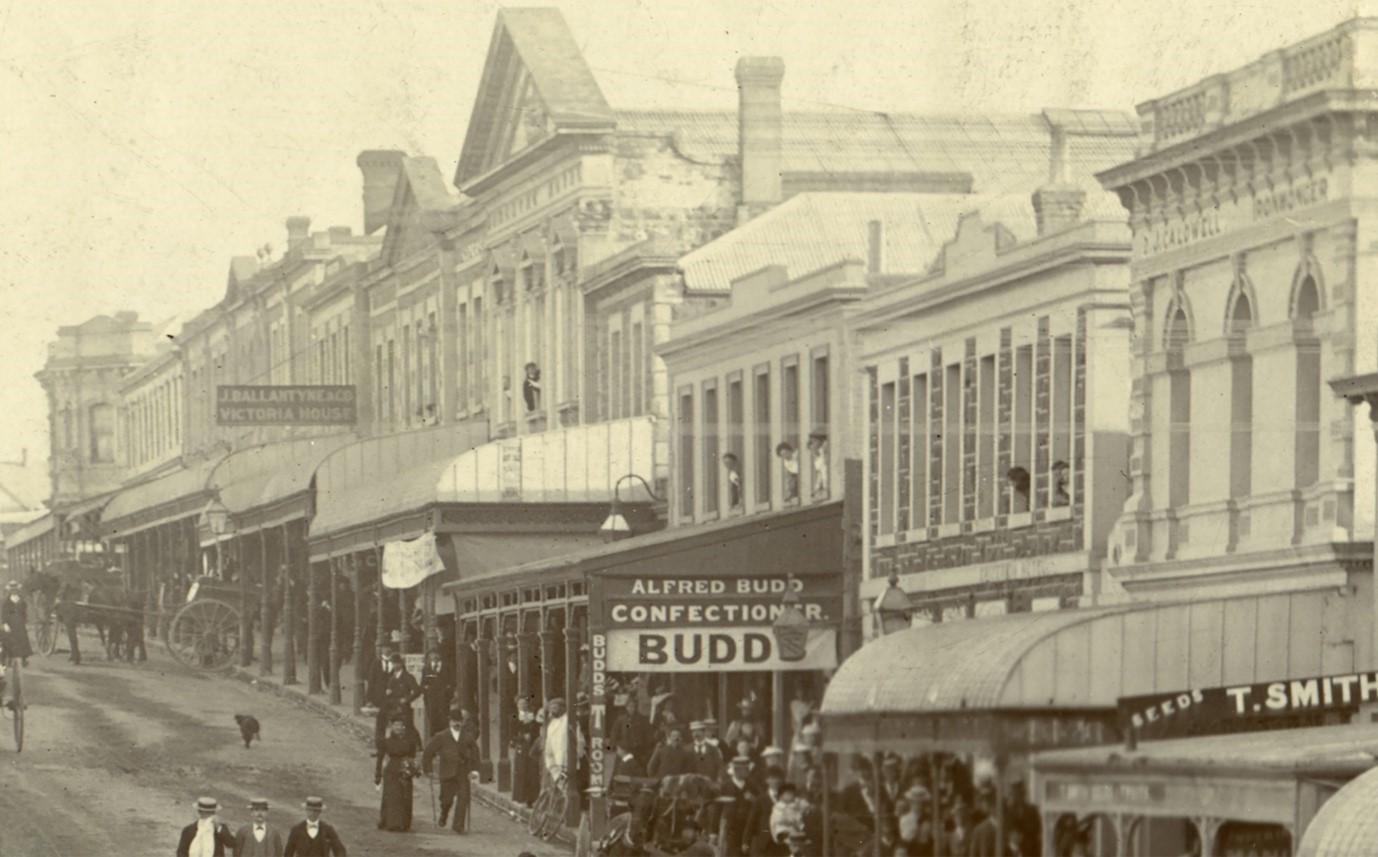
ABOVE: Photo taken in 1899 shows the Ballantynes branch in Timaru (established here in 1883). A sign reads “J Ballantynes & Co Victoria House” almost next door to the Theatre Royal. Ballantynes moved to its present site in 1913. Section of a photo. Section of a photo by William Ferrier. - Courtesy of the South Canterbury Museum 1415

1909 Photograph taken by an unidentified photographer employed or contracted by 'The Press' newspaper of Christchurch.Stafford Street, Timaru, with carts, horses and people in the street. The Press (Newspaper) :Negatives. Ref: 1/1-008815-G. Alexander Turnbull Library, Wellington, New Zealand. /records/29944621
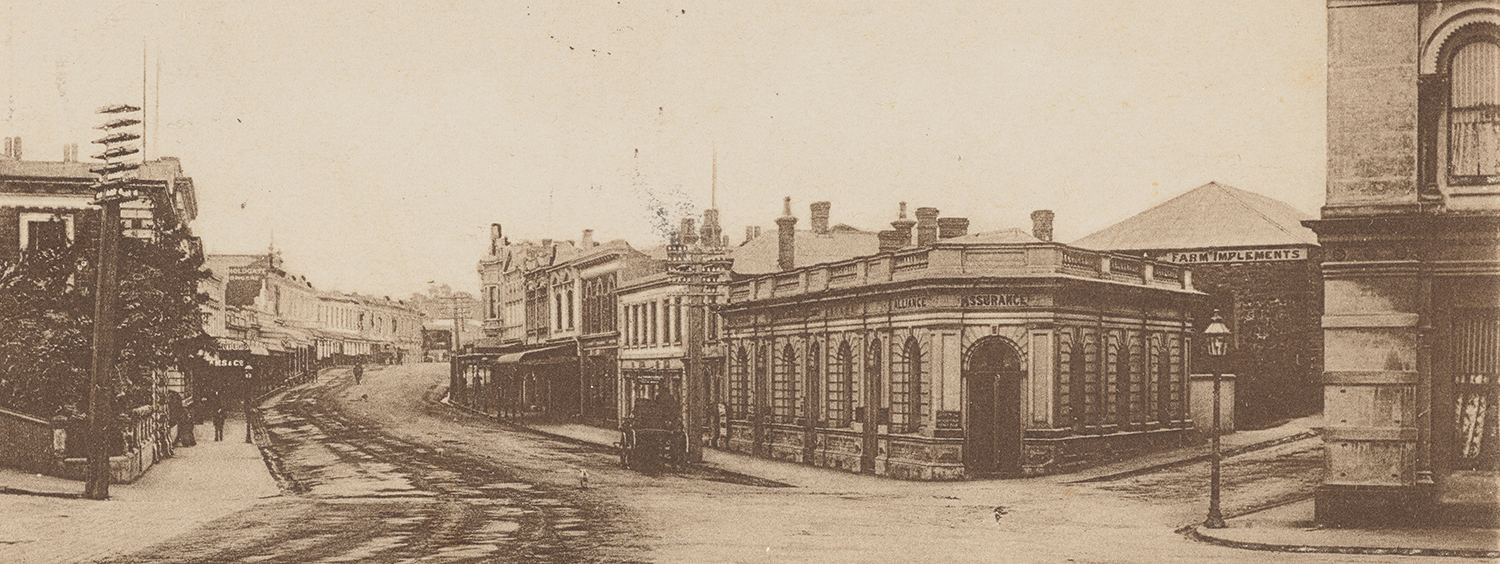
Stafford Street, looking up, 1904, Timaru, by Muir & Moodie. Purchased 1998 with New Zealand Lottery Grants Board funds. Te Papa (PS.001032)

The Dunstable House name remained on the building after the 1869 rebuild because it continued to operate under that title, even after David Clarkson sold it to William Pratt in 1863. Pratt retained the name for its established reputation, and when John Ballantyne took over in 1872, he also used it briefly (“J. Ballantyne & Co., late Dunstable House”) to reassure customers. In Victorian retail, shop names often outlasted their founders, functioning both as business brands and building identities, so the signage persisted for continuity despite changes in ownership and structure.
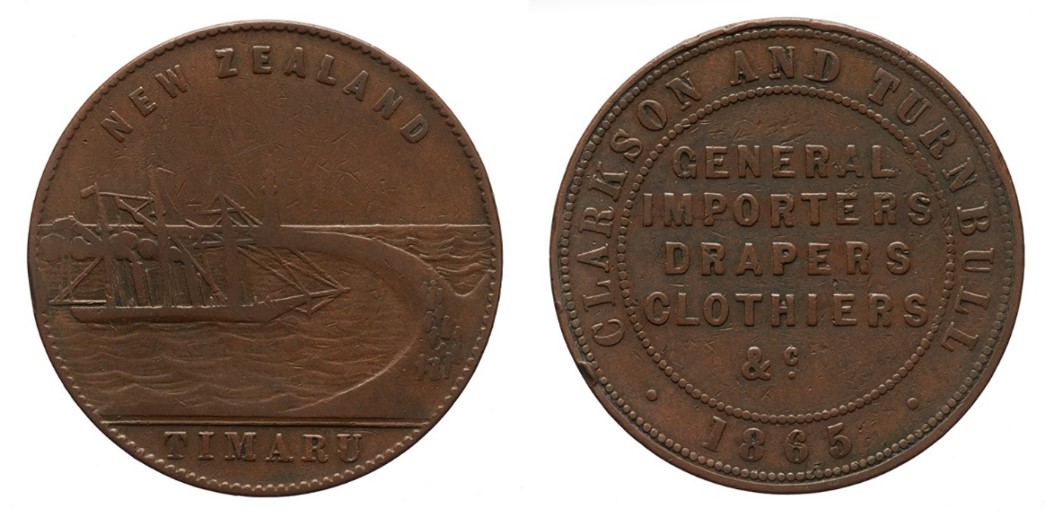
ABOVE: 1865 “New Zealand Timaru” Token , by Clarkson & Turnbull. The reverse shows a ship in harbour, behind a breakwater. The business was the first to export flour from Timaru. The harbour at Timaru was unsafe for vessels in high winds until the construction of a breakwater, a project that did not begin until 1879. – Courtesy Te Papa (NU005401)
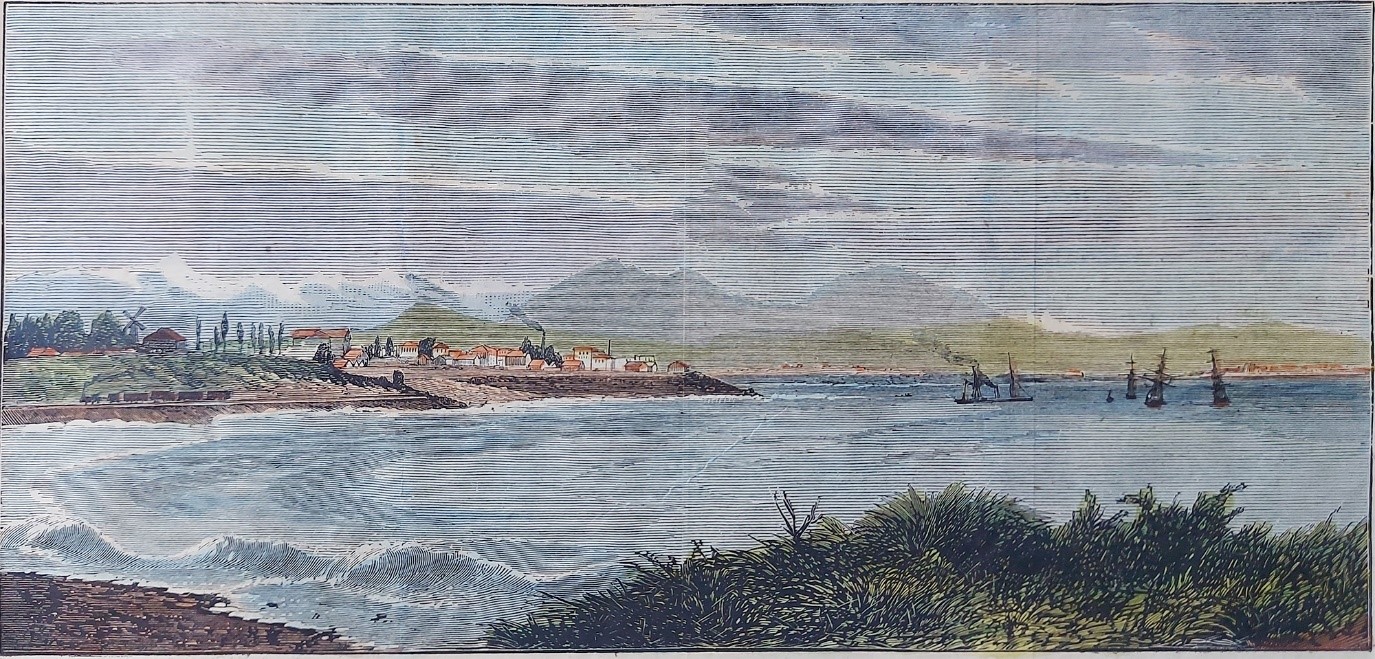
ABOVE: c1877 The Roadstead in Timaru before the breakwater was constructed. Courtesy of Private Collection. - Illustrated Australian News (Melbourne, Vic. : 1876-1889) Wed 3 Oct 1877. P155

Engraving showing the Timaru Breakwater 1888. Picturesque atlas of Australasia"; The Picturesque Atlas Publishing Co.
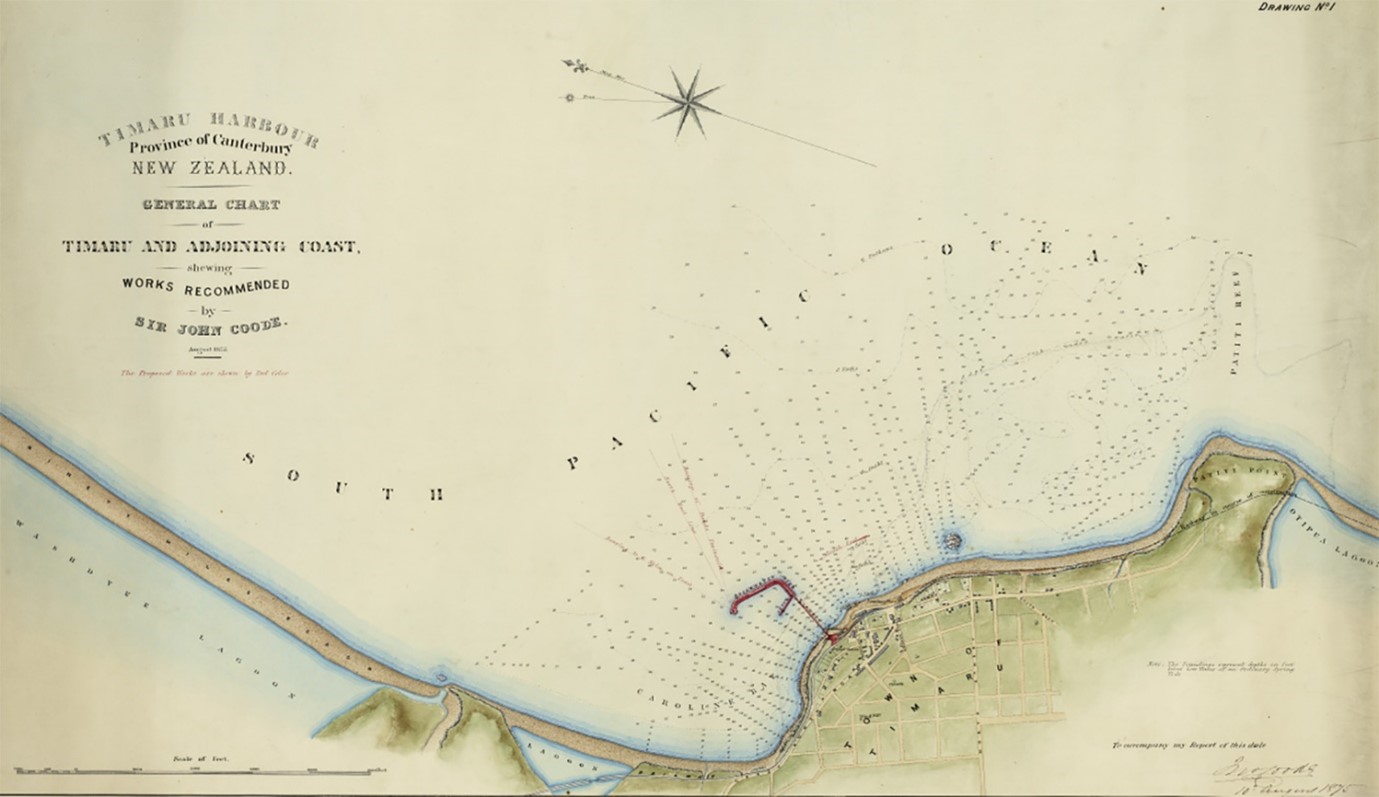
ABOVE: Timaru Harbour, Province of Canterbury : general chart of Timaru and adjoining coast by Sir John Coode showing works recommended by Sir John Coode, August 1875. (from Patiti Point to Washdyke Lagoon). The proposed works are shown in red. – Courtesy of South Canterbury Museum.

This chair that is in the South Canterbury Museum may once have stood in their cottage. Perhaps Mary polished it, sat in it nursing babies, or shifted it to make room for another child’s bed. Maybe it meant nothing to her at all. Though labelled as Richard’s, I think it can also speak to us about her. Her legacy as the wife of Richard Turnbull, the mother of her children and the woman that she herself was. This chair has witnessed emigration, loss, fire, rebuilding, shipwreck and progress. In seeing it as Mary’s too, we begin to reclaim space for women in the stories of our past.
Five-Roomed House Damaged by Fire - Timaru Herald, Volume C, Issue 15321, 15 April 1914, Page 3
At 4 a.m. yesterday, a five-roomed house on Nelson Terrace, owned by Mr. R. C. Macfarlane of Wanganui and occupied by Mr. T. Turnbull—auctioneer for the New Zealand and Australian Land Company—was partially destroyed by fire.
Mr. Turnbull, who was alone in the house at the time, awoke to find his bedroom filled with smoke. Upon escaping, he discovered that the rear portion of the house was ablaze. He roused a neighbour, who quickly contacted the Fire Brigade by telephone.
The Brigade responded promptly, but the fire had already taken a strong hold and was clearly visible throughout the neighbourhood. Two leads of hose were deployed to bring the main fire under control, but as the flames had spread above the ceilings, firefighters had to remove sheets of roofing iron to extinguish the final embers.
The back of the house was almost completely destroyed. However, the two front rooms and their contents were saved—though they suffered considerable damage from heat, smoke, and water.
Mrs. Turnbull and the family were away in Dunedin at the time. Mr. Turnbull is unable to determine the cause of the fire, noting that no fires had been lit in the house since the previous Thursday. He believes it may have started in the kitchen.
Mr. Turnbull held insurance of £225 on his belongings with the National Insurance Company. Mr. Macfarlane carried a policy of £450 on the building with the South British Insurance Company.
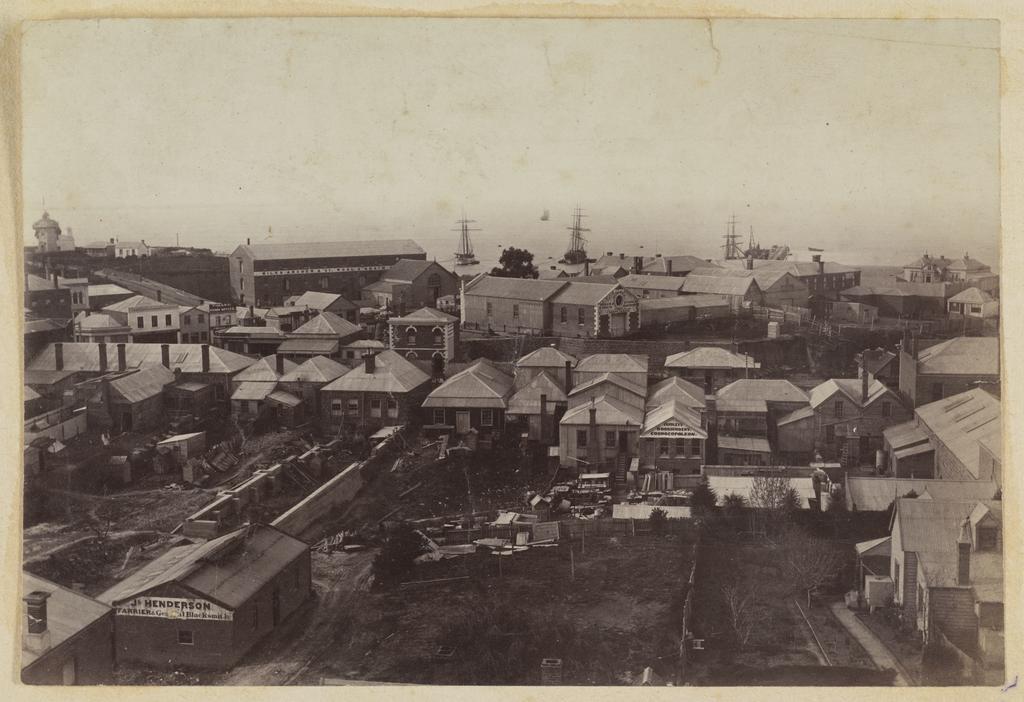
Unknown, Timaru (c.1880s). Hocken Digital Collections, accessed 10/09/2025, https://hocken.recollect.co.nz/nodes/view/58448
Richard Turnbull was born in 1826 in Oxford, England, and came of age during the industrial and agricultural shifts that would later send many English families abroad. In 1851 he married Mary Hepzibah Watts, and after eleven years farming at Halswell near Christchurch, they moved south to Timaru in 1864. The settlement was still little more than a windswept shore, but Richard saw promise. With his business partner and relative by marriage, David Clarkson, he opened Clarkson & Turnbull on the corner of George and Stafford Streets — one of the town’s first general stores. The partners minted a penny trade token promoting the dream of a harbour, and in 1867 became the first to export flour from Timaru to London. Richard and Mary would raise fourteen children, seven of whom survived to adulthood, among them Arthur, a merchant; David, founder of D.C. Turnbull & Co.; and James, who became one of Timaru’s most respected architects.
When the Great Fire of 1868 swept through Timaru’s wooden buildings and destroyed three-quarters of the town — including the Turnbull home and store — Richard rebuilt in stone, adding a bluestone warehouse on the site where the Theatre Royal now stands. He quickly became a civic leader, serving on the Municipal Council from 1865 and helping to establish Timaru’s first public school and hospital. His 1873 town hall meeting in his own warehouse led to the creation of the Timaru Harbour Board, and his efforts in securing a £100,000 government grant to build the breakwater changed the course of the port’s history. Through his merchant work, philanthropy, and belief in civic progress, he shaped the early character of a town determined to rise from adversity.
Elected to Parliament in 1878, Richard served as Member for Timaru until his death in 1890. He died in Wellington, aged 64, while Parliament was in session, and was remembered as “honest, outspoken, fearless, large-hearted and just.” His funeral procession filled the streets of Timaru, the town he had helped to build from mud tracks into a thriving port. Richard Turnbull’s vision and perseverance left a lasting legacy not only through his descendants but also through the continued presence of D.C. Turnbull & Co. — a family business that still supports South Canterbury’s rural community more than 160 years later.
Timaru Herald, 19 September 1924
GABITES’ CORNER
Demolition of Old Landmark
Considerable interest has been aroused by the work of demolition which is now taking place at the corner of Stafford and George Streets, where the old block of buildings, known for years as “Gabites’ Corner,” is being pulled down.
This building is one of the oldest in Stafford Street. Though substantially built of bluestone, it has outlived its usefulness, and will give place to a modern building of reinforced concrete.
It is interesting to note that the original building on the corner was a wooden structure, an illustration of which appeared in the recent Jubilee Supplement of the Timaru Herald. It was built in 1863 by Messrs Clarkson and Turnbull. This wooden building was destroyed in the big fire of 1868, when the present stone building was built in its place by the same firm.
About 1884 a mercery and clothing shop was opened at the corner by the late Mr A. Gabites, and the business has been carried on ever since under the same name.
A few years ago the front of the building was repaired, and modern shop fronts, with tiled fronts and mirrors, were installed. These have been removed, and the whole building is to be entirely demolished to make place for the new structure.
The New Building
The new building is to be of the most modern construction, built entirely of reinforced concrete. The present block is to be three storeys high, but sufficient strength has been provided in the foundations and piers to carry another two storeys if it is ever required to do so.
The whole of the Stafford Street frontage will be taken up by four shops, each having shop fronts of polished metal. The piers and window stalls will be cased in blue-grey veined “Moa” marble, highly polished. The shops will be finished inside in white plaster, with fibrous plaster ceilings.
The entrance to the top floors will be off George Street, next to Mr J. E. Pigott’s vestibule. Collapsible iron gates will lead into a small tiled lobby from which a pair of plate-glass swing doors will lead into the entrance hall. From this will rise the wide and handsome main staircase, and the lift as well.
On the first floor will be nine large and well-lighted offices, five of which will be divided into two suites, each containing a strongroom. The floor will be complete with ample lavatory accommodation. The top floor will probably be sub-divided into offices in the same manner.
At the back of the building, in a sub-basement, will be the boiler room with the heating boiler, from which the whole building will be heated by means of low-pressure hot-water radiators. Special attention has been given to the electric lighting of the various parts of the building. The shop windows will be floodlighted by high-power lamps from concealed sources, and the other fittings have been selected for efficiency.
Externally the building will prove a notable addition to the architecture of the town, rising 51 feet from the pavement. For its effect it depends largely upon the shape and disposition of the windows, which will be large, well-proportioned steel casements. Between the rusticated side features on either frontage will be shallow wrought-iron balconies, also acting as fire escapes, which very materially assist the elevations.
The shops will be protected by a large cantilever verandah, suspended by rods, and stepped to the fall of the streets.
The architects for the building are Messrs Turnbull and Rule, and the contractor is Mr A. Kennedy. The total cost will run to about £10,000, and it is hoped to have the building ready for occupation in about eight or nine months’ time.
Timaru District Council recently published their heritage audit with work by Dr Ann McEwan.
As part of the District Plan Review by the Council, the list of heritage scheduled items in the Timaru District has been published online. As part of the Council's 10 year District Plan Review, heritage specialist Dr Ann McEwan was commissioned to do a full audit of the district's built heritage assets. The previous list contained 129 protected buildings, but this has been increased by a further 82 new items which will be given heritage protection status. Dr McEwan has written a detailed history of each of the listed buildings in the district and these are a great resource for researching the history of our heritage buildings in the Timaru district. The individual reports are able to be downloaded from the following council webpage: TDC PDP Supporting Docs (scroll down to the bottom, where you see the heading 'Schedule 3 Schedule of Historic Heritage Items (HHI)')
This is the report for the The Oxford Buildings which turned 100 years old in 2025.
https://www.timaru.govt.nz/__data/assets/pdf_file/0009/673884/Historic-Heritage-Assessment-Report-HHI61-Oxford-Buildings-Category-B.pdf
Oxford Buildings – Chronological Facts
-
Pre-1868 The first building on the site was erected before the great 1868 Timaru fire, which destroyed many central town buildings.
-
1872 The drapery and clothing firm Gabites & Plante was established. Arthur Gabites later occupied Richard Turnbull’s earlier building on this corner site, giving rise to the long-used local name Gabites’ Corner.
-
1894 David Clarkson Turnbull founded DC Turnbull & Co., the firm that would eventually commission the Oxford Buildings.
-
c.1895 Architect James S. Turnbull (son of Richard Turnbull) established his architectural practice in Timaru.
-
c.1920 James S. Turnbull entered partnership with Percy Watts Rule, forming Turnbull & Rule, who later designed the Oxford Buildings.
-
May 1924 Early reports appear about redeveloping the Gabites’ Corner site for DC Turnbull & Co., originally planned as a three-storey building.
-
December 1924 A decision was made to increase the project to four storeys, making it the tallest building in Timaru at the time.
-
1924–1925 Oxford Buildings constructed, designed by Turnbull & Rule and built by A. Kennedy. Reinforced concrete, inter-war classical style.
-
1925 Arthur Gabites took possession of the prime corner shop in the new building. Three other retailers occupied the remaining Stafford Street shops.
-
April 1927 The Press and Weekly Press moved into first-floor offices.
-
Early 1950s Government Life Insurance purchased the building, having previously operated from Hay’s Buildings further north on Stafford Street.
-
Late 20th Century – Present The building changed ownership several times but has remained in continuous commercial use. Its reinforced concrete construction, classical façade detailing, and corner landmark position contribute to the character of central Timaru’s heritage streetscape.
In 2023 the Timaru Civict Trust donated $5,000 as a Heritage Grant for Oxford Building to contribute to the recent refurbishment of the beautiful Oxford building on the corner of George and Stafford St. Formerly known as as the Government Life building, it was built in 1925 and designed by local architects Turnbull & Rule. The building facades have been repaired and repainted and the windows restored and the Civic Trust congratulated Shaun Stockman, the building's owner, for continuing to invest in the maintenance and preservation of Timaru's heritage building stock. https://www.timarucivictrust.co.nz/uploads/6/4/4/4/64447489/tct-jun-2023-newsletter.pdf

About seven years ago, I got curious about the buildings in Timaru’s CBD. I had no background in architecture, and my research and history skills were, well, pretty slim. Then a family friend, Phil Brownie, handed me his Timaru heritage reports from the 1980s. I flicked through them and that was it – I was hooked. I got pretty far through my hunt. I made a list of international, national and local events, plotted them on a timeline and popped the buildings conception dates into the list. Then I looked for stories on people from all walks of life, the business owners, residents, politicians, sporting icons, sex workers, opium den workers, chinese grocers, public servants, fire starters, constable murderers, even tales of ghosts. What I have ended up with is a dense document that if taken for a mornings wander round town might leave you feeling proud of local people and places of the past too. Or in need of a beverage and carbs to refuel the brain and body. https://www.wuhootimaru.co.nz/cbd-heritage-walk
Learn about the areas history with a 40min wander

Take a look around Timaru CBD and do the Historic Walk and learn a bit about Timaru's past and evolution in the facades along the way.
Timaru CBD features one of NZ’s most significant collections of Victorian and Edwardian buildings. The high quality of the architecture reflects times of growth and prosperity in the district’s history.
Former Miles Archer & Co. Stores, Tramway Tunnel & Siding / DC Turnbull & Co. Stores, Tramway Tunnel & Siding and Offices
HNZ List Number: 2055 & 7307/2 – Category: B
Date Built: 1880-81
Architect: Unknown (stores); JS Turnbull (offices); Builders: Messrs Hunt and Werry (offices)
Architectural Style: Industrial vernacular / Edwardian commercial classicism
Address: 1-9 Strathallan Street, Timaru
D. C. Turnbull and Co was one of the first large companies to emerge n the area. In 1901 they built their premises close to one of the landing services for the port and rail wagons were once able to be directed into the warehouse by a turntable and access tunnel built in the cliffs. The tunnel still exists although it is now closed off and it seems that went some distance underground further than The Terrace and near Stafford Street. Today you can see the large brick store and their buildings on the land between The Terrace, Strathallan St, the cliff which remains as offices today. The building was designed by D.C. Turnbull's brother, architect James Stuart Turnbull who also designed the Aigantighe, Chalmers Church and shops on Stafford Street.
Miles & Co Ltd acquired merchant Henry Le Cren’s business in 1867. They were considered one of the best wool and stock businesses in NZ. In 1901 the building was purchased by grain and seed merchant firm David Clarkson Turnbull and two-storied offices with show-room were added. They were engaged in the wool, grain, and frozen meat trade and had their own sailing vessel to carry consignments into any inter-colonial port.
In 1904 Timaru Port was the third largest in New Zealand for agricultural exports.
Significant elements include pilasters, window details, dentilled cornice and parapet.
Many years ago, Guinness and Le Cren were founded on the Pyne, Gould, Guinness site in 1891. A tunnel and track once continued on under The Terrace, what is now Wright, Stephenon and Company's property, and ended behind the buildings that were occupied by Pyne Gould Guinness Limited now Community House on 27-29 Strathallan Street. The track and tunnel were in use more than half a century ago with horses pulling railway wagons along the siding and through the tunnel. It is substantial, nine feet across and arching to 8ft 6in formed from bricks. but were blocked off in the city center by a brick wall in the 1920s. The east side of the tunnel was used as an air-raid shelter and is now a storeroom for bales of straw. Learn more
Did you know? A tramway tunnel and railway siding under the Terrace (listed C2, R7307) connected a rat proof grain store and warehouses.
Can you find? A plaque marking the site of Le Cren’s Landing Service where goods where landed by surf-boats until the harbor was built.
Get a selfie with Strathallan Street Sign. On The Strathallan, a lady wrote; if Timaru was a third of the size of London she would be happy. Imagine the look on her face when she arrived in 1859, and saw only 5 houses and about 19 locals! The ship was two weeks early and caught our towns folk off guard, so the new locals had to sleep in the wool shed until their homes were built. More arrived including six boatmen and their families from Deal, UK. A cob cottage still stands on 20 Avenue Road where one lived. Their skill was critical at the time for landing boats. But it was dangerous and became the first to be buried in the Timaru cemetery.
The Terrace used to be called Le Crens Terrace. The Harbour Board lighthouse stood at the rear of section 7 from 1878 until it was replaced by a navigation light above Dashing Rocks in 1970. Blackett's Lighthouse was relocated to Cnr of Te Weka St and Benvenue Ave and then further down the road at the top of the cliff.
A newer iron lighthouse was constructed on site in 1903 by the Timaru harbour board. It was built to overcome the ineffectiveness of the harbour light. The lighthouse originally resided on Somes Island North of the Wellington Harbour in 1866. The Lighthouse had a sole keeper, who lived on station until 1930 when a gas operated light was installed. The lighthouse sits proudly at Tūhawaiki Point, nicknamed Jacks point after the Maori Ngai Tahu chief Hone Tūhawaiki who drowned there when his whaleboat capsized. - maritimenz.govt.nz/Tuhawaiki-Point

26 Cains Terrace and 8 Beswick St
LN: 2054 C:2
1875 rebuilt 1915
Architect J S Turnbull
Builders Shillito Bros
The Grosvenor Hotel was constructed in 1915. It replaced a previous hotel with the same name which had occupied the site since 1875 The first Grosvenor Hotel on the site was a two storeyed brick building established by John Meikle on land owned by John Crammond. Both hotels have made unique contributions to the history of Timaru. The Canterbury Rugby Football Union (CRFU) was established in the basement if the original building in 1879. The Grosvenor there today hosted Queen Elizabeth during a royal visit in 1954 and again in 1970s. Since 1983 the hotel has been recognised by Heritage New Zealand Pouhere Taonga as a Category II historic place.
When Polladio Holdings Limited bought the building in 2005, it was looking tired and somewhat neglected. The new owners were keen to uncover the original brickwork, kauri and rimu flooring and panelling. Ping Lim from Polladio Holdings Limited says he likes ‘the creaking old floorboards, uneven wall lining, and a different layout for every room’. He saw the interior as a blank canvas – literally. In the past 14 years, the Grosvenor has become home to a substantial art collection that includes works by eminent New Zealand artists Bill Hammond, Peter Robinson, Hannah Kidd, Lonnie Hutchinson, Jim Cooper and Ian Scott. International artists like Melly Trochez and Leo Eguiarte also feature throughout the hotel, and its popular restaurant and bar. Learn more here
Affectionately known as the "Grand Old Lady of the South", the foundation stone was laid 1875 and shortly after it was completed it burnt down. The façade you see today comes after the rebuilding in 1915. Her Majesty Queen Elizabeth II stayed there for the Golden Jubilee and she set up camp again in the 1970s when her yacht was berthed at Timaru. She slept in room 101 and we still have her menu where she was offered baked mountain trout and Veuve Clicquot champagne among other delicacies. The Canterbury Rugby Football Union was formed at The Grosvenor on July 26th 1879 and a plaque on the building stating that still remains.
The plans for the original hotel were drawn up for John Meikle by the architect F J Wilson in 1875. The hotel is believed to have been built for Mr O'Meehan and for a time after his detail it was owned by his estate., Sometime after 1913 it was taken over by Mr Charles Sullivan who then moved on to the Old Bank Hotel. The control of the Grosvenor passed to Mr Murphy who came to Timaru in 1913. In 1915 he closed the building for a complete reconstruction which drew some criticism of the design. It was considered to be too austere in an era when ornamentation was in vogue. Murphy was bought out by a syndicate who leased the hostel to FM Drewitt but later it was managed for the owners C S (Tui) Elms. Mr E Young bought the Grosvenor from teh syndicate and sold it to Mr and Mrs McNeil.
Redeveloped by architect James Turnbull in 1915 Edwardian Baroque style for Mr John Meikle. The Grosvenor Hotel was sold to Christchurch-based Pollardio Holdings. The company took over the business on October 1 2007. "They are committed to maintaining the heritage and the glory of the Grosvenor Hotel for another 125 years." The foundation stone was laid in 1875 and the Edwardian with Georgian influence building was constructed of brick, plaster and Marseilles tile.
Significant elements include corner treatment, orial windows, circular windows, window head detailing, hood moulds, cornice pediments and parapets.
Did you know? When NZ's premier arrived by train he popped in for a quick champagne to clear the soot from his throat before continuing on to Dunedin.
The Street is named after the early pioneer George Buchanan (1833-1922) he had a farm at Willowbridge where he built the first flour mill in the district south of Timaru in 1862.

1916 Exterior view of the Grosvenor Hotel, Timaru, circa 1916, photographed by Frederick George Radcliffe. Timaru. F.G.R. 5553 - National Library 1/2-006876-G & hocken.recollect.co.nz/52786 No known copyright or other restrictions on use exist in this image.
J Craigie's 'Pareora Buildings'
HNZ List Number: (not listed) – Category: (not listed)
Date Built: 1901
Architect: J Turnbull
Architectural Style: (not listed)
Address: 175A-183 Stafford Street
Coronation Buildings
HNZ List Number: 2057 / 2 – Category: B
Date Built: 1902
Architect: JS Turnbull; Builders: Messrs Werry & Hunt
Architectural Style: Edwardian commercial classicism
Address: 256-260 Stafford Street, Timaru
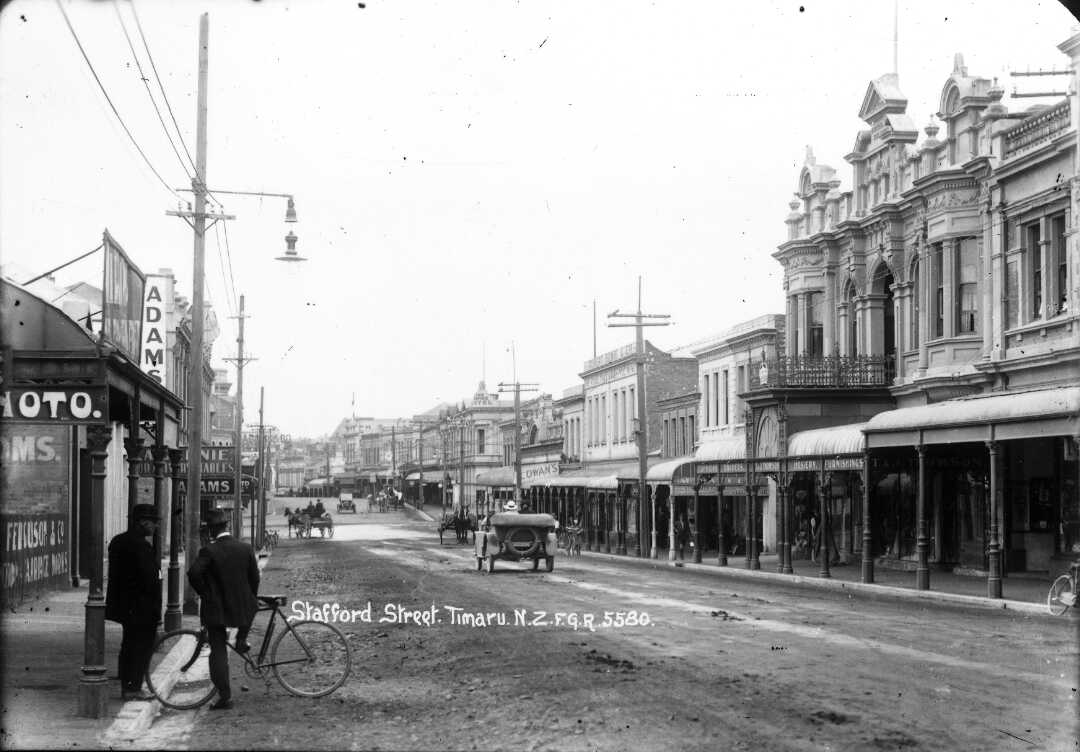
1915 Looking down Stafford Street in Timaru, circa 1915, with shops lining both sides of the street. The shop second in from the right, with the ornate facade, is the business of T & J Thomson. Cars, horse drawn carriages and bicycles can also be seen on the street. Taken by Frederick George Radcliffe. Tiaki IRN: 133640 Tiaki Reference Number: 1/2-006892-G Collection: PA-Group-00408: Radcliffe, Frederick George, 1863-1923 : New Zealand post card negatives
Thomson’s Coronation Buildings on Stafford Street were opened on 2 January 1903, a proud Edwardian landmark designed by Timaru architect James S. Turnbull and named in honour of King Edward VII’s 1902 coronation. Built by Werry and Hunt in brick and cement plaster, the building featured oriel windows, ornate plasterwork, and a central pediment that still reads “Coronation Buildings 1902.” Its construction helped pull Timaru’s retail centre northward from the port end of town. Only five years later a major fire in 1908 gutted the upper floor, but the solid brick structure saved the façade, and Turnbull personally oversaw the rebuilding. The building was later strengthened, altered, and extended north into the 1910 adjacent structure, yet its original rhythm and classicism remain intact.
The Coronation Buildings grew from the success of T & J Thomson Drapers, founded in 1883 by brothers Thomas and James Thomson, Scottish immigrants whose business reflected the optimism of a fast-growing town. Thomas became a respected civic figure, and after his death in 1935 his son Charles Edward Thomson took over the store before selling it to Hay’s in 1961. Charles went on to serve as Mayor of Timaru from 1962 to 1965. The wider Thomson family had deep roots in local retail and community life, linking with other long-standing Timaru names such as the Holdgates of Priest & Holdgate Ironmongers in the Royal Arcade. The building has witnessed triumphs and tragedies, including the town’s 1902 coronation celebrations and the still-unsolved 1921 murder of Constable James Dorgan in the alley behind the shop.
Over more than a century, the Coronation Buildings have mirrored the evolution of shopping in Timaru: from bustling drapery counters where assistants snapped open rolls of cloth, to Hay’s modern department store era, and finally to Farmers, which has traded there since 1982 and now occupies both the 1902 and 1910 buildings. Today Farmers remains part of the New Zealand-owned James Pascoe Group, employing local staff and continuing the building’s long retail tradition. Protected as a Heritage New Zealand Category 2 place and a significant item in the Timaru District Plan, the façade continues to anchor the streetscape. Its stories of coronations, fires, family enterprise, architectural craft, and everyday shopping tie generations together, reminding us how much of Timaru’s identity lives quietly in the details of its historic main street.
Former Clayton/Hardy Building
HNZ List Number: (not listed) – Category: (not listed)
Date Built: 1902
Architect: James Turnbull
Architectural Style: (not listed)
Address: 167 & 169 Stafford Street
Former Chalmers Presbyterian Church / St George's Coptic Church
HNZ List Number: 7107/2 – Category: B
Date Built: 1903-1904
Architect: JS Turnbull; Contractors: W Petrie & Son
Architectural Style: Gothic Revival
Address: 2 Elizabeth Place, Timaru
Former Jackson Memorial Methodist Sunday School
HNZ List Number: (not listed) – Category: B
Date Built: 1907
Architect: JS Turnbull; Builders: Messrs Baird & Son
Architectural Style: Edwardian Baroque
Address: 34 Church Street / 37 Theodosia Street, Timaru
St Mary's Hall
HNZ List Number: (not listed) – Category: B
Date Built: 1928-29 1928
Architect:Turnbull & Rule
Contactor JT Hunt
Architectural Style: Collegiate Gothic
24 Church Street, Timaru
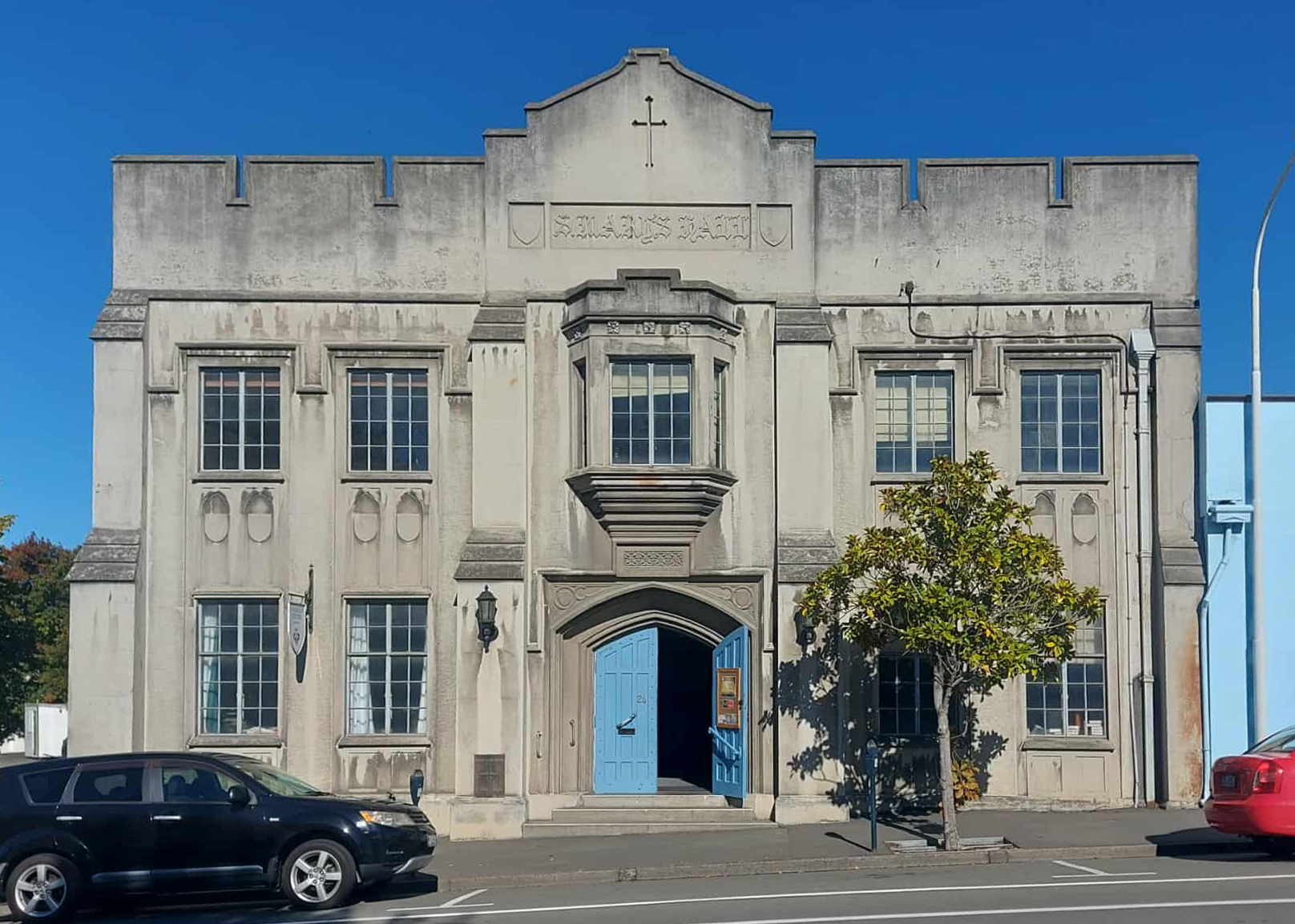
St Mary's Hall by Turnbull & Rule.
Former Timaru Milling Company Office
HNZ List Number: (not listed) – Category:B
1941-42 1941
Architects: Turnbull & Rule
Architectural Style: Art Deco Moderne
1 Stafford Street, Timaru
Timaru Central City Historic Character Area – Chronological Timeline
-
1853 The Rhodes brothers freehold about 50 hectares north of the planned government town. They later commission Edward Lough to lay out an alternative settlement known as Rhodes Town.
-
1856 The Canterbury Provincial Government sends Samuel Hewlings to survey Timaru. He lays out the official ‘government town’ between what would become North Street and Patiti Point, intended as the future town centre.
-
1859 Immigrant landing sites become established behind the beach at Rhodes Town. As a result, commercial activity begins to flourish there rather than in the surveyed government town.
-
September 1866 DP 1 ‘Plan of Rhodes Town’ is surveyed (later redrawn in April 1972).
-
1868 A major fire sweeps central Timaru, destroying many early buildings. This triggers the construction of more substantial masonry commercial buildings in the emerging town centre. Population approx 1,000.
-
1868–1878 Timaru’s population trebles to 3,389, reflecting rapid commercial and urban development.
-
1870s Construction of the southern railway contributes to growth, prosperity, and increased commercial building activity in the town centre. Stafford Street becomes the main commercial spine, with development extending along key cross streets.
-
1875 A plan of Timaru shows the most built-up areas concentrated on: Stafford Street (north of Strathallan Street to Woollcombe Street) George Street Cains Terrace and Beswick Street
-
1878–1901 Population nearly doubles again, reaching 6,424 by 1901.
-
1901–1911 Timaru’s population almost doubles a third time, rising from 6,424 to 11,280 within a decade.
-
By 1914 Population approaches 12,000, marking Timaru as a major South Canterbury centre. Many substantial commercial and public buildings from the late nineteenth and early twentieth centuries now shape the central city.
-
1900s–Early 20th Century Expansion of the Port of Timaru, railway operations, and the development of Caroline Bay drive further growth. Commercial development extends from The Bay Hill through to North Street.

1958 Stafford Street, Timaru. New Zealand Free Lance : Photographic prints and negatives. Ref: PAColl-8983-52. Alexander Turnbull Library, Wellington, New Zealand. /records/22445605
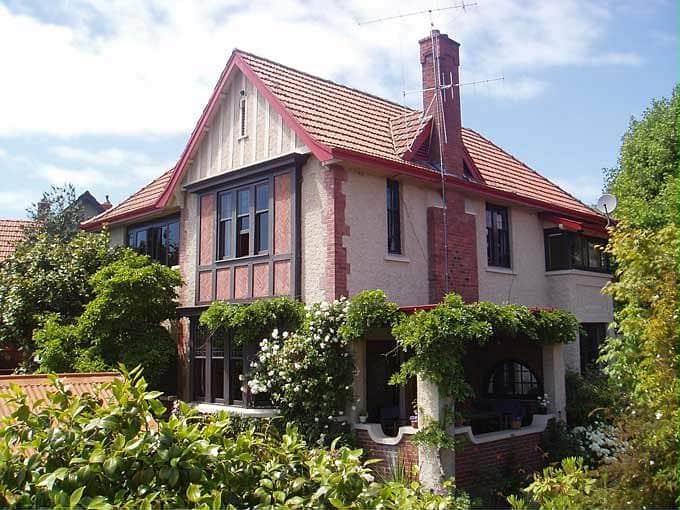
This arts and crafts home at 32 Sefton Street Timaru was built in 1919 and designed by local architects Turnbull & Rule. https://www.wuhootimaru.co.nz/blog/1063-show-us-your-turnbull-part-one-kelly-and-forrest-s-early-1900s-arts-crafts-home