
By Roselyn Fauth
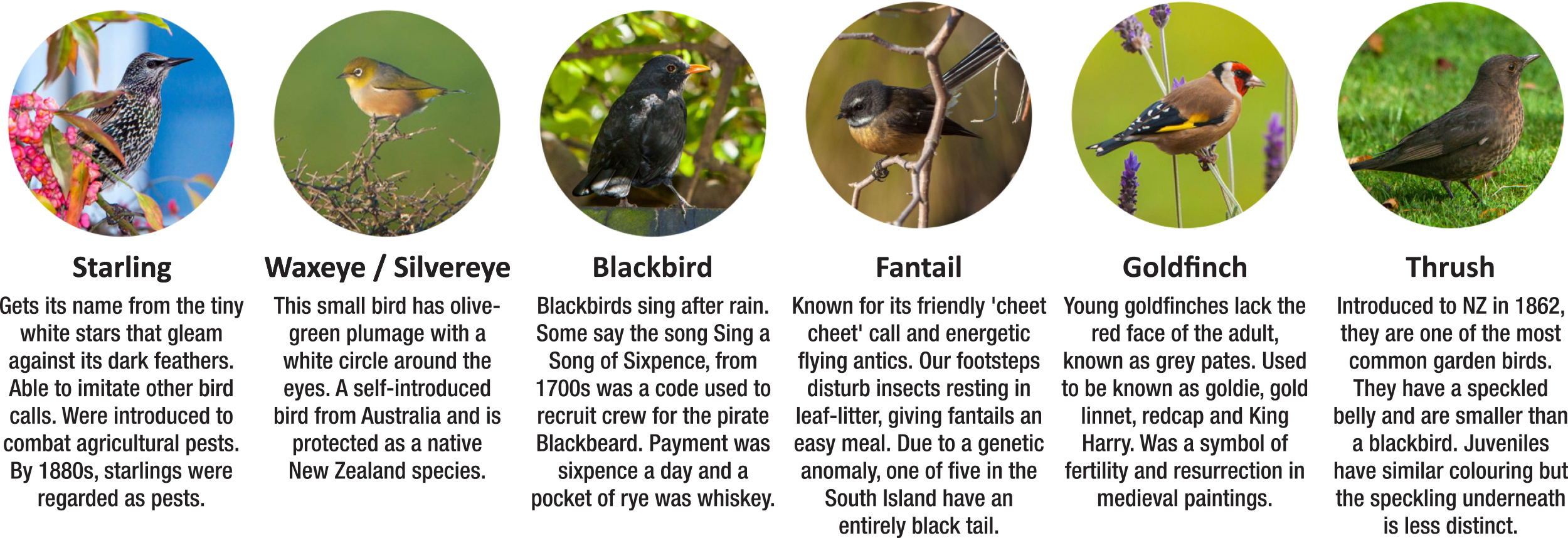
In the early days of European settlement, South Canterbury was a place alive with birdsong. The forests, swamps, lagoons and open plains thrummed with the calls of native birds, many of which were completely new to the arriving settlers. Early writings from those settlers paint a picture of incredible abundance—birdlife that was prolific, varied, and deeply woven into the natural balance of the land.
As new people arrived, so did new birds... deliberately carried across oceans, tucked into cages, crated in straw, and placed on the decks of ships bound for the colonies. These were the feathered companions of memory: blackbirds, thrushes, pheasants, partridges, sparrows, familiar voices from English hedgerows and game estates. Their journey sounds like it was pretty brutal.
The birds didn’t travel well. The long voyage from England, especially the sweltering stretch through the tropics, often proved fatal. If more than a quarter survived the journey, it was considered a triumph.
In 1861, one of the first successful introductions was led by George Rhodes, who managed to bring blackbirds and other hedge birds to the Canterbury region. Just a few years later, in 1864, the Canterbury Acclimatisation Society was formed in Christchurch to coordinate efforts to import and establish foreign species. South Canterbury formed its own branch a decade later in 1874. These societies weren’t just casual clubs. They shaped the region’s wildlife forever—sometimes for better, sometimes for worse.
By the 1870s, the English countryside was being recreated in colonial gardens and rural properties. Blackbirds and thrushes had found homes in the thickets around Captain Henry Cain’s house in Timaru. In 1875, the Timaru Herald reported the pleasure of hearing the birdsong of home, with linnets appearing in Arthur Perry’s garden at Beverley (a property once owned by H.J. Le Cren and home to the famous “Champagne Tree”).
Quail, partridges, and pheasants were also introduced, thriving for a time in the tussock-covered landscape. Partridges were reportedly “in every paddock” until farming and fencing drove them out. Californian quail—brought in from Christchurch in 1874—still make rare appearances around Timaru. But it didn’t take long for the tone to shift.
By the mid-1870s, complaints were rising. Quail were becoming “a nuisance,” damaging fruit crops and even forcing farmers to guard young tree trunks against bird attacks. Hares and stoats compounded the problem, and by 1889, pheasant numbers had plummeted. Once plentiful, they were nearly extinct—efforts to reintroduce them proved largely unsuccessful.
Predators weren’t the only issue. Habitat loss due to intensified farming erased much of the low-lying shrub and tussock that birds had once thrived in.
Mallard ducks, introduced much later due to the abundance of native duck, eventually began to hybridise with their native cousins. By 1956, observers feared the original strain of native duck was disappearing. And then there was the sparrow....
The sparrow may be one of the most telling examples of our complicated relationship with introduced species. At first, it was welcomed—imported deliberately by individuals and the acclimatisation society as a cheerful reminder of home. But as numbers soared, the sparrow became an agricultural headache. Its story reflects a broader pattern: the romanticism of familiar wildlife often collided with the reality of a new and delicate ecosystem.
Looking Back, Looking Closer
Today, some of those introduced species are part of our everyday landscape. Others are rare sightings. Their legacy—of survival, adaptation, conflict, and change—tells a deeper story about how we shape and reshape the natural world around us. Next time you colour in a thrush, a blackbird, or a quail on our Garden Birds in South Canterbury sheet, remember this: those birds crossed oceans, survived predators, weathered controversy, and became part of our shared environment.
Colour them as you see them… or as you imagine they once were.
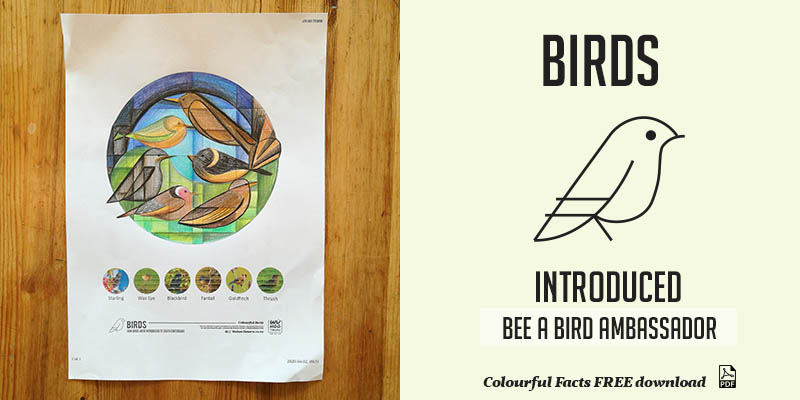
Download:
Colourful Facts Birds - Complex.pdf
Colourful Facts Birds - Simple.pdf