TIMARU
Centennial Park
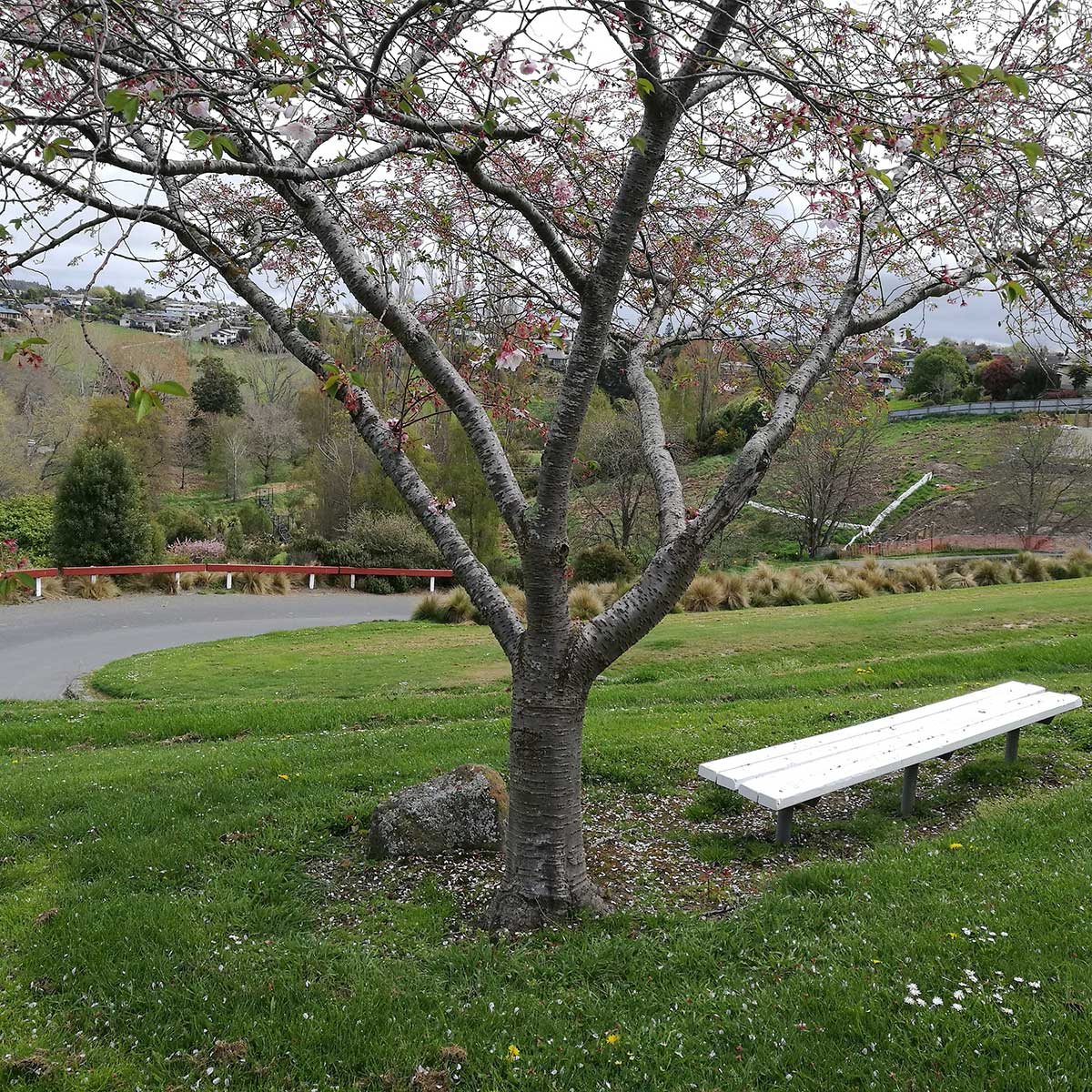
Find a tree dedicated to Nola Mortimer
Nola and her husband Claude Motrimer were publicans at The Lake Tekapo Hotel and lived at 8 Hart St up the alleyway from Beverly Rd
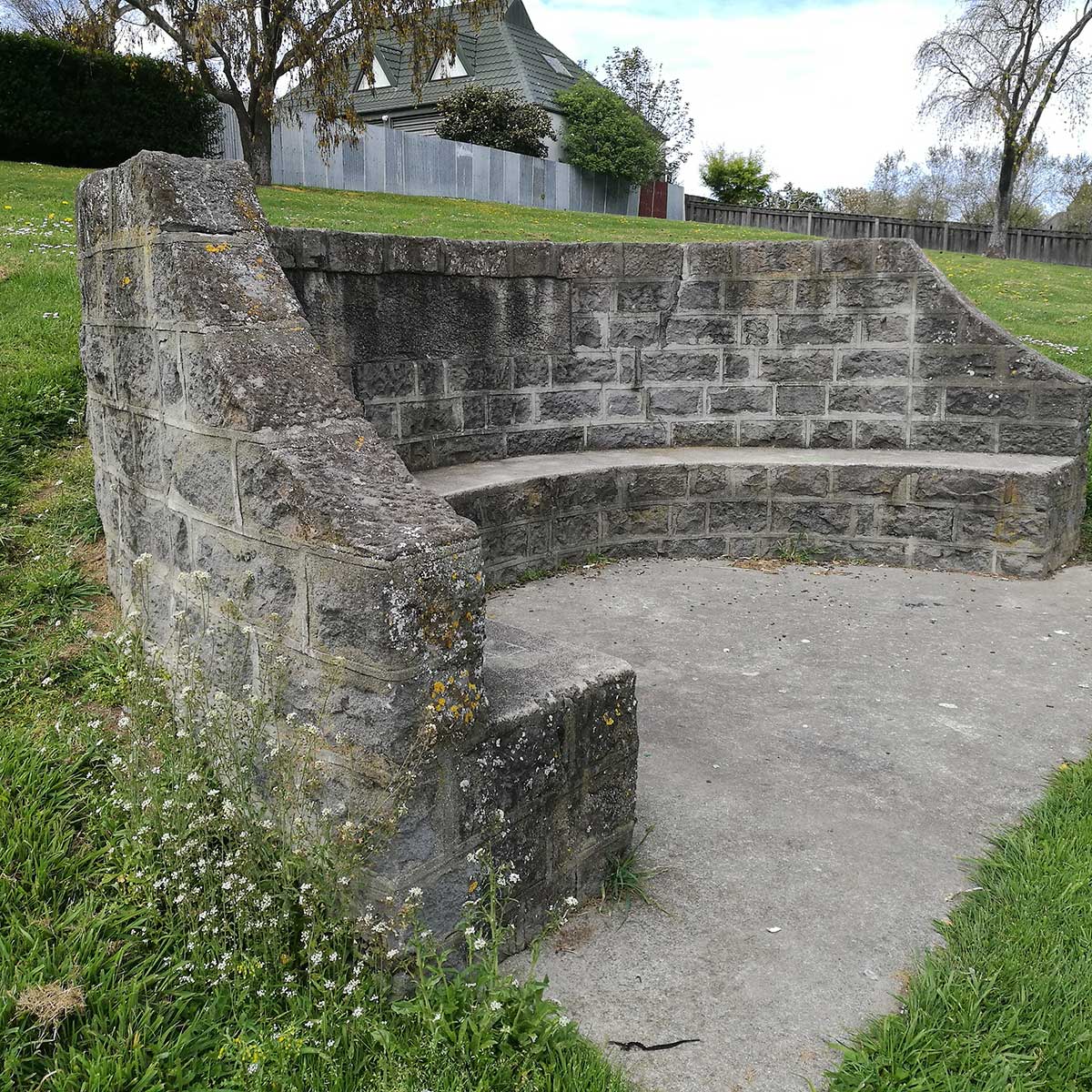
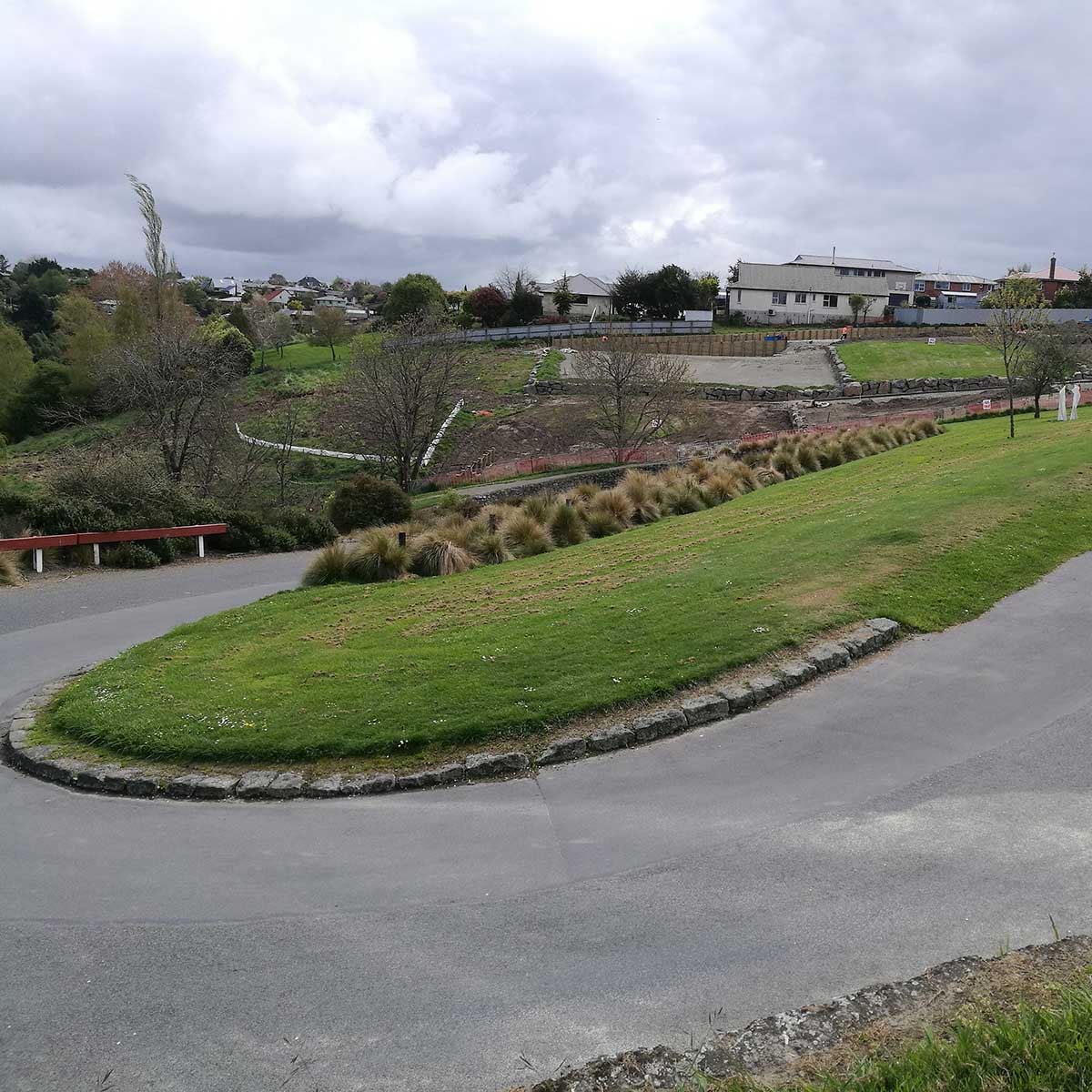
The abandoned quarry is also known by many locals as the "Scenic Reserve", Centennial Park was officially named in 1939 to commemorate the centennial of the Dominion of New Zealand. The park is situated along the south western boundary of the Timaru urban area and straddles the north branch of the Otipua Stream.
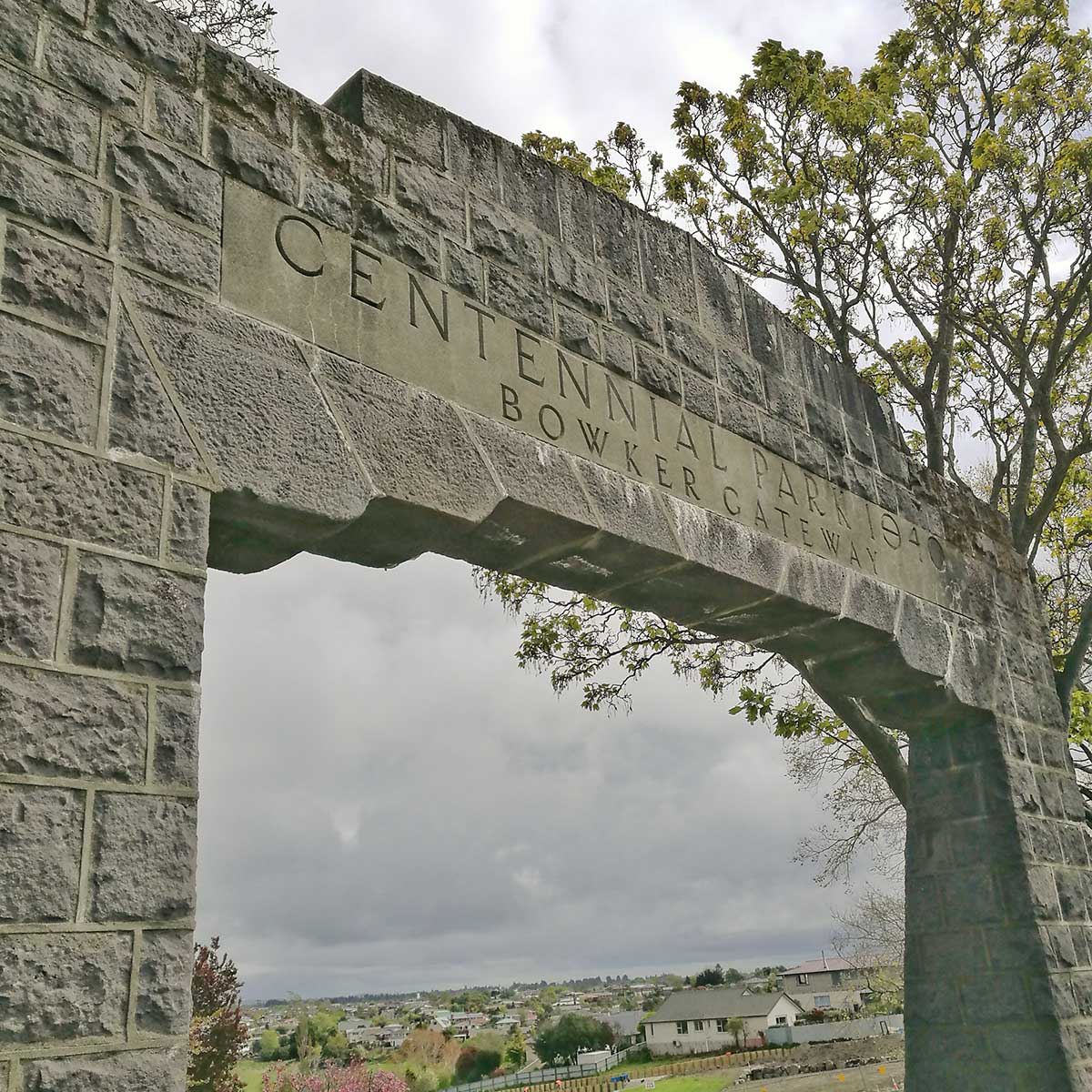
The Bowker Gateway, opened in 1940, on Otipua Road is an entrance to Centennial Park and the exit is beside the Claremont Road Bridge on Claremont Road. It is a lovely walk or drive. The reserve includes a 1½ hour walk, 3.5 km walkway, following the wooded valley of the Otipua Creek.
An old railway line used to take the basalt boulders from the quarry to the harbour breakwater. The park has a wide variety of exotic and native trees. There is a planting programme part of the Tu Kakariki tree planting programme.
In about 1981 the first crew went in with slashers to start clearing the scrub. Today the park looks so good with many beautiful and intresting trees.
Timaru Herald 30/04/2013
The Timaru Harbour Board once owned much of the land at Centennial Park, which was worked as a quarry to provide a source of harbour-protection rock for the development of the Port of Timaru. Road bridges and and railroads were built for moving the quarried rock out of the reserve by railway lines on Wai-iti Rd, Otipua Rd and James St to reach their destination at the port. During 1934-35 negotiations took place between the Timaru Harbour Board, representative of the estate of J King, and the Timaru Borough Council to acquire land for a reserve in the western sector of the borough. The land lay from Claremont Rd stretching east to the end of Quarry Rd. About 32 hectares was bought for the equivalent of $1060. However, the harbour board maintained its right to quarry in the reserve until 1975. The plan also provided for coin-operated barbecues, a suspension bridge over the lake, a walkway across the dam and swings, slides and seating, plus extensive landscaping and plantings. In 1938 it was formally opened and named the Scenic Reserve; however, by 1940 it had been renamed Centennial Park marking the centenary of the signing of the Treaty of Waitangi. The park would not be what it is today if it was not for the initiative of a Timaru service club, Round Table 48. In early 1988 the club launched a fundraising project with the aim of damming the Otipua Creek that flowed through the park to create a lake and recreational areas. The plan also provided for coin-operated barbecues, a suspension bridge over the lake, a walkway across the dam and swings, slides and seating, plus extensive landscaping and plantings. With $90,000 having been raised by the Round Table and other service clubs, work was able to start in 1990 on the dam to create an 800-metre-long lake. The following year the lake was filled in May and work began on planting 7000 trees around the area.
Timaru Herald, 31 December 1904, Page 3
The Harbour Board's quarry has been gradually extended up Wai-iti creek; until he furthermost cranes are at work within view from the Claremont road bridge, and the pioneer workmen of future extensions of the railway have begun clearing a road-bed beside the last exposure of rock in the lease, this being opposite of Fyfe's quarry and its upper end quite near the Claremont end. The four cranes are now at work at two spots a considerable distance apart. Two of them in the near side of the back shunt, have got a nice face of good stone to work at, but there is not a great deal left at this point. The uppermost pair have a considerable area stripped, and part of the face is about 50ft high. There has been some rather heavy stripping on parts of it, one comer running to as much 18ft. the deepest yet done. The rock deposit is very uneven, and its outward appearance is frequently deceptive. More than once, the surface when stripped has promised a good quarry, and it turned out that there was only a layer of big stones on top, covering lower streams of small rubbishy stuff. A peculiarity in the surface of the rock is a sort of basin-like hollow, sometimes many yards across and several feet deep, and filled with a tough dark coloured, waxy clay. These "potholes," as the quarrymen call them, are always a surface indication of loose, dirty, and rubbishy rubble below. The uppermost face towards which the men are now working, appears to be of good-sized stone, and it is expected to be between 30 and 40ft high. Fyfe's quarry, across the narrow creek is the best face and the most solid rock to be seen near Timaru and it will be most satisfactory if the Harbour Board's quarry proves to be of the same nature. The upper end of the exposed face, on the Board's side of the creek is certainly different and inferior, being a huge nest of rotten stuff, which is supposed to be "cooked" but not melted rock. As this stuff shows in the creek above the bridge, it may be that the stream of lava which made Fyfe's good quarry crossed the creek line below, in which case the Harbour Board will get the benefit of it. The work at the quarry appears to be carried on in a most methodical manner and with an alteration in the method of blasting which used to be advocated. Formerly, the blasts used to be made with long tunnels, to shake a large area of rock. Shorter tunnels are now made, and smaller quantities of rock are more thoroughly shaken apart. The quarry gully now looks very pretty in its summer dress of green grass and wild flowers on the sunny side, and thick gorse and broom wastes on the other, and nature has already almost hidden beneath vegetation the ugly scars made by the earlier stages of the quarrying work. A good deal of the rubbishy rock left behind seems to be rapidly disintegrating into soil, and the loose dirt of the quarry grows some fine specimens of Scotch thistle and other weeds, and gorse and broom flourish in it.
Timaru Herald, 28 March 1914, Page 9 TIMARU HARBOUR BOARD.
The Resident Engineer reported that: Extension of Eastern Mole, 450 ft. Fairly good headway is being made with this work. The staging is now out 125 feet. The first stone was tipped on the 10th instant and up to date 1073 tons have been deposited in the 450 ft. extension. In the raising of the wall at the root of the Eastern Extension mole 5848 tons have been deposited, and with 258 tons on trucks in the ready for tipping, the total quantity sent down from the quarry to date is 7179 tons. He had taken the levels, etc., for extending the train to Fyfe's quarry on the opposite side of the creek.
The railway line.
Stone quarried between 1888 and 1890 was transported by tram via Wai-iti Rd to build the North Mole.
The Otipua Rd tramway was used in the 1930s or 1940s to repair the East breakwater.
The Gleniti Quarries were reopened in 1955 to stockpile 30,000 tons of rock. A weighbridge was put into operation and 838,149 tons rock registered up to Feb, 1957. Ref. Gillespie. pg 162
See if you can find more plaques and signs:
- Centennial Park Lake Development - A community and combined service clubs project opened 6 November 1994 by the Mayor Wynne Raymond, J.P. Concept -Round Table No. 48.
- In honour of Dr. Richard St Barbe Baker (1889 - 1992) conservationists, author, founder Men of the Trees.
- Steam trains hauling rock from these quarries to the Timaru harbour, stopped at this point to replenish their water supplies. From here they travelled via Quarry Rd, Otipua Rd, and James St. and Domain Ave, to the harbour.
- Conical mounds visible on the site of the track were created when soil and clay overburden was removed during the quarrying to allow access to the rock beneath.
- Otipua Creek Walkway - Quarry Rd entry / exit to Coonoor Rd, 15 min.
- D.J. Fyfe's Quarries (David Fyfe, of Gleniti, farmer and engaged in the silk trade born in Dundee, Scotland. Died 13 Feb. 1922. A group of men, once camped up Otipua Creek "to get sweet water", this was a piece of land that appealed to Mr Fyfe, and four years later they went down from Christchurch and bought it from the Government. He was a farmer and brought up a family here. He married in 1868, the wedding being one of the earliest celebrated by Rev. George Barclay. Mr Fyfe is survived by his widow, two daughters, and three sons. The Misses M.D. and and O. [sic] Fyfe live with their mother at Glen-iti.
- Miss Fyfe's Quarry 1941, 1955-58 (Miss Fyfe, was a teacher at Wai-iti and Waimataitai school,)
- Timaru Harbour Board Quarry 1912