
Te Manunui - The Great Bird Rock Art Site (Frenchmans Gully)
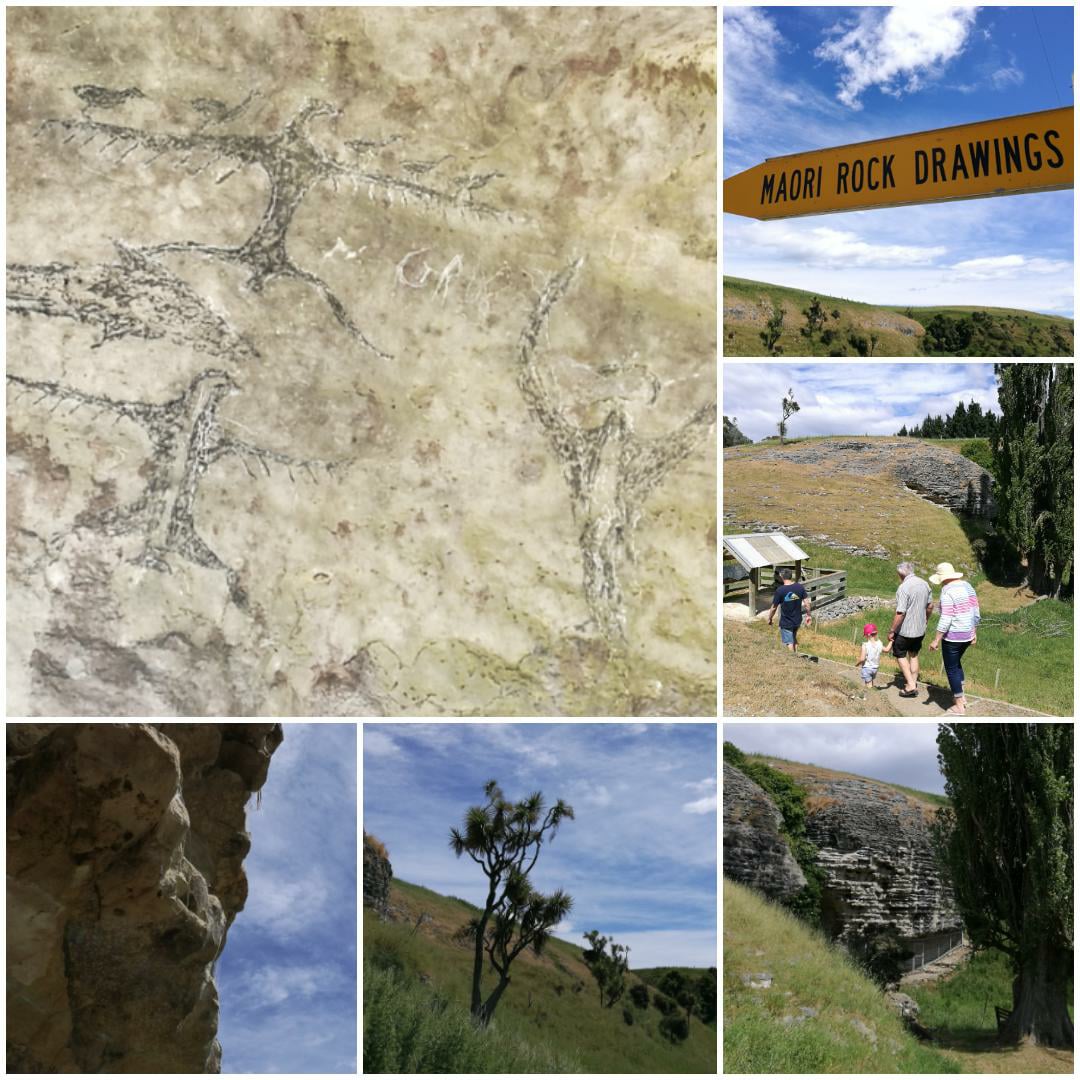
A 25-minute drive southwest of Timaru, this site features what is thought to be depictions of birds and human figures. A brief walk from the roadside leads you to a limestone overhang. Give your eyes time to rest and then look for ancient artworks on the walls and ceiling. Please respect the private farmland by staying on the designated path. The Te Manunui Rock Art Site is one of the few sites that are accessible to the public. For tangata whenua, the site is a tangible link to their ancestors’ activities, migration routes, and traditions. The presence of extinct animals and stylistic similarities to Eastern Polynesian art suggest it dates to the earliest phase of Māori settlement in Te Wai Pounamu. Some believe the bird figure ‘Te Manunui’ (the Great Bird) represents New Zealand’s now extinct Pouakai or the Haast eagle (Aquila moorei, previously Harpagornis moorei) that was associated with the Canterbury area. It is easy to get to, and the drawings are reasonably clear. A wonderful place to take your family and visitors, and to raise public awareness and appreciation of Māori rock art, and to educate the public about the earliest stages of human habitation in New Zealand. Historic Place Category 1 in the Canterbury Region
25 minute drive from Timaru via Taiko Vaklley and across Pareora River. 2 min walk from the road side. Note the path can be muddy when wet.
215 Frenchmans Gully Road, Maungati Get Directions - Google Map
Historic Place Category 1 in the Canterbury Region
A 25-minute drive southwest of Timaru, this site features what is thought to be depictions of birds and human figures. A brief walk from the roadside leads you to a limestone overhang. Give your eyes time to rest and then look for ancient artworks on the walls and ceiling. Please respect the private farmland by staying on the designated path. The Te Manunui Rock Art Site is one of the few sites that are accessible to the public. Some believe the bird figure ‘Te Manunui’ (the Great Bird) represents New Zealand’s now extinct Pouakai or the Haast eagle (Aquila moorei, previously Harpagornis moorei) that was associated with the Canterbury area. It is easy to get to, and the drawings are clear. A wonderful place to take your family and visitors, and to raise public awareness and appreciation of Māori rock art, and to educate the public about the earliest stages of human habitation in New Zealand.
Can you spot the Great Bird of legend?
At the heart of Te Manunui is a striking bird figure believed by tangata whenua to represent the now-extinct Pouakai or Haast eagle. This interpretation inspired the site’s renaming in 2007 from Frenchmans Gully to Te Manunui (The Great Bird), reflecting its cultural and symbolic importance.
What creatures can you recognise in the ancient artwork?
The site contains bold, well-preserved images that include fish and possibly moa. These visually striking figures are notable for their completeness and skilled execution, offering rare insight into the artistic expression of early Māori communities.
Did you know this art is hiding in the South Canterbury hills?
Te Manunui is situated in a limestone rock shelter in the Pareora region of inland South Canterbury. Its transformation in 2007 into a named heritage site marked a significant effort to recognise and celebrate its historical and cultural value.
What stories does this place tell about the first people here?
For tangata whenua, the site is a tangible link to their ancestors’ activities, migration routes, and traditions. The presence of extinct animals and stylistic similarities to Eastern Polynesian art suggest it dates to the earliest phase of Māori settlement in Te Wai Pounamu.
Can you trace the timeline in the drawings?
Although no direct dating has been done in New Zealand, depictions of extinct species and archaeological evidence nearby point to an ancient origin. While Te Manunui itself does not feature colonial imagery, other sites show that Māori rock drawing continued into the early European contact period, evolving to include ships, horses, and te reo Māori writing.
Why is this site such a rare public treasure?
Unlike most Māori rock art, which is found on private land, Te Manunui is publicly accessible. This makes it especially valuable for raising awareness about Māori heritage and teaching the public about New Zealand’s early human history.
What efforts have been made to protect and honour it?
Registered as a Private Historic Reserve in 1962, the site was extensively upgraded in 2007 with interpretive signage, protective cages, and a visitor track. These enhancements were led by volunteers from the South Canterbury Historic Places Branch in partnership with local councils, Ngāi Tahu Māori Rock Art Trust, and Heritage New Zealand, which now manages the site.
215 Frenchmans Gully Road, Maungati
View Google Map
Te Manunui rock art site is located on the farm property between 215 and 275 Frenchmans Gully Rd, Maungati. The site is publicly accessible from Frenchman’s Gully Road.
Directions:
Timaru Information Centre
2 George Street, Timaru Central, Timaru 7910
Take Stafford St to North St
2 min (550 m)
Take Fairview Rd, Holme Station Rd and Pareora River Rd to Craigmore Valley Rd in Maungati
18 min (20.0 km)
Continue on Craigmore Valley Rd. Drive to Frenchmans Gully Rd
4 min (3.8 km)
Te Manunui Maori Rock Drawings
215 Frenchmans Gully Road, Maungati 7972