
Then What Else Could It Be?
It might look like just a roof tile, weathered, and no longer useful. But when you take a closer look, could it become something more?
This roof tile once sheltered a home. It sat high above the ground for over a century, protecting walls filled with stories, art, and change. It was made by skilled hands, shipped across oceans, and placed with care on the roof of the Aigantighe Art Gallery, long before it became a gallery at all.
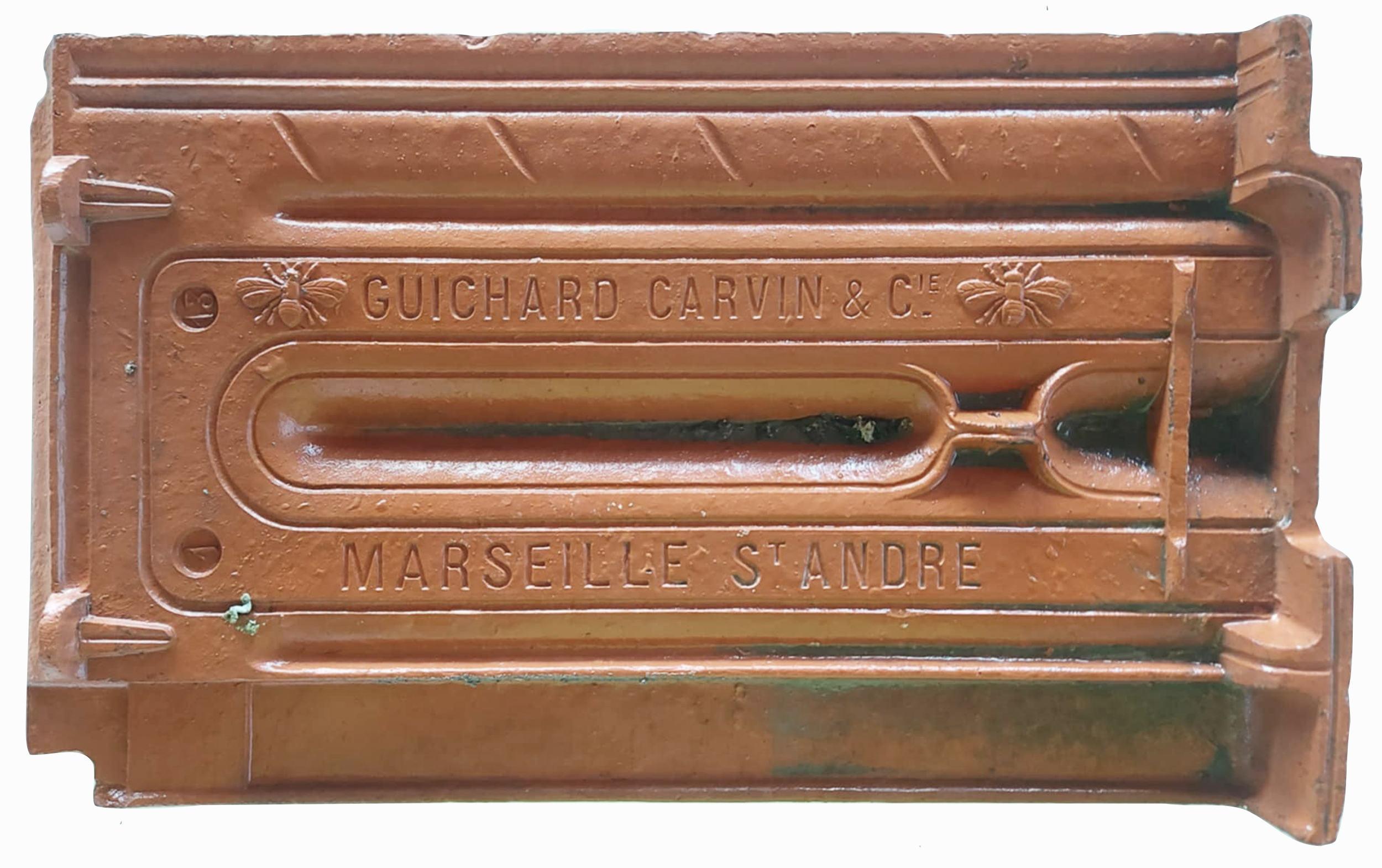
Now, too fragile to return to the rooftop, this tile still carries meaning. You can see it in the tiny stamped bee, the colour of the clay, the lichen, the reminants of dirt accumulated over time and washed away by the weather.
What and who has this tile witnessed. Can it be a symbol, a protector, a survivor, a victim...?
So if it’s not just a roof tile…
Could it be a storyteller?
A memory keeper?
A piece of someone’s legacy?
A spark for your next poem, drawing, painting, or performance?
"The wonderful thing about art is that there’s no right or wrong. Your art doesn’t have to be the best work the world has seen... it can still be powerful when it’s honest, when it tells a story, and when it makes someone feel something. Art gives us the freedom to look closely, ask questions, and share how we see the world. A simple object: like this roof tile, can carry stories, spark ideas, and help us connect with others." - Roselyn Fauth
So how can you be inspired? How will you use your art to inspire others?
Meet the Tile
The Aigantighe roof tile is a weathered, century-old Marseille clay tile that once sheltered the historic Grant family home, now the Aigantighe Art Gallery in Timaru. Made in France by Guichard Frères and stamped with a tiny bee, the tile travelled across the world and was laid by hand on the roof in the early 1900s. It protected the building through storms and seasons and witnessed its transformation from a family home into a public art gallery. Now too fragile to return to the roof that was damaged in a significant hail storm, can you imagine what it has witness over this time, who and how it was made, and how it has impacted our community. When the roof was repaired, the old tiles were discarded, and kept aside waiting for a new use. The tile can show us that every object has a story and a meaning.

Roof tile from the Aigantighe Art Gallery. Photography By Roselyn Fauth. The Aigantighe Historic House that is part of the Aigantighe Art Gallery was designed by James S. Turnbull, a well-known Timaru architect. Built of brick and plaster it is crowned with Marseille tile roofing, which were likely imported from Guichard Carvin et Cie, Marseille St. Andre, known for the bee mark. Pressed tiles like this one were exported all over the world and were introduced to New Zealand in about 1901.

The tiles are famous, made in the south of France, they can be found across the world protecting many buildings. They are so famous, that there are many websites that celebrate their history. Check out the tool on this website to zoom in and rotate the tile to study how it looks: https://acahuch.msd.unimelb.edu.au/miles-lewis-heritage-building-collection/marseille-roofing-tiles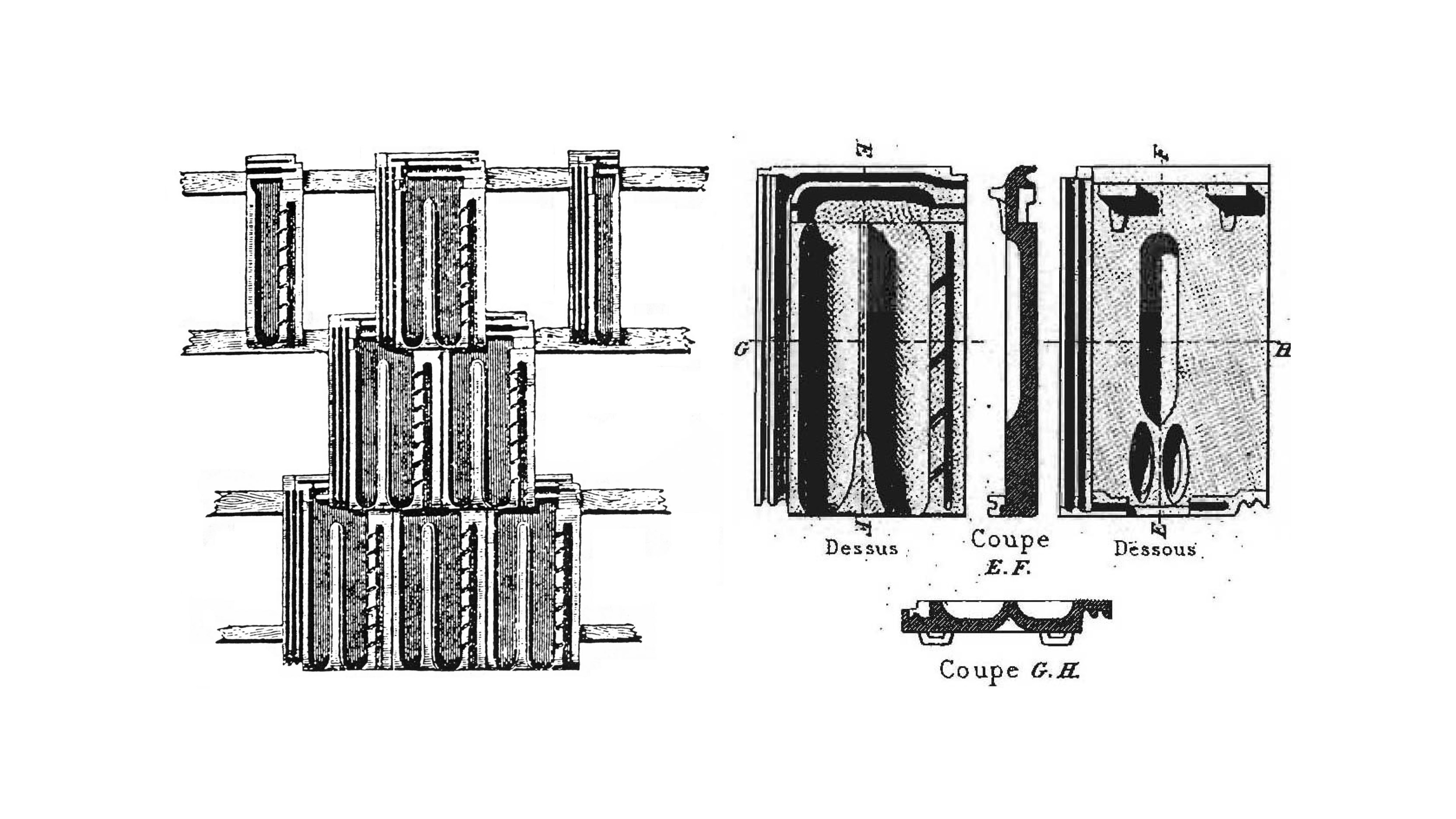
Meet the Architect
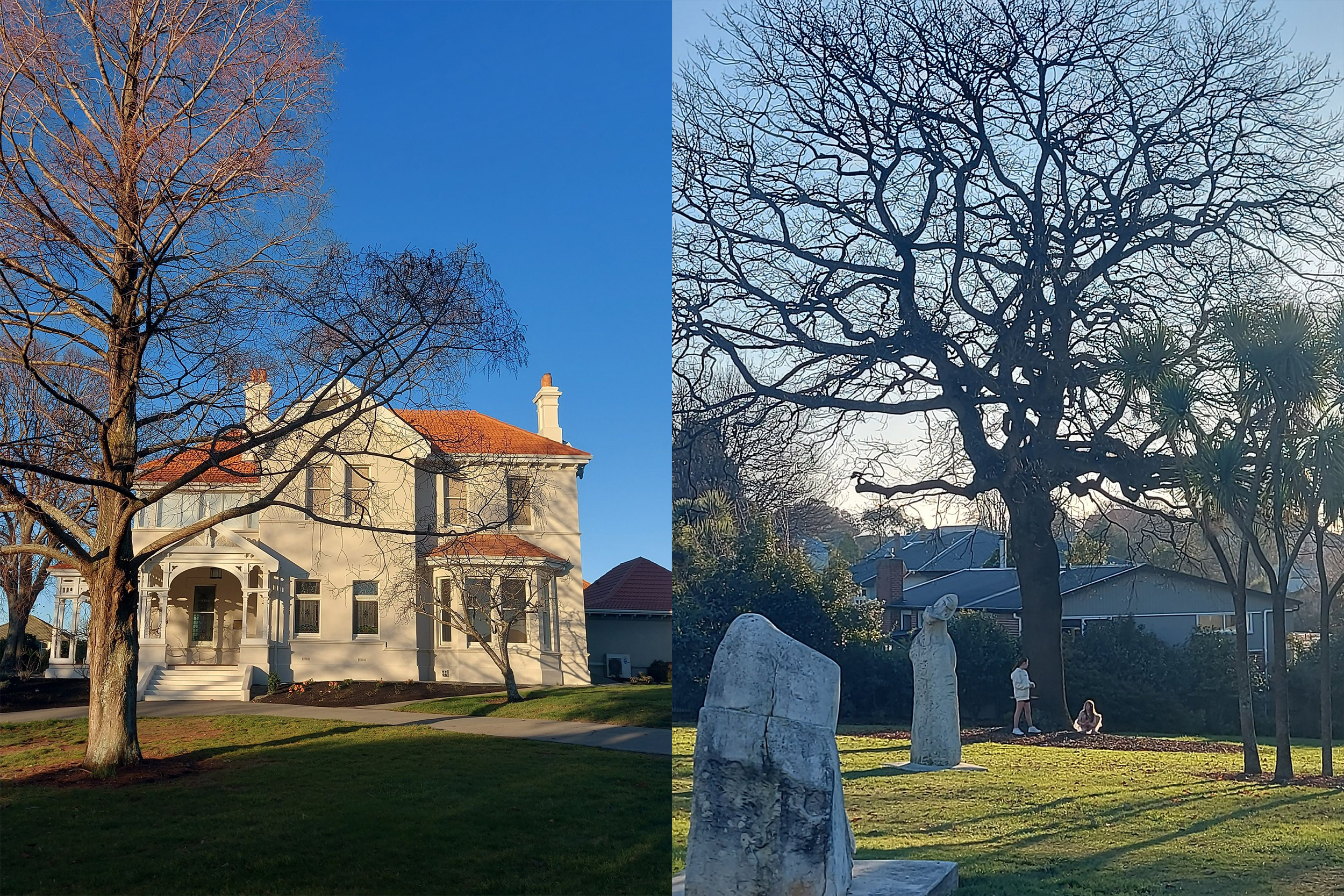
Aigantighe Art Gallery and the Sculpture Garden. - Photo Roselyn Fauth 2025
About the Architect: James S. Turnbull (1864–1947) James S. Turnbull was a prominent Timaru-born architect whose work helped shape the look and character of the town in the early 20th century. Trained in Christchurch and Melbourne, he returned to Timaru to open a practice known for elegant residential and commercial buildings. He became a Fellow of the New Zealand Institute of Architects in 1905.
Turnbull’s designs often reflect the influence of the Arts and Crafts movement, using local materials like red brick, timber, and plaster. He valued craftsmanship and simplicity, drawing inspiration from traditional British styles. In 1919, he partnered with Percy Rule, and together they created many of Timaru’s most recognisable buildings, including St Mary’s Hall, the Oxford Buildings, and parts of the Timaru Milling Co offices.
His legacy includes homes and public buildings that are still lived in and loved today, blending heritage with function. Turnbull died in 1947 and is buried in the Timaru Cemetery alongside his wife Katharine. His work continues to tell stories about the people, materials, and movements that shaped South Canterbury.
Timaru District Council Heritage Building Report
Meet the people who lived here or had a connection to this place

Left:, Archibald Nicoll, Helen Grant, c.1940, oil on canvas, Aigantighe Art Gallery Collection 1998.34. Helen (Ellen) Grant (nee Banks) (1854–1955) and her husband Alexander built Aigantighe House in 1908 as their retirement home, where Helen hosted social gatherings and nurtured the gardens. In 1955, their son James Grant gifted the house and the family’s art collection to the city of Timaru, fulfilling Helen’s wish for it to become a public art gallery. The Aigantighe Art Gallery opened in 1956. The Grants’ donation reflected their lifelong commitment to the arts. A portrait of Helen by Archibald Nicoll, gifted in 1998, continues to honour their legacy as art patrons and supporters of creativity.
Center: 16 August 1956 was the official opening of the Aigantighe Art Gallery. Pictured in this group photo is Governor-General Sir Willoughby Norris, the Mayoress, Mrs R.E White, Lady Norrie, Mrs Lorna Grant, Mr James Grant, and the Mayor, Mr R.E. White on the Verandah of the Aigantighe. - Image courtesy of the Aigantighe Art Gallery Archives
Right: Generations can now enjoy art in South Canterbury thanks to the legacy and generosity of others. Roselyn's daughter Medinella stands with staff member outside. Photo by Roselyn Fauth
The gardens were to become a place of "rest and quiet"

Left: Helen Grant (1854-1955) with her children. James (also known as Hamish), Jessie and Alexander who died aged 10 in 1893. Right: Alexander Grant (1831-1920). Images courtesy of the Aigantighe Art Gallery Archives.
1881 Alexander and Helen Grant began farming at Gray's Hills station near Burkes Pass. He was born in Stirling, Scotland and immigrated to New Zealand in 1861. Alexander purchased land on Wai-iti Road, Timaru for the construction of the Aigantighe. In 1905 The Grants relocated from the farm to the completed house. In 1905 Alexander went into partnership with his son James in 1908. The Aigantighe became the primary residence for Alexander, Helen and daughter Jessie. 1910 Alexander retires from farming. Jessie married Rudolph Wigley (who founded the Mount Cook Group in 1912) and they lived in Fairlie before relocating to Kitchener Square in Timaru. Their six children were the only grandchildren of Alexander and Helen.
James married Lorna Guthrie in 1916, and year later he enlists in the army to serve in France with the New Zealand Field Artillery in 1918. 1920 Alexander dies at the Aigantighe. In 1948 James and Lorna retired from farming and lived at the Croft at 12 Park Lane, Timaru. 1955 Helen died. James and his sister Jessie who is a patron of the South Canterbury Arts Society donated Aigantighe and gardens to the City of Timaru to become an art gallery. 1956 the Aigantighe Art Gallery formally opens, and the South Canterbury Arts Society gift their collection of 82 artworks to the gallery. 1957 James donates more land to the eastern side. 1958-1960 Jessie Wigley's art entered the Aigantighe's permanent art collection. Jessie died in 1968, aged 85. James died in 1969 aged 90. 1976 the Friends were founded and by 1978 grew to 500 members. They commissioned a bronze sculpture called "Study from Life" by Frances Shurrock. The Friends were founded to support the Gallery with fundraising for the extension.
1978 The extension is built designed by architect Ronald Dohig. 1983 The building is Listed as a Historic Place Category 2. 1995 Additional storeroom and office extensions are built to accommodate the growing art collection.
- Timeline supplement in the Book, Aigantighe Timaru's Home of Welcome. Published 2021 by the Aigantighe Art Gallery.

The Grants Aigantighe Home on Wai-iti Road, Timaru, New Zealand. Images courtesy of the Aigantighe Art Gallery Archives
"Aigantighe (Scottish Gaelic for ’home of welcome’ and pronounced Aig-an-tighe) was originally built in 1905 (attributed to the architect James S Turnbull) for Alexander Grant (1831-1920) and Helen Grant (1854-1955), who had emigrated from Scotland and farmed Gray’s Hills Station in the Mackenzie Country. The Grant family lived in the ‘Aigantighe’ for 50 years; Alexander Grant passed away in 1920 at the age of 89, and his wife Helen in 1955 at 101. Their daughter, Jessie Wigley, with the support of her brother, James Grant (who had inherited the house on their mother’s death) gifted the house and its grounds to the people of Timaru in October 1955 to establish the District’s first and only public art gallery, to be known as the Aigantighe Art Gallery" - aigantighe.co.nz/about/heritage-house-gallery/the-history

James (Hamish) Grant (1878-1969) Image courtesy of the Aigantighe Art Gallery Archives

Aigantighe Art Gallery before the extension. 1950's. Photo courtesy with permission from Cynthia Cleland.
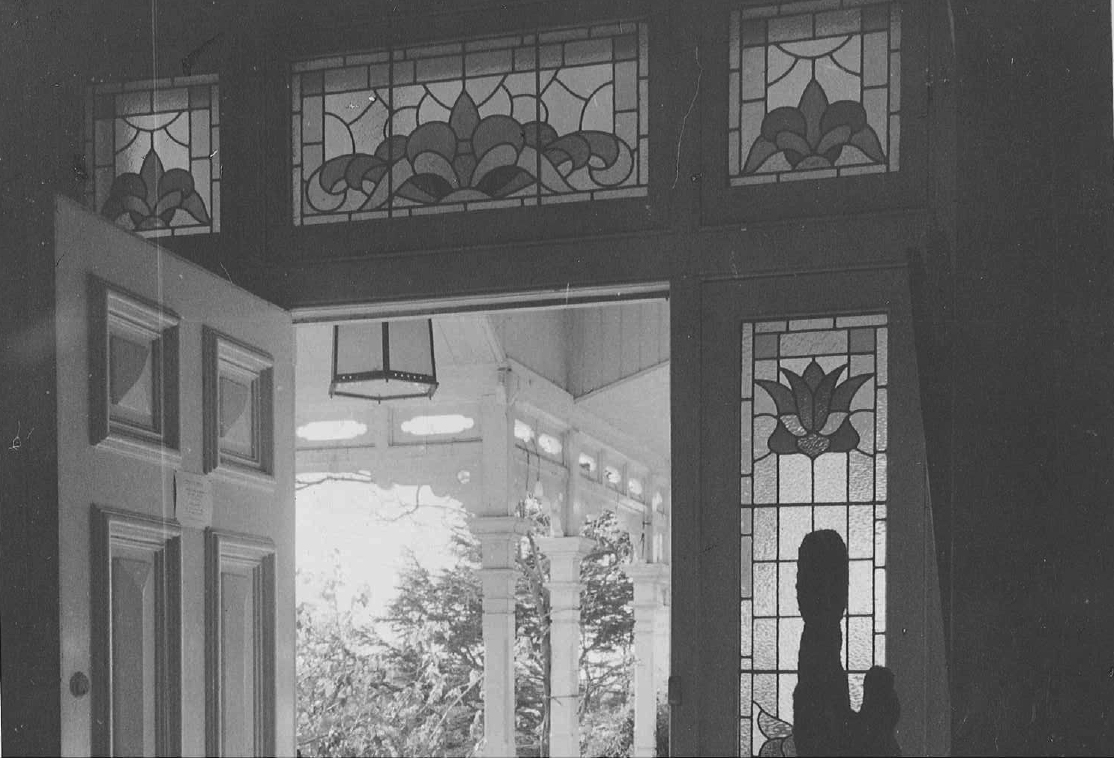
The Grants Aigantighe Home - Image courtesy of the Aigantighe Art Gallery Archives.
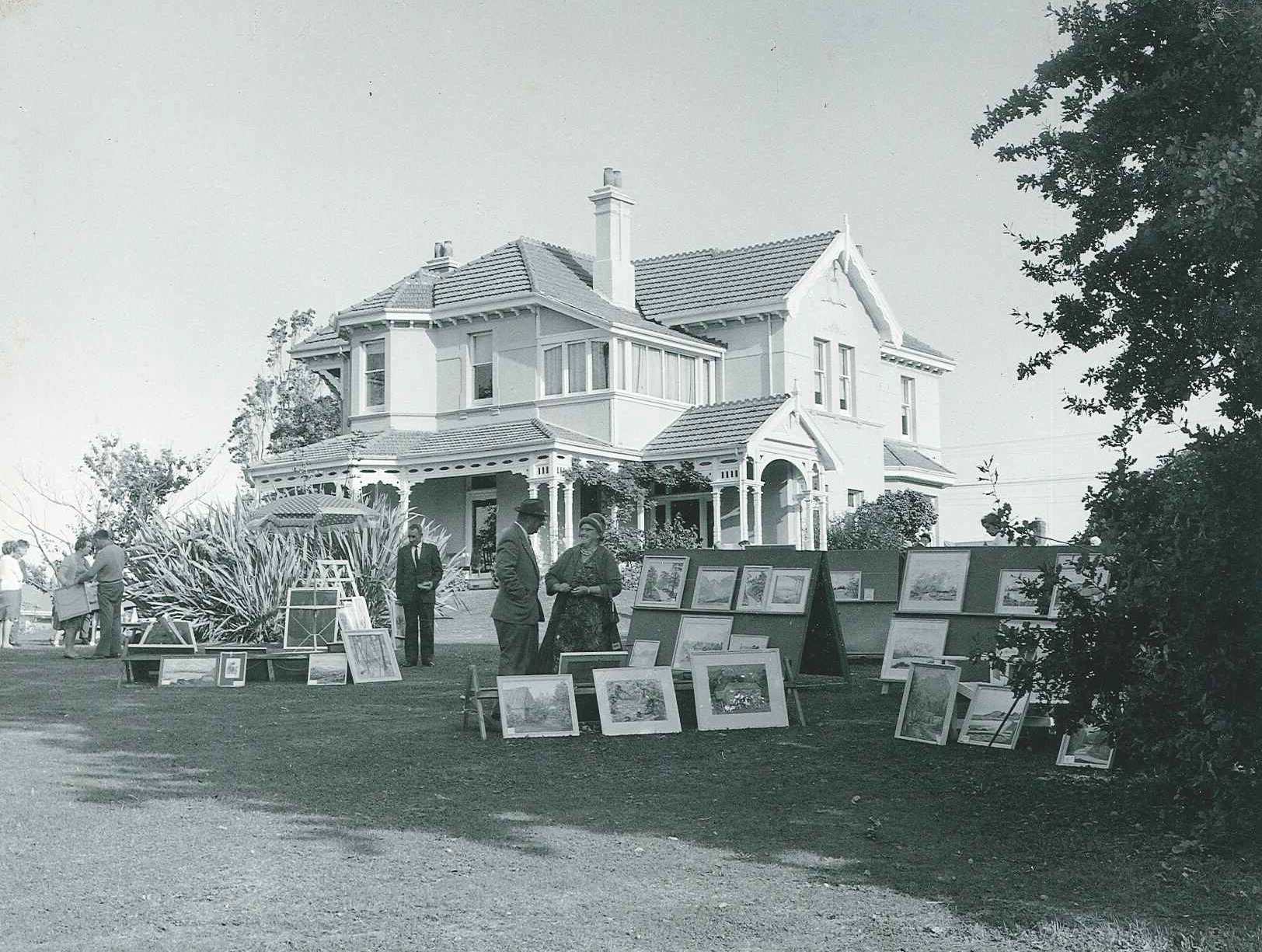
The Grants Aigantighe Home now an art gallery - Image courtesy of the Aigantighe Art Gallery Archives.
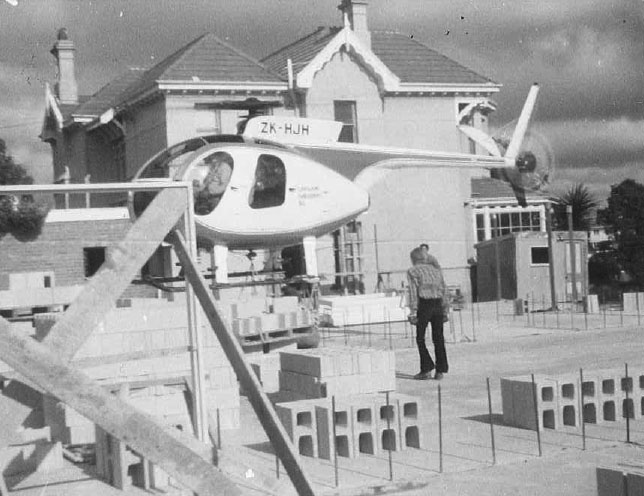
Consturction of the gallery extension underway - Image courtesy of the Aigantighe Art Gallery Archives.
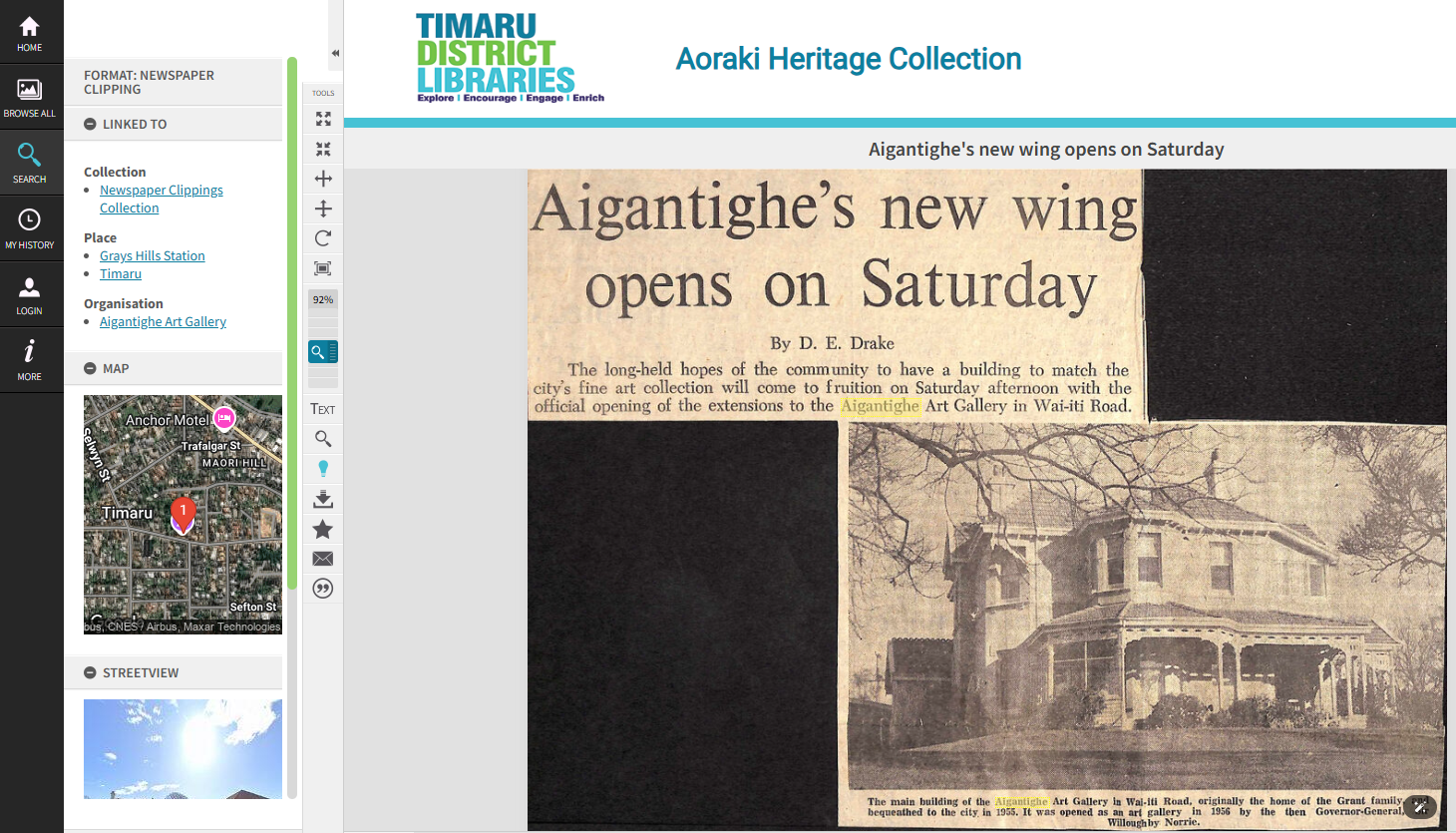
Aigantighe's new wing opens on Saturday (07 Sep 1978). Aoraki Heritage Collection, accessed 20/07/2025, https://aorakiheritage.recollect.co.nz/nodes/view/4294
The Aigantighe Art Gallery in Timaru celebrated the opening of a major new extension, officially launched by Sir Henry Wigley, nephew of James William Grant, who gifted the Aigantighe property to the city nearly 25 years earlier. Originally built in the early 1900s by Alexander and Helen Grant, Aigantighe ("Welcome to our Home") became an art gallery in 1956. While this was a cultural milestone, limited display space meant many artworks remained in storage. Over the years, growing calls for expansion led to council efforts, a $4,000 donation from Mr Grant before his death in 1969, and eventual government funding support.
After various setbacks, construction began in 1976 under architect R.L. Dohig, who designed the extension to complement the original building. The new wing includes a spacious gallery, restoration workshop, and a landscape window overlooking gardens and sculpture court. Gallery director A.G. Manson emphasized that the expansion allows for broader cultural use and improved display of the significant provincial art collection. The opening featured the Kelliher retrospective exhibition and a sculpture gift from the Friends of the Aigantighe to mark the occasion.

Modern Extension of the Aigantighe - Image courtesy of the Aigantighe Art Gallery Archives.
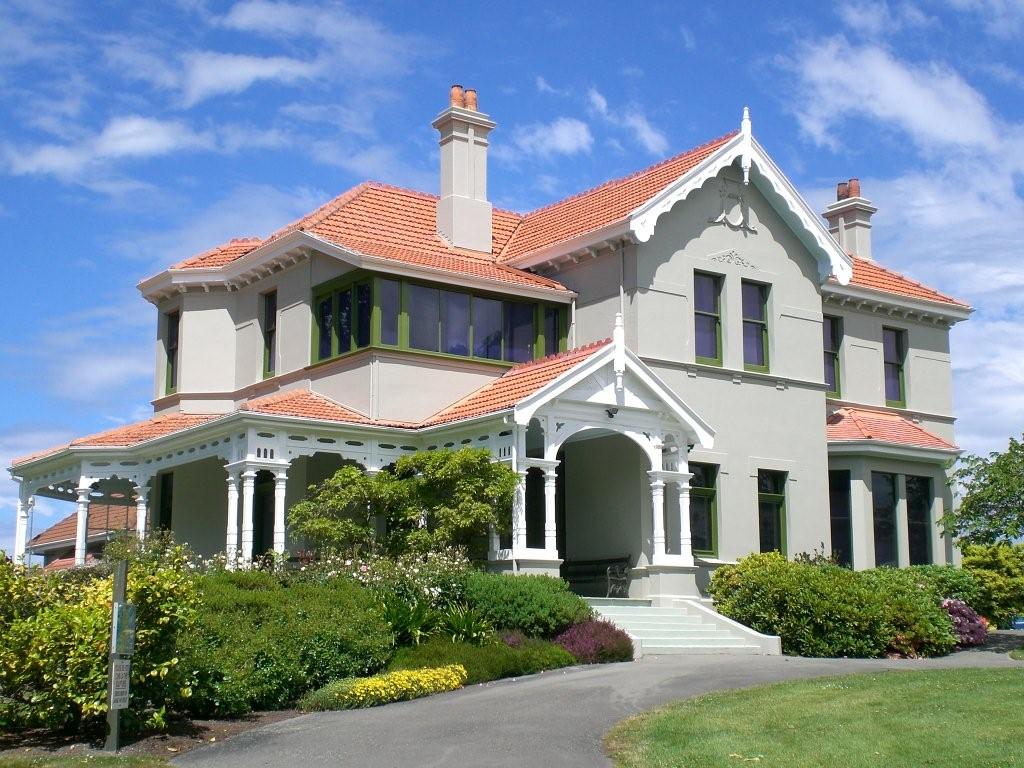
The Aigantighe Art Gallery in 2008. Photograph by Geoff Cloake
Fun Facts About the Aigantighe Art Gallery
Aigantighe Means “Home of Welcome” Pronounced Aig-an-tighe, the name comes from Scottish Gaelic. The house was built in 1905, most likely by well-known Timaru architect James S. Turnbull.
From Scottish Pioneers to South Canterbury Legacy. Alexander Grant (1831–1920) and Helen Grant (1854–1955) emigrated from Scotland and farmed Gray’s Hills Station in the Mackenzie Country.
They lived in Aigantighe for 50 years. Alexander died at age 89, and Helen lived to an extraordinary 101.
A Family Gift to Timaru. In October 1955, the Grants’ daughter Jessie Wigley, with support from her brother James Grant, gifted the house and gardens to the people of Timaru. Their wish was to create the district’s first and only public art gallery, and so the Aigantighe Art Gallery was born.
A Long-Awaited Dream Fulfilled. The South Canterbury Art Society had been calling for a public gallery since 1895. On 16 August 1956, that dream came true when Aigantighe officially opened. To help launch it, the Art Society donated their entire civic art collection.
A Growing Collection of National Treasures. Since opening, the gallery’s permanent collection has grown to more than 1,800 artworks. It includes works by some of New Zealand’s most celebrated artists, such as: Colin McCahon, Doris Lusk, William Sutton, Toss Wollaston, Charles Goldie
Expanding the Space. As the gallery became more popular, it outgrew the original heritage house. A modern extension, designed by Ronald Dohig, was added in 1978, providing a main gallery, reception area, and storage. Additional rooms were added in 1995 to support the growing needs of the collection.
A Cultural Landmark for All. Today, Aigantighe Art Gallery continues to collect, exhibit, preserve, and educate. It’s a cornerstone of South Canterbury’s arts scene...a place where people come to be inspired, challenged, and connected through art.
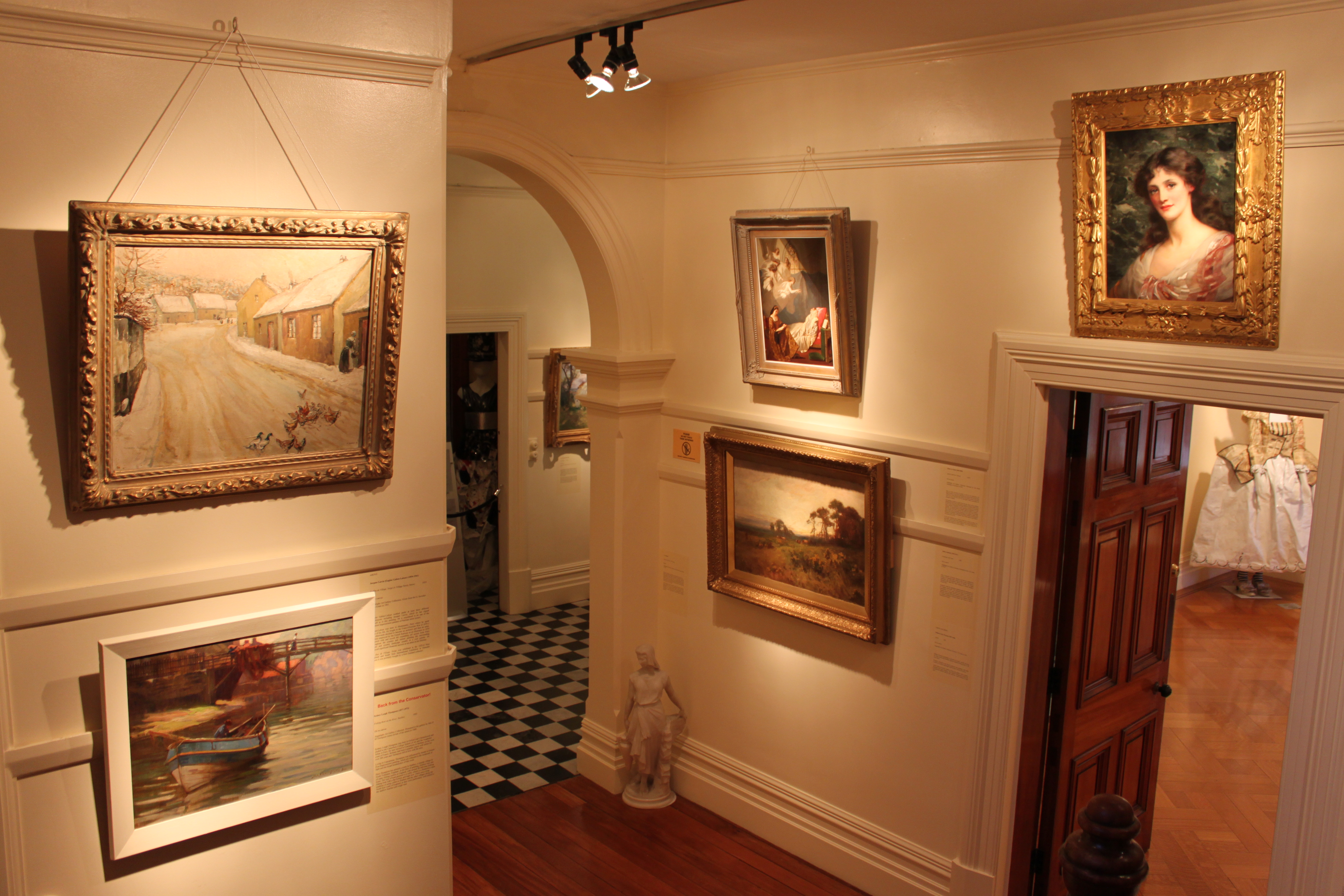
Inside the Aigantighe House in 2008. - Photograph by Geoff Cloake
Meet the Friends
The idea for the Friends of the Aigantighe actually started with a question in the Timaru Herald back in May 1975. It asked, “Should a ‘Friends of the Art Gallery’ Committee be formed in Timaru to foster interest in the Aigantighe Art Gallery?” That was the spark. At a City Council art gallery meeting the day before, the director, Mr A G Manson, had floated the idea, suggesting it could be a group to support the gallery... not in competition with the South Canterbury Arts Society, but something alongside it. The Arts Society’s president agreed. He said the two groups could serve different roles, and people might belong to both.
A steering committee was set up with Mr E R McKenzie as chair, and on the 7th of May 1976, they held a special evening at the gallery. There was an exhibition of African arts and brass rubbings, and yes, sherry was served. The mayor at the time, Mr C R Hervey, sent a letter of support and reminded everyone that the Aigantighe existed because of the generous gift from Mr and Mrs James Grant of Grey’s Hills Station. He explained that the new Friends group would help promote the gallery and support its exhibitions, lectures, and cultural events.
Membership fees were $2 for individuals, $3 for couples, $4 for families. By August that same year, they’d formed the first full committee and already had over 300 members. Dr McKenzie stayed on as chairman, and the team included a mix of passionate locals, including the gallery director himself, Mr A G Manson. The Friends hosted events, supported openings, and helped to build excitement about what the gallery could offer. By 1979, they had almost 600 members. People even paid 50 cents to attend some openings to help cover costs. Sherry eventually gave way to wine, and fifty years the later the committee continued to support the gallery staff, membership and help host openings.
As well as helpers, The Friends were advocates. In 1980, when a local review dismissed a pottery and weaving exhibition, several members wrote thoughtful letters defending the show. That same year, the group launched a campaign to approach local businesses for support, aiming to buy artworks and bring exhibitions to Timaru. They also committed $150 a year toward restoration and preservation work, which was reported to the cultural committee by Mr D McBride.
In 1981, they helped fund a stereo system and new chairs for the gallery and voiced concern about the lack of a permanent exhibitions officer. They introduced live music to the gallery with performances by talented local musicians. But it wasn’t always smooth sailing. In 1982, they had to return a watercolour by Alfred Sharpe after falling short of the funds to buy it. They’d raised $4,500 through a public appeal but were turned down for the remaining $2,500 by the Timaru District Council. Still, they didn’t give up. They hoped to one day bring a Sharpe painting to the Aigantighe collection.
One of the most special early moments came in 1977. The Friends had been offered a plaster figure by New Zealand sculptor Francis Shurrock, on loan from F C W Staub. It was decided to have it cast in bronze. They raised the funds, got a quote from a foundry in Melbourne, and made it happen. The model for the sculpture actually came from a family of models, her younger brother was the inspiration for the Peter Pan statue in Kensington Gardens in London. Shurrock had moved to New Zealand for health reasons after suffering the effects of gas attacks in WWI, so this work carries personal and national history.
That sculpture, Study from Life, became the Friends’ first official gift to the gallery. It was unveiled during the opening of the Aigantighe’s new extension in 1978, alongside the New Zealand premiere of the Kelliher Retrospective Art Exhibition. The opening was led by Sir Henry Wigley. By that time, the Friends had firmly established themselves, not just as supporters, but as a driving force behind the gallery’s evolution.
Looking back, it’s clear that the Friends were more than a fundraising group or a committee. They were part of the gallery’s community. They helped make it a welcoming place for artists, families, and the wider community. And they showed that when people care about something deeply enough, they’ll find a way to help, advocate, celebrate and make it grow.
- 200 Friends of Aigantighe Art Gallery (10 Aug 1976). Aoraki Heritage Collection, accessed 20/07/2025, https://aorakiheritage.recollect.co.nz/nodes/view/4315
Examples of many of the Friends legacy:
The James Cook Collection. A generous gift of paintings and drawings by the celebrated New Zealand-born artist, secured through the support of the Friends and donated by his sister, Mrs M. Hemsley. Cook’s work is held in major galleries across Australasia, and now also here in Timaru. This lasting gift connects Aigantighe to a wider cultural story, honours personal legacy, and shows how the Friends turn generosity into something the whole community can treasure. Important paintings for Aigantighe (16 Nov 1977). Aoraki Heritage Collection, accessed 20/07/2025, https://aorakiheritage.recollect.co.nz/nodes/view/4341
The Friends' contribution was during the official opening of the Aigantighe Gallery extensions in 1978. Sir Henry Wigley, nephew of James Grant who gifted Aigantighe to the city, performed the opening. To mark the occasion, the Friends presented a bronze sculpture of a woman—a meaningful gesture symbolising their role in enhancing the gallery experience. Their gift was part of a landmark event that also launched the Kelliher Retrospective Art Awards exhibition and celebrated the expansion of gallery space, including new display and restoration areas. It was a moment that blended community pride, national art recognition, and the Friends' ongoing commitment to cultural enrichment. - Nephew of Aigantighe donor opens city art gallery extensions (11 Sep 1978). Aoraki Heritage Collection, accessed 20/07/2025, https://aorakiheritage.recollect.co.nz/nodes/view/4330
The Friends' influence came through the leadership of Graham Sanders, who became gallery director in 1982. He described Aigantighe as “an outstanding asset” and praised the Friends as the largest gallery support group in New Zealand on a per capita basis—more than double the size of Christchurch’s. Their strong backing gave him the confidence to dream big, from extending gallery hours and launching lecture series, to proposing Aigantighe as a national repository for contemporary prints. The Friends' visible, active support helped make ambitious thinking possible, laying the groundwork for innovation and wider public engagement. - D E Drake, Aigantighe Art Gallery 'an outstanding asset' (12 Jun 1982). Aoraki Heritage Collection, accessed 20/07/2025, https://aorakiheritage.recollect.co.nz/nodes/view/4333
A beautiful example of the Friends' ongoing support was shared by A.G. Manson, the long-serving gallery director who famously slept at Aigantighe for five weeks straight to guard a priceless exhibition before burglar alarms were installed. On retiring, he credited the Friends of Aigantighe as one of the key groups that helped build the gallery’s reputation and strengthen its collection. Their support, he said, made it possible to bring in exhibitions, acquire important works, and keep the gallery growing—despite limited funds and the many challenges of running a regional art space. Their dedication gave the gallery heart, momentum, and community connection. D E Drake, He slept in gallery to protect valuable art treasures (07 Apr 1982). Aoraki Heritage Collection, accessed 20/07/2025, https://aorakiheritage.recollect.co.nz/nodes/view/4348
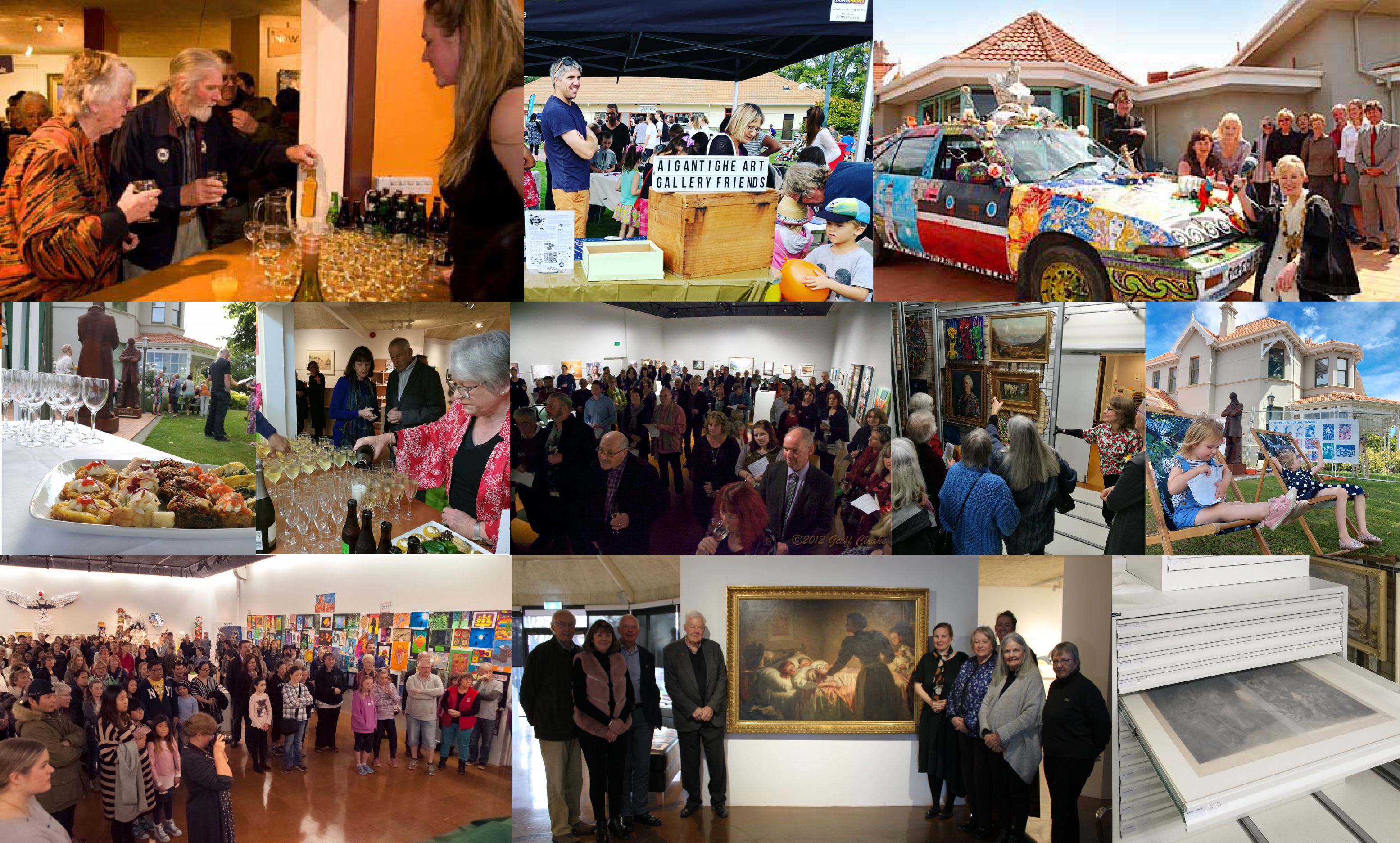
Friends of the Aigantighe Art Gallery. The idea for a Friends group was first publicly discussed in May 1975 following a Timaru Herald article and a Timaru City Council Art Gallery Committee meeting. Gallery director A G Manson and committee members supported the proposal, suggesting it would complement rather than compete with the South Canterbury Arts Society. A steering committee was formed, chaired by Dr E R McKenzie, and in May 1976 a special function was held at the gallery featuring an exhibition of African art and original brass rubbings, with sherry served to guests. In August 1976, the Friends of the Aigantighe Art Gallery was officially established with over 300 members. Their purpose was to support the gallery by organising social functions, promoting exhibitions, encouraging public interest and assisting with the purchase of artworks. Membership grew rapidly, reaching over 500 by 1978 and 594 in 1979. Original subscription rates were two dollars for individuals, three for couples, four for families and eight for institutions. Early members also paid fifty cents to attend openings to help cover expenses. By 1979, wine had replaced sherry at events.
Photography by Roselyn Fauth and Geoff Cloake.
Meet the challenge that brought the roof tiles to a tidy pile
In 2024, the Aigantighe Art Gallery’s Heritage House reopened after a major restoration project. Built in 1905 for the Grant family and designed by local architect James S. Turnbull, the house became Timaru’s public art gallery in 1955. Strengthening work ensured the building could continue to welcome visitors, protect artwork, and share stories for future generations. The roof tiles, including the one featured here, once sheltered this house and can now spark new stories through creative expression.
- The tile originally sheltered the Aigantighe house, connecting it to over a century of local history.
- The 2022–2024 restoration shows how the house and tile remain part of a living, evolving heritage.
- The tile came from a building designed by James S. Turnbull, a key architect in shaping Timaru’s identity.
- Turnbull’s legacy across Timaru adds cultural and architectural depth to the tile’s story.
- The Grant family’s gift and the support of the Friends of the Aigantighe make the gallery a true community taonga.
- Local funders, tradespeople, and volunteers show how shared heritage is built through collective effort.
- The tile’s preservation symbolises how fragile objects can still hold powerful meaning.
- Though too delicate to return to the roof, the tile now inspires learning, art-making, and reflection.
- The project reflects heritage in action—preserving stories while creating space for new ones to be told.
- The tile invites people to look closer, connect with place, and become part of the gallery’s ongoing story.
What Else Could It Be?
It might look like just a roof tile... Could this tile be a storyteller? A memory keeper? A spark for something new?
"The wonderful thing about art is that there’s no right or wrong. Your art doesn’t have to be the best work the world has seen... it can still be powerful when it’s honest, when it tells a story, and when it makes someone feel something. Art gives us the freedom to look closely, ask questions, and share how we see the world. A simple object (like this roof tile) can carry stories, spark ideas, and help us connect with others." - Roselyn Fauth
So how can you be inspired? How will you use your art to inspire others and spark creativity and conversations?
2. Look Closely
- What more can we discover by slowing down and observing with care? Try these questions:
- What material is it made from?
- What colours, textures, or patterns can you see?
- Are there any marks or stamps?
- Is it damaged, or weathered in any way?
- How might it have been made?
- What might it have seen from the rooftop?
- Who might have handled or installed it?
- What does the bee symbol mean to you?
- What does it feel like to hold or imagine holding it?
- What story might it tell if it could speak?
3. Why This Matters
We can use this roof tile to spark curiosity, explore local history, reflect on legacy, and create meaningful art and stories. It helps us see how something simple can hold powerful connections... and how our ideas can shape the future by honouring the past.
Can you...
- Observe closely and notice details others might miss
- Discover the stories hidden in everyday objects
- Explore our local history and the legacy of the Aigantighe Art Gallery
- Connect with people who shaped our place, like Helen Grant, James Turnbull, and local artists
- Reflect on what it means to protect, to shelter, and to pass something on
- Create artwork, poetry, sculpture, or stories inspired by a single tile
- Express who we are and where we come from
- Imagine the tile’s journey and how it witnessed change over 100 years
- Share our own voices and creative responses with others
- Contribute to a classroom or community exhibition of meaning-filled creations
- Think deeply about legacy, identity, and what we want to be remembered for
- Celebrate the power of art and storytelling to bring history and people to life
"I’ve grown up with the Aigantighe. It has been part of my life since I was a child. As a sixth-generation Timaruvian with Dutch roots, I’ve always felt a deep connection to this place. One of my proudest moments was designing a stained glass window for the gallery. That little roof tile was there the whole time, quietly sheltering it all. It reminds me that we build on the foundations of those who came before us. Just like legacy, a roof tile can shelter, uplift, and inspire."— Roselyn Fauth (nee Cloake)
4. Create With It
Visual Art
- Sketch the tile in pencil, charcoal, or pen
- Paint using watercolours, acrylics, or found tools (e.g. sponges, leaves)
- Make a collage with paper, fabric, or textures
- Sculpt with clay, LEGO, cardboard, or natural materials
Design a new tile with your own maker’s mark
- Words & Storytelling
- Write a short story or diary from the tile’s point of view
- Create a zine or flipbook about its life
- Compose a poem about shelter or legacy
- Invent a legend about the bee mark
Performance & Sound
- Record a voiceover as the tile
- Create a soundscape of wind and rooftops
- Choreograph a movement piece about its journey
- Act out a short scene about its transformation
Tech & Mixed Media
- Create digital artwork or animation
- Edit a photo of the tile with overlays or filters
- Build a Minecraft or Roblox Aigantighe
- Make a stop-motion video with playdough or photos
- Tactile & Hands-On
- Mold the tile’s shape from dough or soap
- Carve your own symbol into clay or foam
- Create a sensory board with tile-like textures
- Make a wearable badge or pendant
5. Bonus Prompts
- What if the tile could fly?
- What does the bee mean to me?
- How can I give this tile a superpower?
- What would this tile say to a tree?
- What if the tile held a secret inside?
6. Find inspiration from others
Artist and volunteer, Roselyn Fauth’s Reflection, Inspired by the Aigantighe Art Gallery and a very old tile.
You might think it's just a roof tile... old, no longer useful. But when I held this heavy tile in my hands, I felt something more. It sheltered a home that became a public art gallery. It saw the lives of the Grant family, the hands of builders, the footsteps of artists and visitors.
If you look closely, you'll find a tiny bee. That bee came all the way from France, stamped into clay by Guichard Frères. My great-grandfather, grandfather, uncles, aunties, and cousins were beekeepers, so the bee means something personal to me too. It reminds me of legacy... what we build, what we leave behind, and how art connects us.
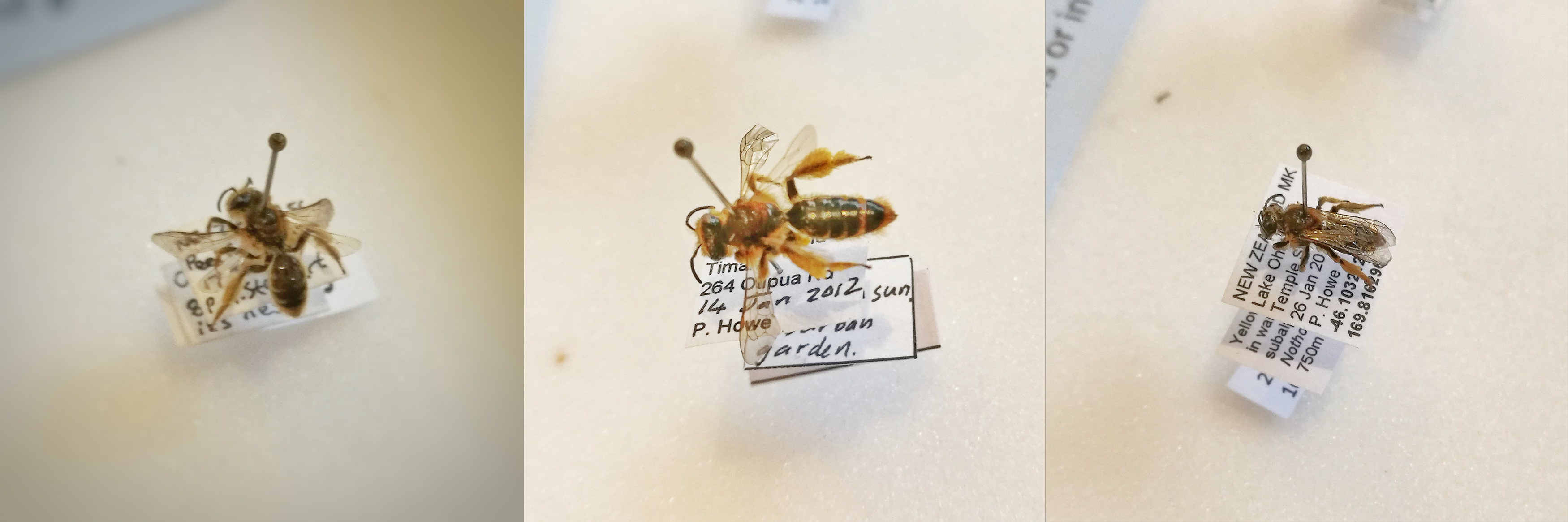
Native Bee Pollinators From South Canterbury Museum - Roselyn Fauth
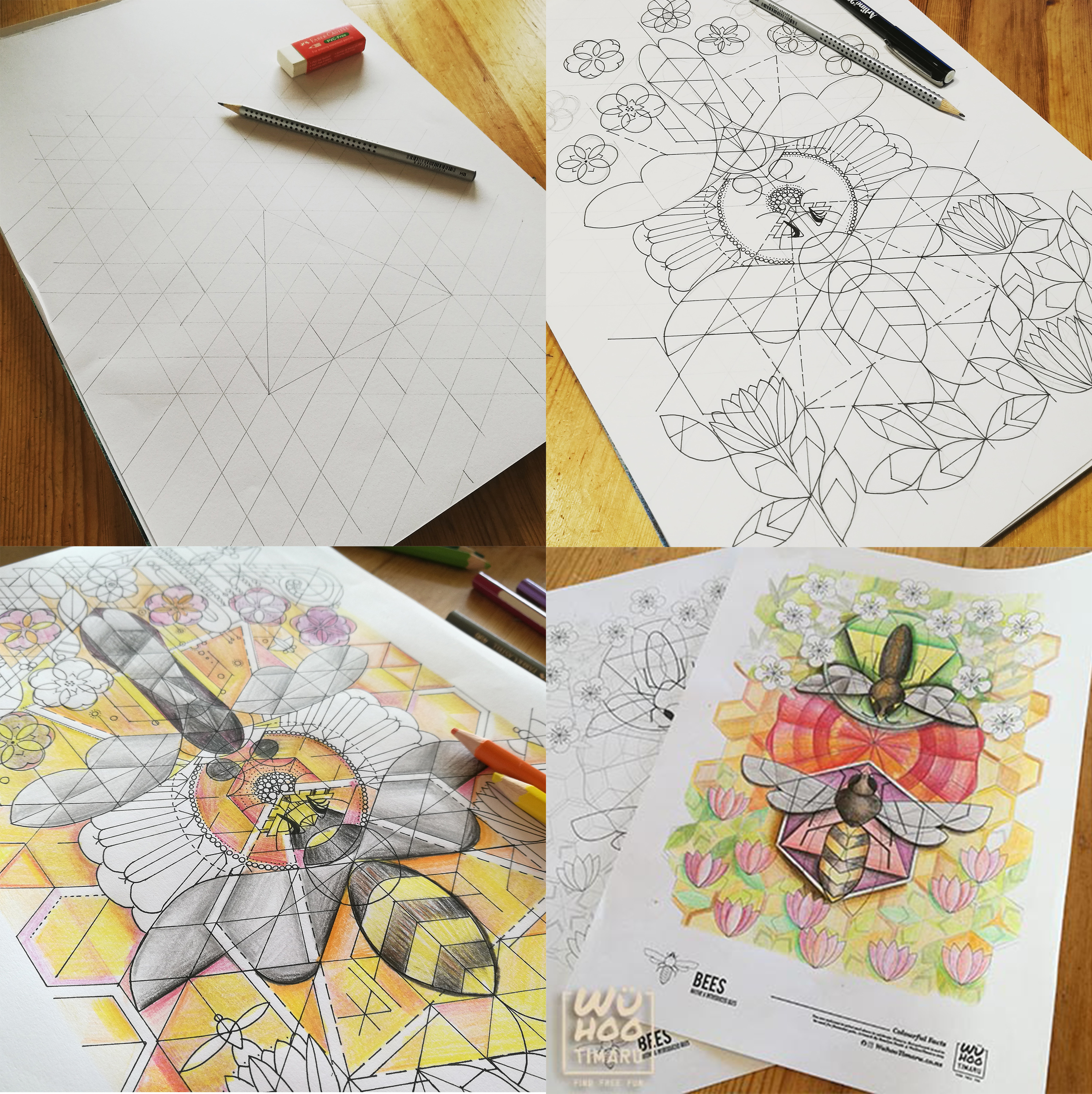
WuHoo Timaru fun fact colouring in sheet on native and introduced bees with clover and manuka. You can download and colour it in here: wuhootimaru.co.nz/colouring-sheets/106-bees
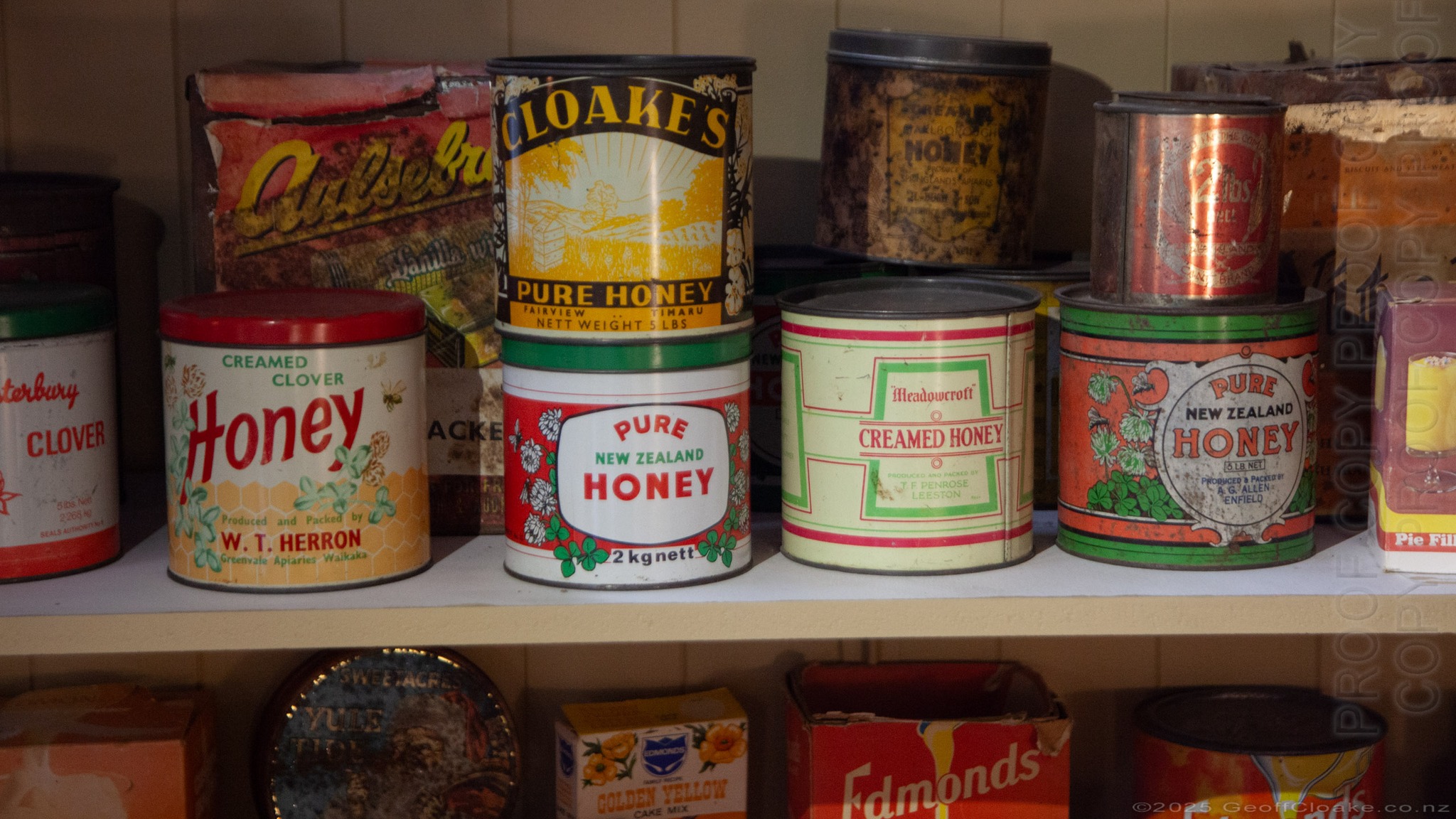
Honey bees were critical for pollinating the introduced crops, as the native pollinators weren’t really interested in them. So while I never helped, I grew up with the honey in our pantry and had many fond memories out at Fairview with family, the smell of hives and wax. I feel proud to have family roots in the industry and to acknowledge what they achieved.

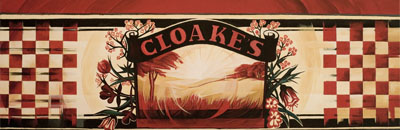
Honey Tins on display at Oamaru visitor center including Cloakes Honey. Below: Painting by Roselyn Cloake inspired by the Cloakes Honey Tin. I've really enjoyed rediscovering our family roots. If Annabelle was a boy we were going to call him Bertie. Above is a painting of the honey tin label. Cloakes Honey Limited (Fairview Road, Timaru) was incorporated on 12 December 1963, with Mervyn David Cloake serving as a long-time director
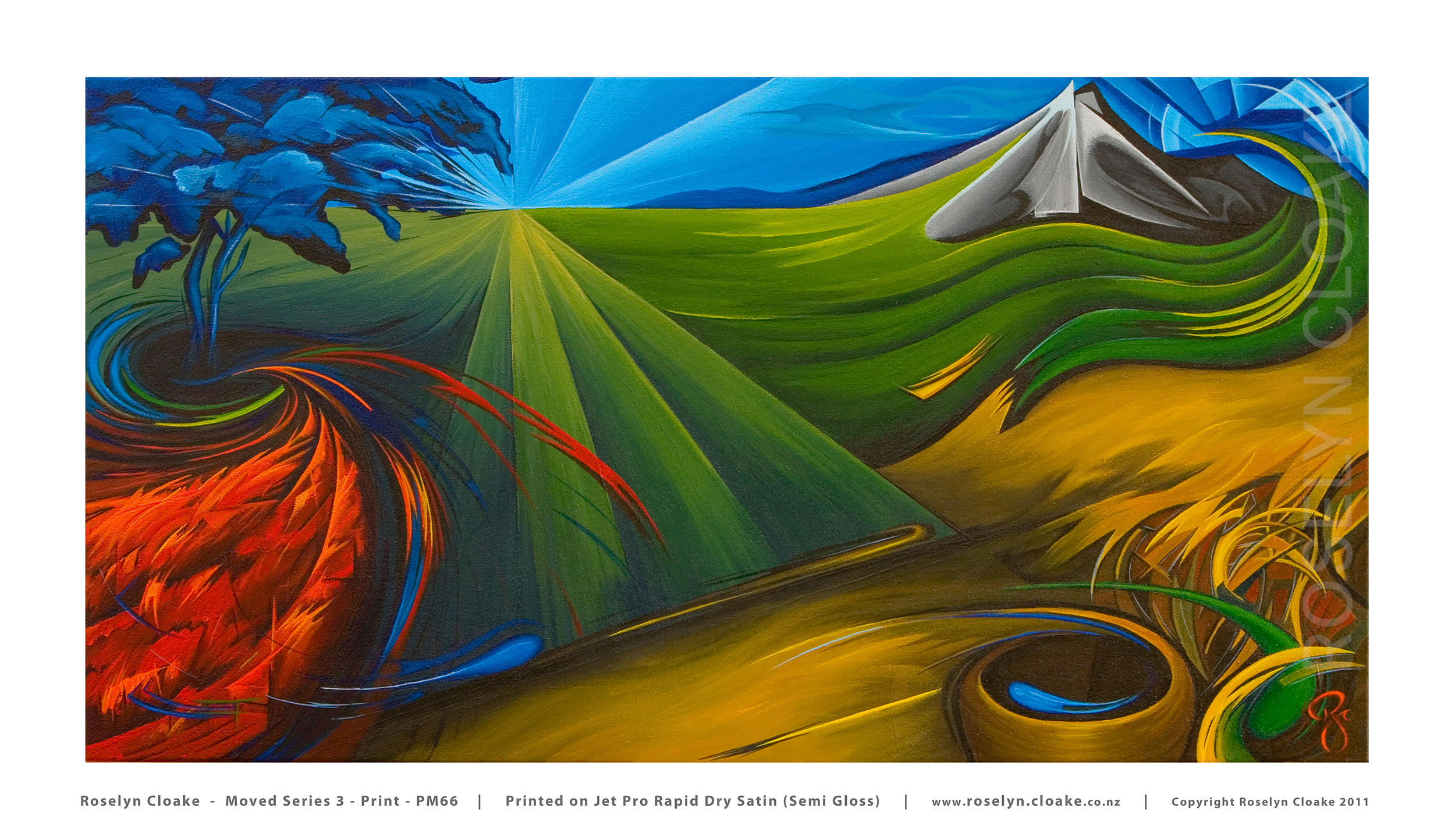
Roselyn Cloake. Roots 26. 2006. Acrylic on Canvas. A painting of her family inspired her grandfathers Cloakes Honey tin and a year living with family on Texel, Netherlands.
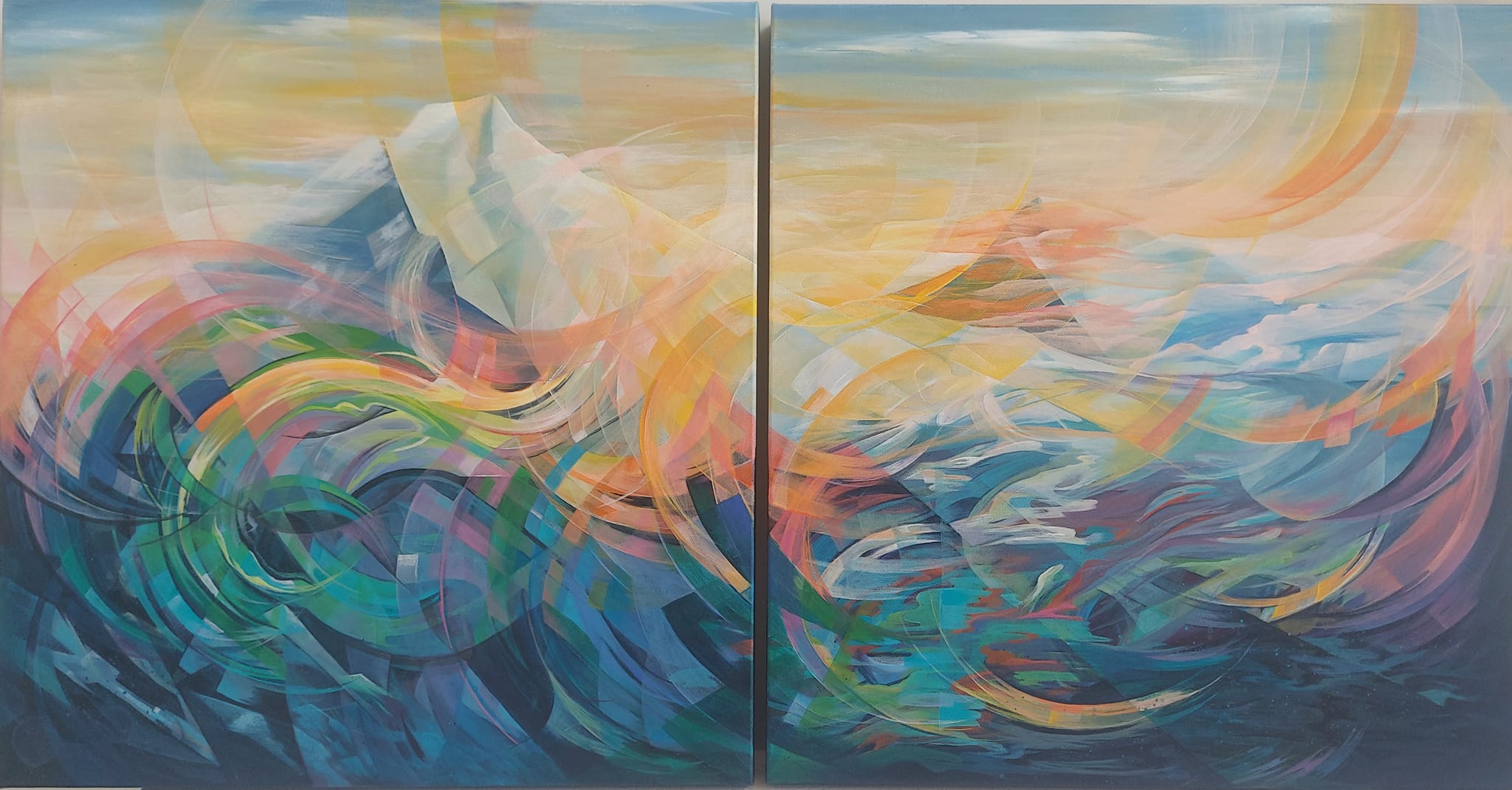
Inspired by a art commission for the Aigantighe for their Historic House stained glass windows. I made a painting in 2024 about a trip to Aoraki Mt Cook with my children. On the theme of my family connection to the land and the honey tin, I continue to see the land and my family as a large part of who I am... lifted, squeezed, worn down by shaking, wind, rain, ice, plants... while it's moved and sculpted by the elements and mammoth tectonic forces... even with everything thrown at it, it still stands tall and the sunrise brings a new day. There's hints of tartan of my Scottish ancestry, and kete inspired by my friend Francine Spencer who uses this as a symbol in her art about weaving people together, symbolic of people with place. You can still see the sun rays from the honey tin in this painting 20 years later.

Roselyn’s Reflection: Looking at the Tile Through Layers of Legacy
When I look at the old roof tile from the Aigantighe, I don’t just see clay or a stamped bee. I start thinking about colonisation. It’s not always an easy topic to talk about, because it carries strong feelings, generational trauma, and layered stories, especially when you look closely at your own family history.
My Dutch ancestors survived invasions from the Spanish, then moved to a colony in Indonesia to work in the rubber trade. My great-grandfather was later captured during the war and forced to work on the Burma Railway. My mum was born in post-war Holland and emigrated to New Zealand in the 1970s.
On the other side of my family are Irish, Scottish, and English roots. One ancestor may have been a stowaway who arrived in New Zealand in the 1860s. Another came in the 1910s. I often wonder what their arrival meant... not just to them, but to the land, to tangata whenua, and to the world they entered.
Later, our Cloake side of the family built up a beekeeping business and became one of the largest apiaries in the South Island and were instrumental in a co-operative of beekeepers. Honey bees are now critical for our food systems, but we don’t often talk about the native bees, butterflies, and moths that quietly existed here before. I feel that their story can be pushed to the margins. Today we need both. We need the introduced species and we need to protect what was already here. That awareness takes time. It takes honest reflection.
When I look at the tile, I see these layered stories... settlement, movement, industry, impact, and change. I see expectations, misunderstandings, conflicts, resilience, healing, and recovery. These are hard conversations, but they matter. Because understanding our past helps us make better choices for the future. I see the honey bee on the tile, as a link to a colony of a hive of bees is an interesting connection to the colonisation of place. But also about what is good for the hive is good for us, conversations around collaboration, working together, duty and role.
The tile connects deeply for me because the Aigantighe has been part of my life since I was a child. I’ve visited it, volunteered there, exhibited work, spoken on its steps, drawn inspiration from its rooms. One of my proudest moments in my artistic career was the opportunity to design a stained glass window for the Aigantighe Art Gallery with my friends and artist Francine Spencer. And all that time, that little roof tile sat up above, quietly sheltering the building and the people who passed through it.
Looking at the tiny bee mark on the tile recently made me reflect on some of my older artworks. I went back to a painting I made in 2006, inspired by my family’s honey tin. Then I looked at a more recent painting from 2023, made after a trip to Aoraki Mt Cook with my children. The mountain, like my own journey, had been shaped by time, lifted, shaken, weathered, and worn down. Yet it still stands. In the new painting there are traces of tartan for my Scottish ancestors, and a woven kete shape, inspired by my friend Francine Spencer who uses the symbol in her art to represent people woven together with place.
The honey bee still shows up. It connects both works. Twenty years apart, it reminds me that the story keeps evolving, and that art can hold these conversations when words don’t quite get there.
Art has always been my safe space. It gives me a way to process what I feel, what I question, and what I’m learning. It helps me say things I’m still figuring out.
Art is a safe place to share these conversations because it gives us room to explore big ideas without needing to have all the answers. Through colour, shape, rhythm, and symbol, we can share emotion, ask questions, and connect with others. We can hold space for complexity and invite new stories in. Art helps us make sense of the past so we can move forward with more understanding and heart.
— Roselyn Fauth (née Cloake)
Once I have made an artwork I like to take time to critique it. This is how I do it...
My reflection checklist for visual storytelling, inspired thinking, and creative growth
1. Have I explored a clear idea or theme?
- What is my artwork really about?
- Does it connect to a big idea (like identity, heritage, place, shelter, transformation)?
- Would someone understand my idea just by looking... or do I need to clarify it visually?
2. Am I developing my idea over time?
- How does my latest piece build on the one before it?
- Have I taken risks or pushed my idea in new directions?
- What new materials, formats, or perspectives have I tried?
3. Am I using artist models to help me grow?
- Have I looked at other artists who explore similar ideas or styles?
- Have I borrowed techniques or concepts and made them my own?
- What did I learn from the artist’s approach... and how did I apply that?
4. Is my media well chosen and well used?
- Am I using my tools and materials with care, control, and confidence?
- Is there a strong link between my media and my message?
- What can I improve in how I handle materials or techniques?
5. Does my work show originality and personal voice?
- What part of this work feels uniquely mine?
- Does it reflect something I care about, wonder about, or feel connected to?
- Is my story clear, or is it getting lost in technique or style?
6. Have I reflected on and refined my ideas?
- What feedback have I received, and how have I responded to it?
- What would I do differently if I started again?
- How have I edited, simplified, or deepened my work?
7. Does my artwork communicate something meaningful?
- Will others feel or learn something when they see this?
- What emotions, questions, or conversations might it spark?
- How does this work honour the past or inspire others?
Extra Reflection Prompts (for tile- and object-based work)
- What story might this object tell if it could speak?
- How do I show both observation and imagination in my work?
- Have I used the tile (or object) metaphorically, not just literally?
- What new meaning have I uncovered by looking again?
- Does this work help me understand more about myself or my place in the world?
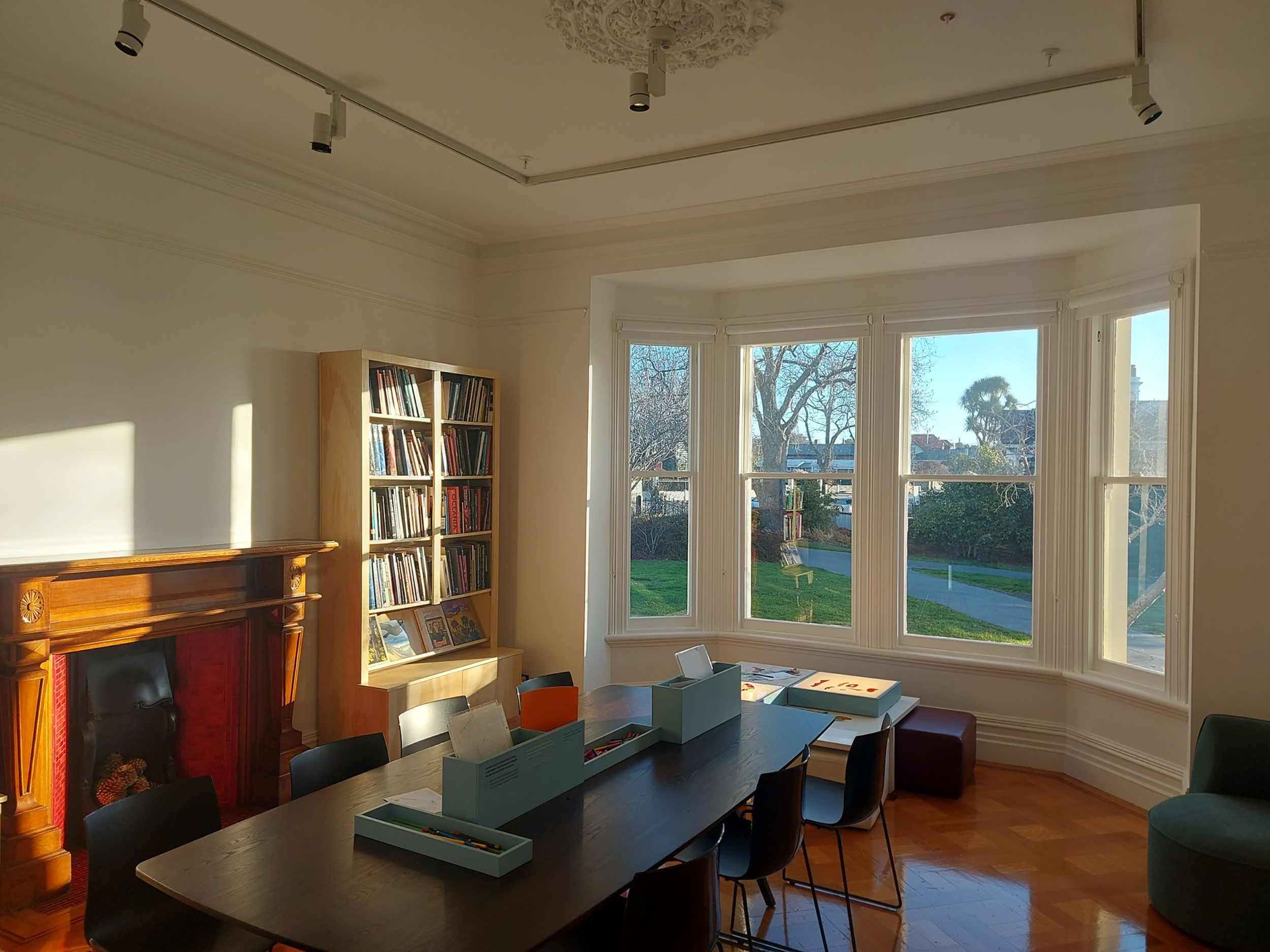
The dining room at the Aigantighe Art Gallery when it was set up to inspire creativity as part of a touring Robyn White exhibition in 2025. - Photo Roselyn Fauth 2025