
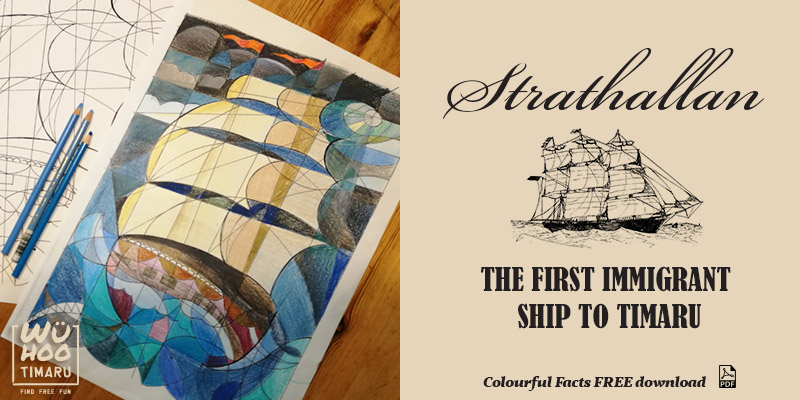
Over 160 years ago, Timaru’s first ship of immigrants arrived. Ever wondered what they experienced and what they found when they got here?
Download: Colourful Facts Strathallan.pdf
Over 160 years ago, Timaru’s first ship of immigrants from the UK arrived. Ever wondered what they experienced and what they found when they got here?
England was a wealthy country, but wealth was unevenly distributed. Bread, potatoes and dried peas were the diet of the working class person and a loaf of bread cost half a worker’s wage. So in the hope of a better life, they risked it all to sail across the world to the new colony. This was 18 years after signing of The Treaty of Waitangi in 1840.
50% Of the fare was subsidised to help the passage of a working class. Officials warned that the greater the assistance, the lower the class of applicant, but in the end the government in London offered half the cost of passage with bills from those already in the colony also gifted toward costs.
1858 12th October, The Strathallan left with mostly English passengers, some were from Scotland, Ireland and one family was from Germany.
110 In total 250 total passengers left on the Strathallan with about 20 crew. 110 of these were destined for Timaru including 30 children under 10 years old.
2 Children were born. Five children and two adults died. As a sign of the hardships of the times the Strathallan was considered fairly fortunate compared to some other immigration ships that suffered terribly from disease and illness.
6x2ft Cubicles were for single passengers and married couples had 6x3.5 feet. The space was not just for sleeping but for storing possessions which were not in the hold.
12-13 Were the ages of the children accommodated as single men or women. Singles were segregated from married couples and single women were supervised, and not allowed contact with males. Families were housed together.
1 Broken top-sail during a severe storm after passing by South Africa. "The water every now and then dashed down the hatchways and the deck leaked in every direction, so there was not a dry place to be found - even the beds were soaked”. With few lifeboats, passengers feared for their lives.
4 Crew members (aside from the Captain) were fit for duty after Christmas celebrations got somewhat out of hand.
1859 13th January, New Zealand was finally sighted after passengers had spent days looking. The Strathallan anchored offshore at Timaru by 1pm on the 14th.
90 Days at sea. The voyagers had left their homes and followed advertisements to this "thriving" town. Some were "bitterly disappointed" with what they found - a barren, treeless coastal Timaru.
3 Men (Captain Cain, Mr Woollcombe and Samuel Williams.) rowed to meet the Strathallan. Woollcombe wore "a blue serge jumper, moleskin trousers tied at the knee and turned up at the bottom and heavy boots, yellow to the top with clay. I thought if this is the Resident Magistrate we have come to a queer place”. Sam was described as "old" despite being only 40.
4-5 Houses in sight included William’s cottage which was having a lean-to added to serve as Timaru's first licenced pub. With no permanent housing ready, most voyagers slept in Rhodes woolshed.
1/4 Of the size of London, was the expectation for one lady. She had been told the district was one of the most thriving in New Zealand. Imagine her surprise when she arrived. At the time Canterbury was populated by several hundred Maori and a just a small number of early European settlers and overstayers from the whaling days.
40-60 Houses had sprung up in Timaru by Jan 1860 (one year after arrival). The population was 200.
1861 There was 1 clergyman, 1 tinsmith, 1 milliner and 1 cordwainer in Timaru. There were also 187 labourers, 151 servants, 99 shepherds, 59 bushmen, 47 bullock drivers, 25 gentlemen, 19 publicans, 5 blacksmiths, 5 bricklayers, 5 medical practitioners, and a few bakers, gardeners, carters, drapers, police, saddlers and stonemasons.
For many years Timaru celebrated the anniversary of the Strathallan's arrival with a picnic at Otipua Lagoon. Cricket, quoits, watching horse racing and athletics, and chasing a pig with a greased tail, were favourite activities on the day.
WuHOO Challenge
Colour in the sheet of the Strathallan, can you find the flying fish, shark, whale and broken sail? What do you think the journey must have been like? What do you think the local Māori might have thought about the new arrivals?
Look down... how many Strathallan ship manholes can you find in the CBD of Timaru?
Have a picnic by the plaque on SOUTH Street on the cliff overlooking where they came ashore
Do the brass rubbing hunt at Caroline Bay and find the Strathallan Rubbing on the Terrace at the Bay Hill

First Immigrant Ship to sail direct from UK to Timaru. Departed October 12 1858 and arrived January 14 1859. Image: R. Morris (2009). Courtesy South Canterbury Museum 2008/237.01
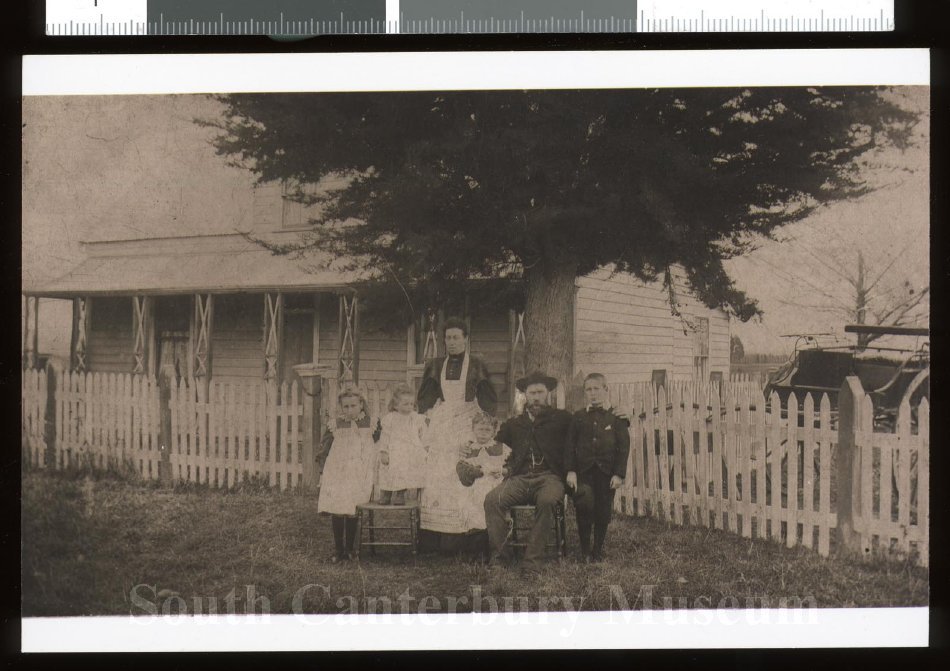
1869-1900, this is a photo of the family of Robert Cairns, who arrived in the Strathallan in 1859 aged two and a half, pictured in Amberley/North Canterbury in later life, circa 1898. Pictured are (from left to right): Elizabeth Jane (Cissy -later Mrs George Hatt), Rose Millecent, Jane (mother, nee Main), Margaret, Robert, and Robert (junior). South Canterbury Museum 2021/015.002
Find out who else arrived in Timaru on the Strathallan here: aorakiheritage.recollect.co.nz/nodes/view/8144
The Strathallan
Timaru Herald, Volume XIIC, Issue 13803 – 14 January 1909, Page 3 (Supplement)
Edited and reformatted transcript
The first ship to land immigrants directly from London to Timaru was the Strathallan, 551 tons register, commanded by Captain W. R. Williamson. She departed St. Katherine’s Docks, London, on the afternoon of Tuesday, October 12th, 1858, carrying around 260 passengers, approximately 110 of whom were bound for Timaru. The Deal boatmen were sent for later, arriving by other ships. The moorings for anchoring were buried in the ballast and had to be dug out at Lyttelton before being sent to Timaru by coaster.
We are indebted to Mr. T. L. Morris of Maori Hill for the following extracts from a rough diary kept by his father, Mr. J. T. Morris, a passenger on the Strathallan. Mr. Morris continued with the ship to Lyttelton but later returned to South Canterbury, where he became well known for his humorous and satirical verse.
The Voyage Diary of J. T. Morris
Departure and Early Days at Sea
Oct 12 – “Started at last.” Man overboard.
Oct 13 – Went ashore at Gravesend with E. Mustered on the poop and made captain of No. 27 mess. Prayer meetings on board.
Oct 14 – Towed to the Nore. Cast anchor off Ramsgate. Weighed anchor at 5 p.m. Saw the comet.
Oct 15 – Off Deal. Foggy and wet. Preserved meat and potatoes. Bumboats alongside. French coast in sight. Set sail again at 8 p.m.
Oct 16–20 – Passed the Isle of Wight. Bay of Biscay. Stormy seas. Much seasickness. One pig fell down the main hatch. A chaffinch followed from England.
Life on Board
Oct 21–22 – Becalmed. A woman died and was buried at sea.
Oct 24 (Sunday) – A child died. Funeral held the next day.
Late October–Early November – Encountered flying fish, porpoises, whales, a shark caught and eaten. Several concerts and dances held on deck.
Nov 18 – Crossed the Equator. “Neptune” ceremony performed. Singing and grog in the forecastle.
Nov 20–25 – Continued sailing near St. Helena. A child was born on board. Several items of clothing stolen.
Nov 30 – The Julia passed by, letters and supplies exchanged. Sea smooth and hot.
December Storms and Sights
Dec 1–7 – Porpoises, albatrosses, and whales spotted. Gale hit on Dec 5. Ship heavily flooded. Tremendous lurch threw everything around.
Dec 8–15 – Sighted St. Antonio. Weather fluctuated between calm and rough. More deaths occurred.
Dec 20–25 (Christmas Day) – Approaching sub-Antarctic islands (Kerguelen or Crozets). Wild weather, aurora australis visible. Two children christened onboard: William Strathallan Padget and Strathallan Hayes. Sailors drunk and fighting. Christmas Day otherwise fine.
New Year and Arrival in New Zealand Waters
Jan 1, 1859 – Strong wind and rough seas. Mrs Brightmore (mentally ill) was restrained.
Jan 4–9 – Calm weather interspersed with fog and fights. A shoal of fish extended over ten miles.
Jan 10–13 – Sightings of seabirds, sharks, and finally land. "NEW ZEALAND!" seen on the 13th. Mountains covered in snow ahead.
Arrival at Timaru
Jan 14, 1859 – Land in sight. Five houses visible. A boat came alongside with six men, including Spanish Joe. One boat smashed. Shoals of porpoises around the ship. No accommodation ashore for the immigrants. Prices steep: ale 2s 6d, rum 9d, tobacco 4s 6d per lb, a sheep £1 or £1 5s.
Jan 15–17 – Passengers landed over three days. Provisions sent for both Lyttelton and Timaru groups. The boatswain was put in irons. Fresh mutton, radishes, and potatoes brought aboard. Passengers began disembarking.
The Landing: Recollections of Major J. A. Young
Mr. J. A. Young, later known as Major Young of Winchester, recorded:
"The first to board the Strathallan were Mr. Woollcombe, Captain Cain, and Sam Williams. Woollcombe, the Resident Magistrate, was wearing moleskin trousers and clay-stained boots from puddling cob for his whare."
A gift of two sheep was sent from Mr. Rhodes. The crew’s spokesman, "Long Bill," demanded a shout for the gift; the captain refused, so Bill distributed the sheep among crew and immigrants.
Fares for passage to shore in surf boats were agreed upon. Around 110 immigrants were landed, most on the 16th, the rest on the 17th. Some slept in Rhodes’ wool shed, fashioning shelters from shawls and blankets.
The Immigrant Outlook
Onshore, the view was dominated by native tussock and scattered cabbage trees. Small timber patches existed at Arowhenua, Waihi, Mt Horrible, Geraldine, Peel Forest, and Waimate. About 40 squatters held sheep runs between the Rangitata and Waitaki Rivers, with no fences. Sod huts, stone cottages, and thatched shelters dotted the landscape.
Game was plentiful: swamp hens, teal, paradise ducks, wild pigs, native hens, eels, and flounders. Pigeons and kākā thrived in forest patches. Few fished the sea.
Wages were 18s–20s per week plus rations. Work at washpools and shearing shed paid better. Some became bushmen, splitting timber, then sawyers and contractors.
The greatest natural hardship: the nor’wester wind. Travel inland to Christchurch was a rugged ordeal via river fords.
New Chum Anecdotes
Major Young shared early settler stories:
New Chum Anecdotes: Humour and Hardship in Early Timaru
When the Strathallan immigrants landed, they were met not by an established town, but by tussock-covered land dotted with only a handful of buildings. The settlers were known as “new chums” — recent arrivals unfamiliar with colonial life. Their experiences were often a mix of culture shock, frontier improvisation, and the resilience required to adapt to a raw new world.
1. A Magistrate in Moleskins and Clay Major Young recalled his first impression of local authority when the boat carrying Mr Woollcombe (Resident Magistrate), Captain Henry Cain, and Sam Williams came alongside the Strathallan. As the boat was tied to the ship’s stern, it broke apart — a rough welcome. Mr Woollcombe came aboard and asked for the captain. Young, not knowing who this plainly dressed man was, inquired and was told he was the Resident Magistrate.
“Well, I thought to myself, if that is the Resident Magistrate, we’ve come to a queer place.”
Woollcombe’s outfit was particularly memorable: a blue serge jumper, moleskin trousers tied at the knee and turned up at the bottom, and heavy boots yellowed to the knee with clay. It turned out he’d been helping build a cob whare (a clay house), trampling the mixture himself — a clear sign that even civic leaders worked with their hands.
2. A Gift of Sheep… and the Sailors’ Revolt Shortly after landing, a boat brought a gift of two sheep from Mr Rhodes for the ship’s cabin passengers. The message was relayed to the captain by “Long Bill,” the boat’s unofficial spokesman. When Bill asked if the captain was going to “shout” (treat them with drink or reward), the captain declined.
“On that,” recalled Young, “Bill went forward, cut the sheep up and divided them among the crew and the immigrants.”
In true frontier spirit, the crew took matters into their own hands — an early lesson in the rough democracy of the colonies.
3. Housing in a Woolshed Accommodation in Timaru was scarce. Young and his family found the only available shelter: Mr Rhodes’s wool store. They climbed several tiers of wool bales and set up camp atop two of them, screening their space with shawls and blankets.
“We made ourselves as comfortable as we could.”
It was a crude but effective shelter — warm, dry, and slightly elevated. When the immigrants woke the next morning, they were greeted with a curious and generous crowd of bushmen offering welcome drinks.
“Men came in from the bush to welcome us, with buckets of port wine and rum, ladling it out in pannikins to anyone who would partake.”
4. Shags for Supper? A Culinary Misfire Eager to contribute, Young and his friend T. Paterson went hunting northward along the coast. The beach was strewn with whale bones. They shot several birds and proudly strung them on a whale rib to carry home. As they passed Captain Cain’s house, Mrs Cain asked what they had caught. When they replied that they planned to share the birds with other immigrants, she stopped them:
“My good men, they are not fit to eat — they’re shags.”
Shags, or cormorants, are fish-eating birds with oily flesh — unpalatable to most. Crestfallen, the men carried their catch to the top of the cliff and threw them into the sea.
5. Sunburnt Arms and Irish Remedies Meanwhile, their wives had been doing washing in the hot sun. Their arms became badly sunburnt and blistered. They went to Sam Williams’s wife — a kind-hearted Irish woman — and asked if she had any cream to soothe the pain.
“She said she had no cream, but brought something in a pannikin and told them to take a little inside, and rub a little outside.”
They followed only the second part of the advice. The “something” may well have been whiskey or rum — a classic colonial cure-all.
6. The Search for Starch and Sock Wool The next day, the women tried to finish their laundry properly. They went to Cain’s store to ask for starch.
“Mr Wood, who was serving, smiled and said starch was unknown in Timaru.”
They then asked for worsted wool to darn socks, only to be told:
“We never use it. When socks wear out, we throw them away. You’ll find plenty on the beach.”
Resourceful, the women retrieved a discarded sock, washed it, and unravelled it to obtain yarn for mending. For starch, Mrs Young scraped a potato — a traditional method known to many rural women.
7. Into the Bush: A Journey to Arowhenua Young and Paterson later travelled inland to Arowhenua by bullock dray — the only transport available. The journey was slow and bone-jarring. Along the way they stayed in rough whares (huts) and cooked outside in camp ovens.
At the Arowhenua bush, they encountered Māori, including one tattooed man who greeted them with “tēnā koe” and requested tobacco. Young gave him the whole stick; the man filled his pipe and tucked the rest under his blanket, saying “Kapai!” Paterson, more cautious, handed out only small portions thereafter.
8. Life Among Māori Women and Piccaninnies At their bush camp, Young observed several Māori women wrapped in blankets with babies (piccaninnies) on their backs. While his children were initially frightened, the Māori were always kind and gentle.
“Our children ran around their mother, but the Maoris were always very kind and friendly.”
This was one of the earliest recorded encounters between newly arrived immigrants and South Canterbury Māori — one marked by generosity and cultural exchange rather than conflict.
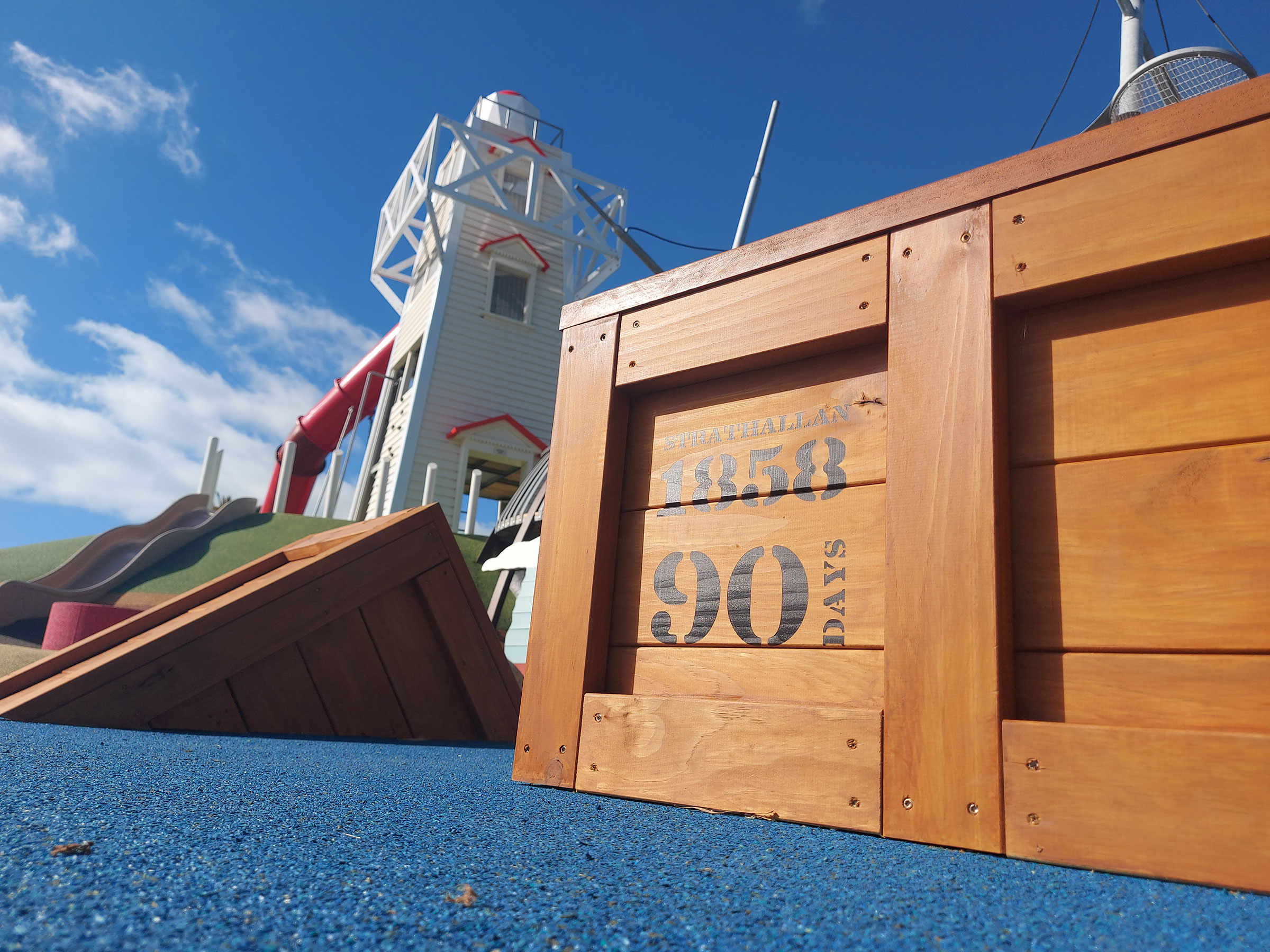
A cargo box themed around the first European immigrant ship to sail direct from UK to Timaru. - Photo Roselyn Fauth
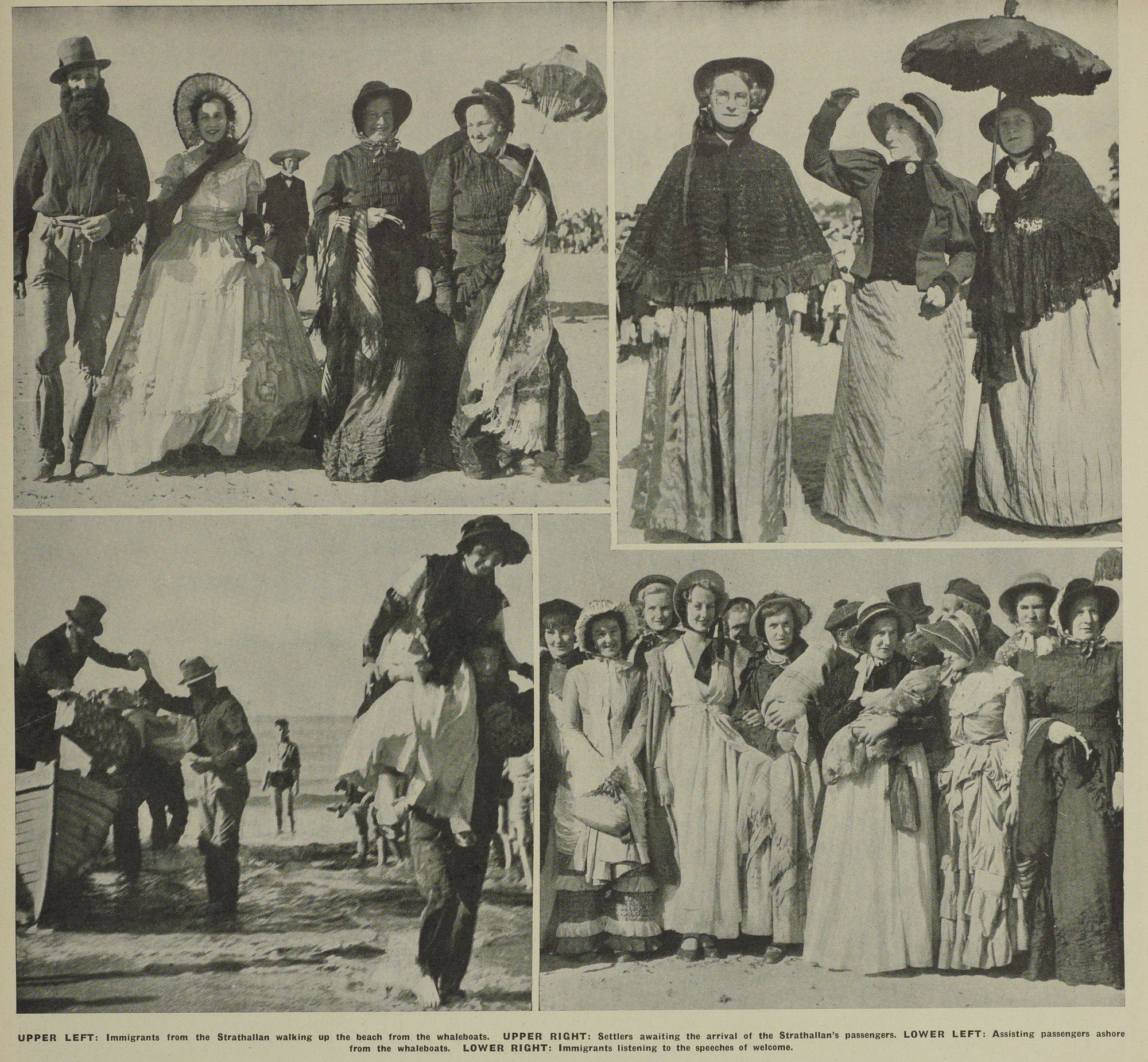
A montage of four photographs documenting a 1940 centennial re-enactment of the arrival of immigrants from the Strathallan at Caroline Bay. The scenes show costumed participants walking up the beach from whaleboats, settlers waiting to greet them, passengers being helped ashore, and the newly arrived immigrants listening to speeches of welcome.
Auckland Weekly News, Landing of Early Settlers at Caroline Bay, Timaru, published 17 April 1940, montage of four black-and-white newspaper photographs. Auckland Libraries Heritage Collections, record AWNS-19400417-36-01. Copyright: No known copyright restrictions. Note: These photographs show a 1940 centennial re-enactment, not the original arrival of the Strathallan passengers.